Logo

Antarctica Ski & Sail

Trip Image

Duration

29 days

calendar

Months

Nov, Dec

level

Trip level

5/5

Ski Antarctica

A Ski Mountaineering Expedition to the Antarctic Peninsula

Now accepting applications for 2026 and 2027

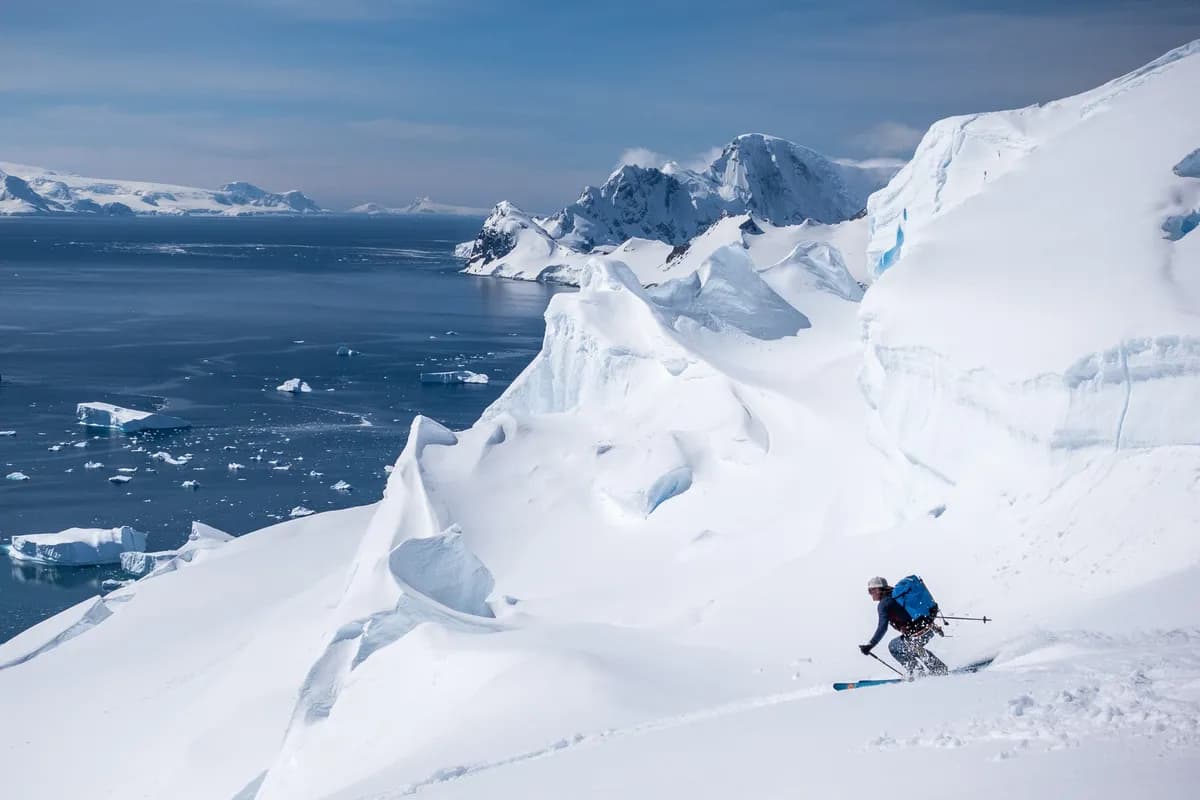
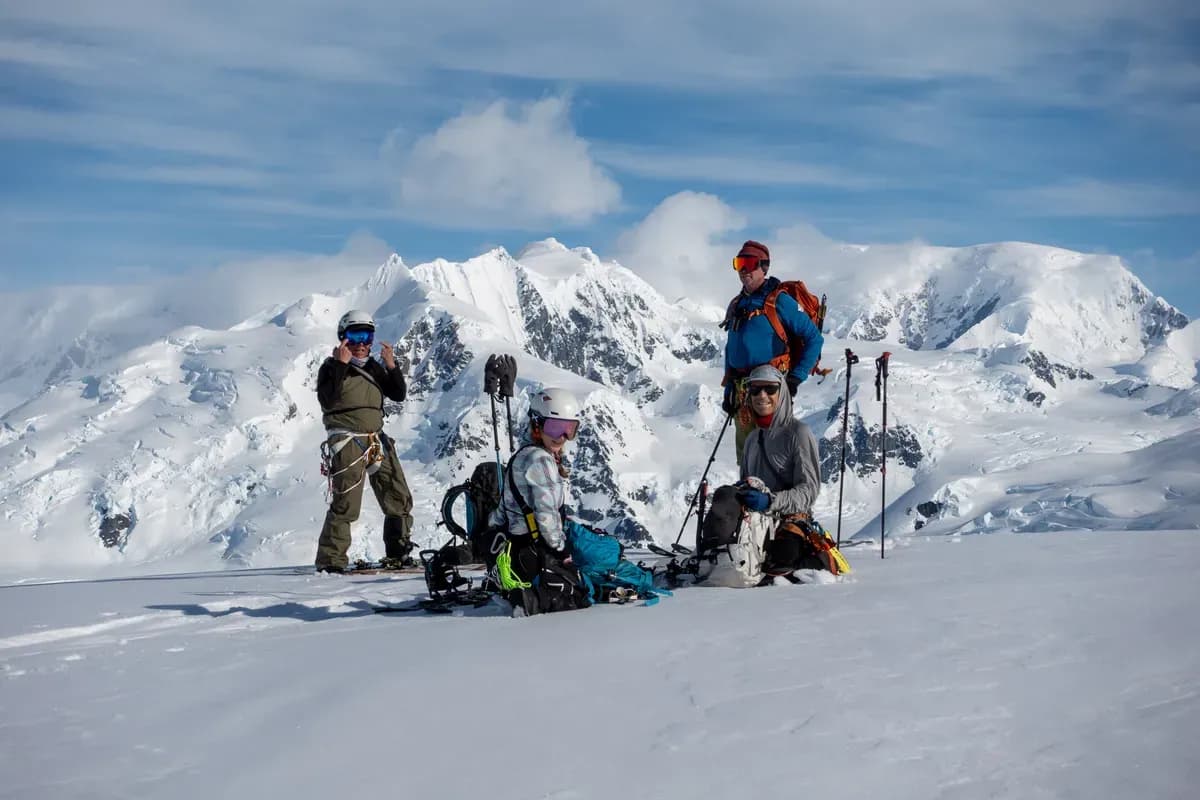
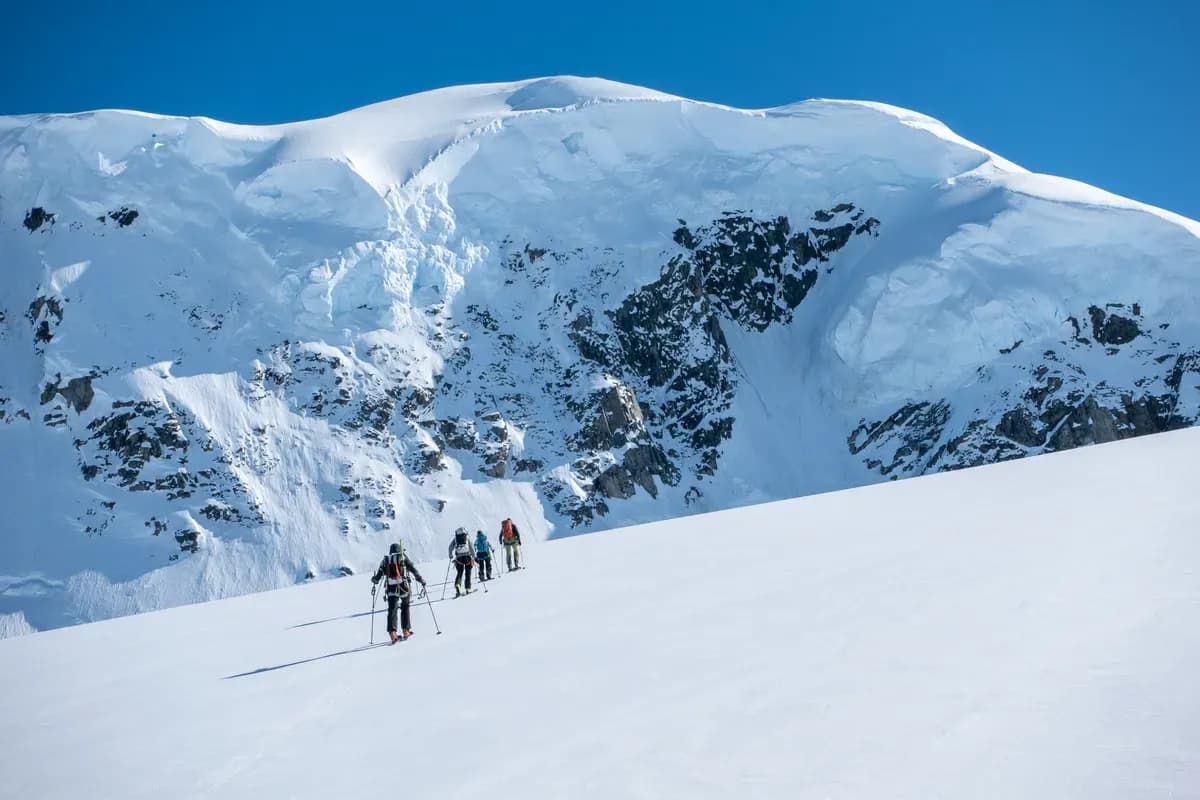
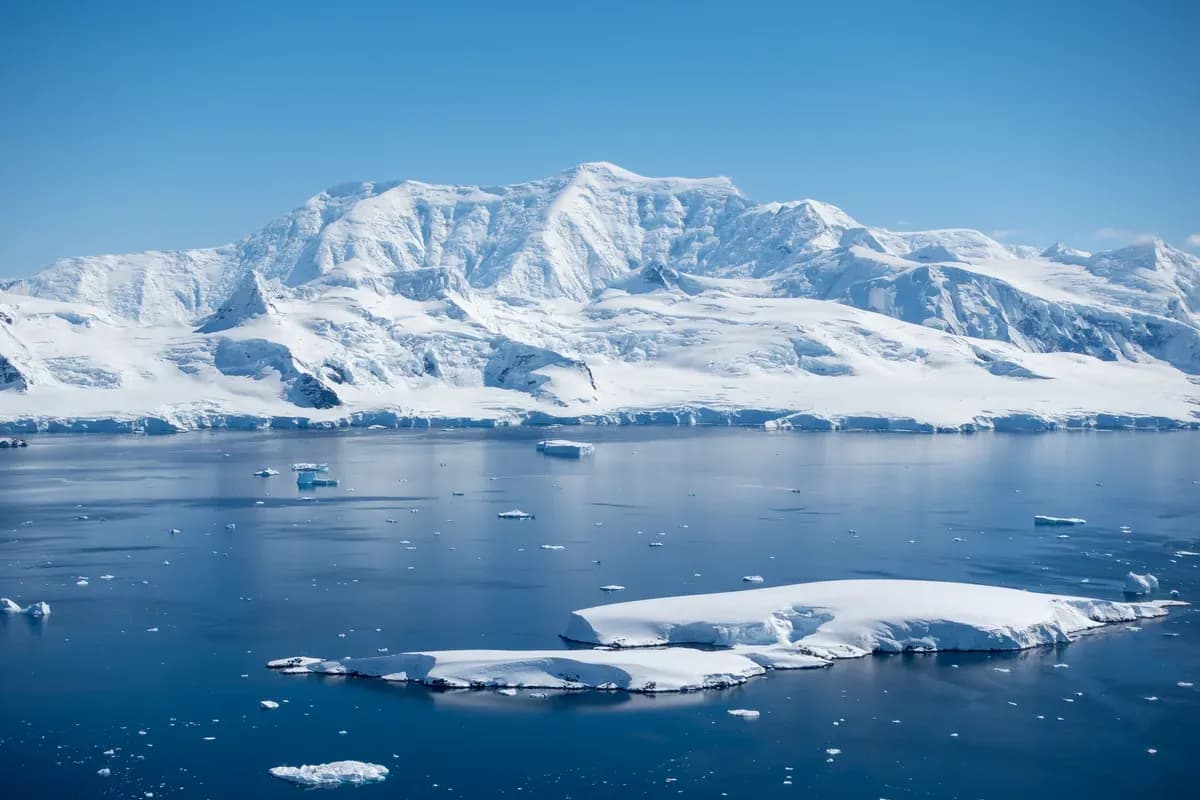
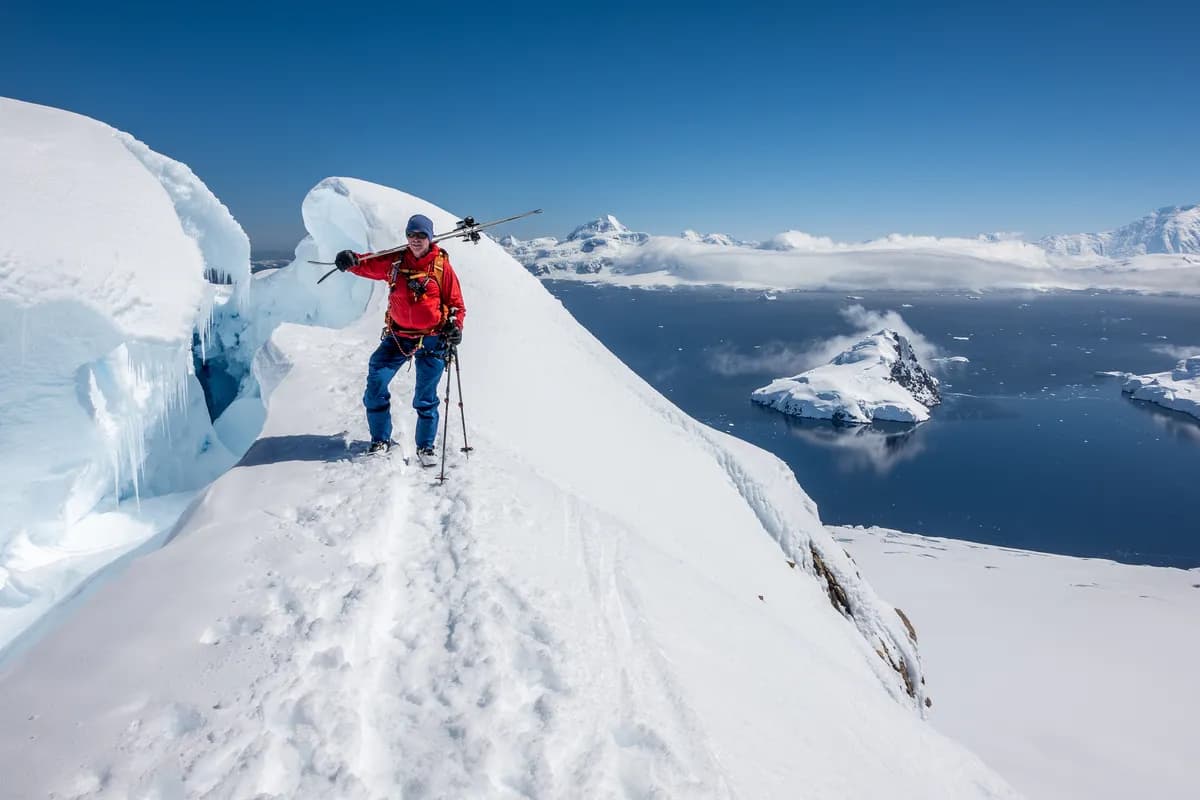
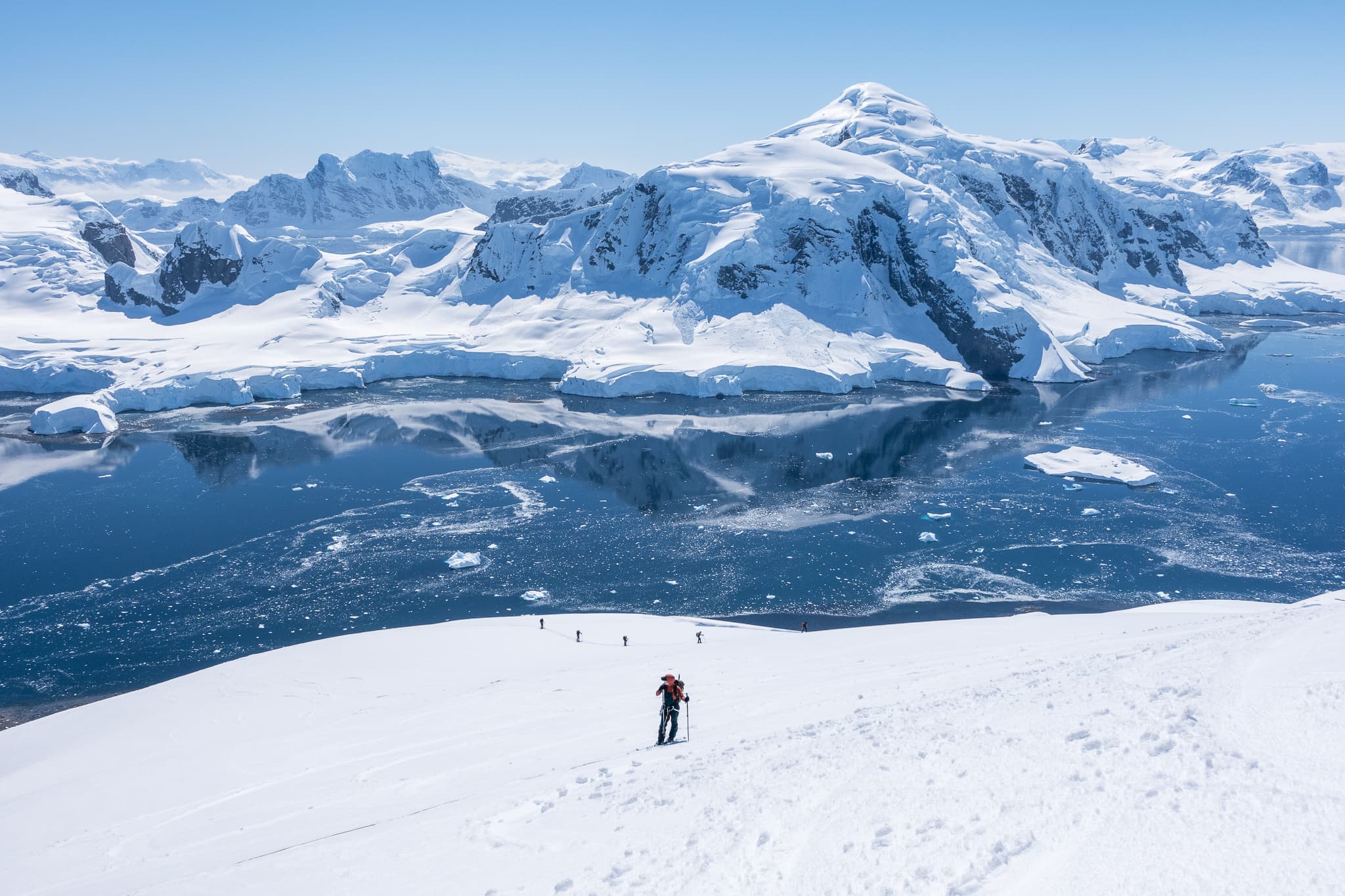
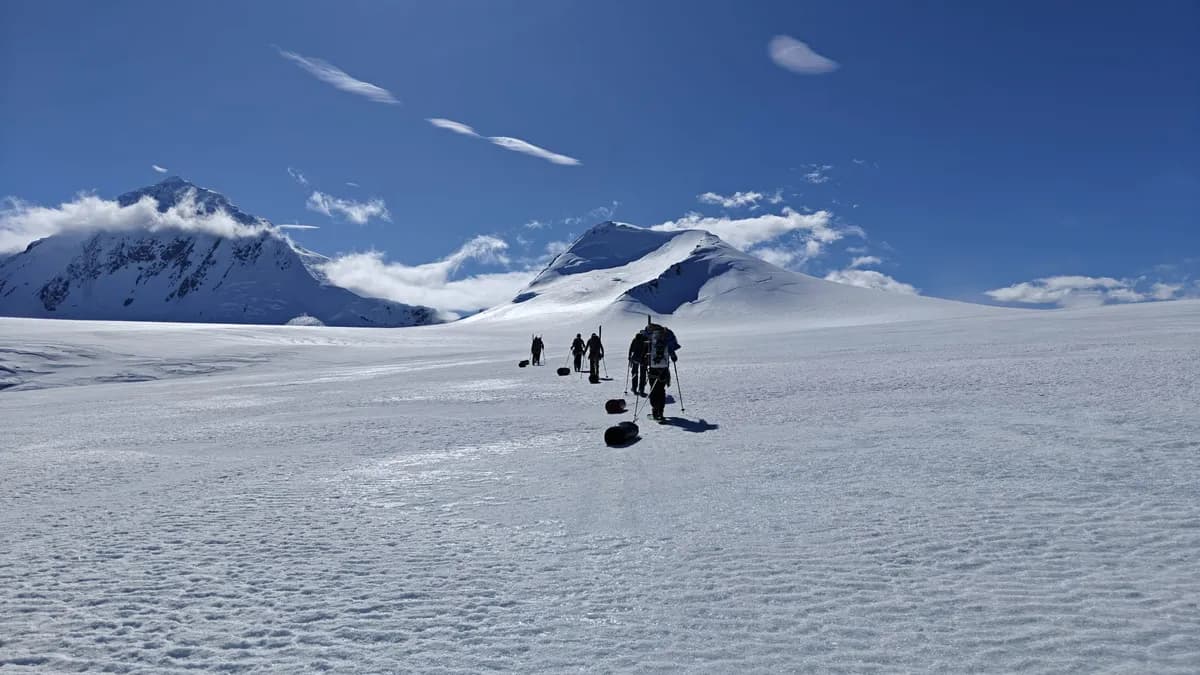
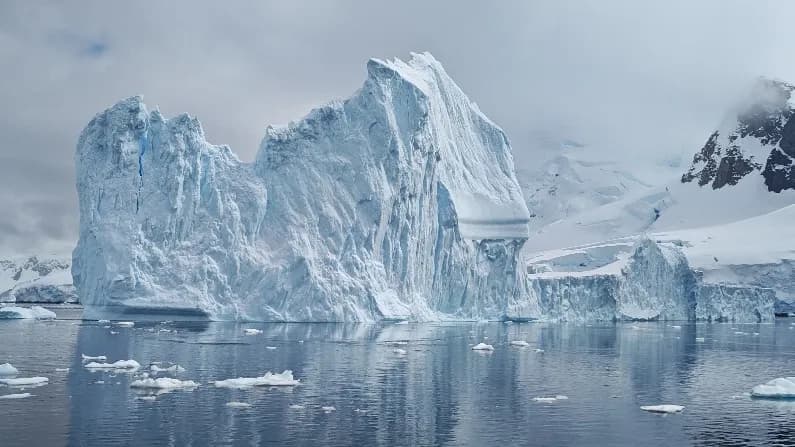
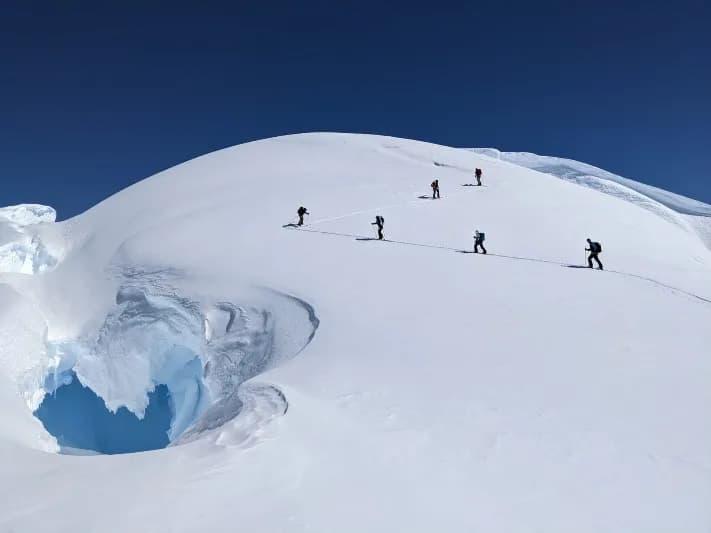
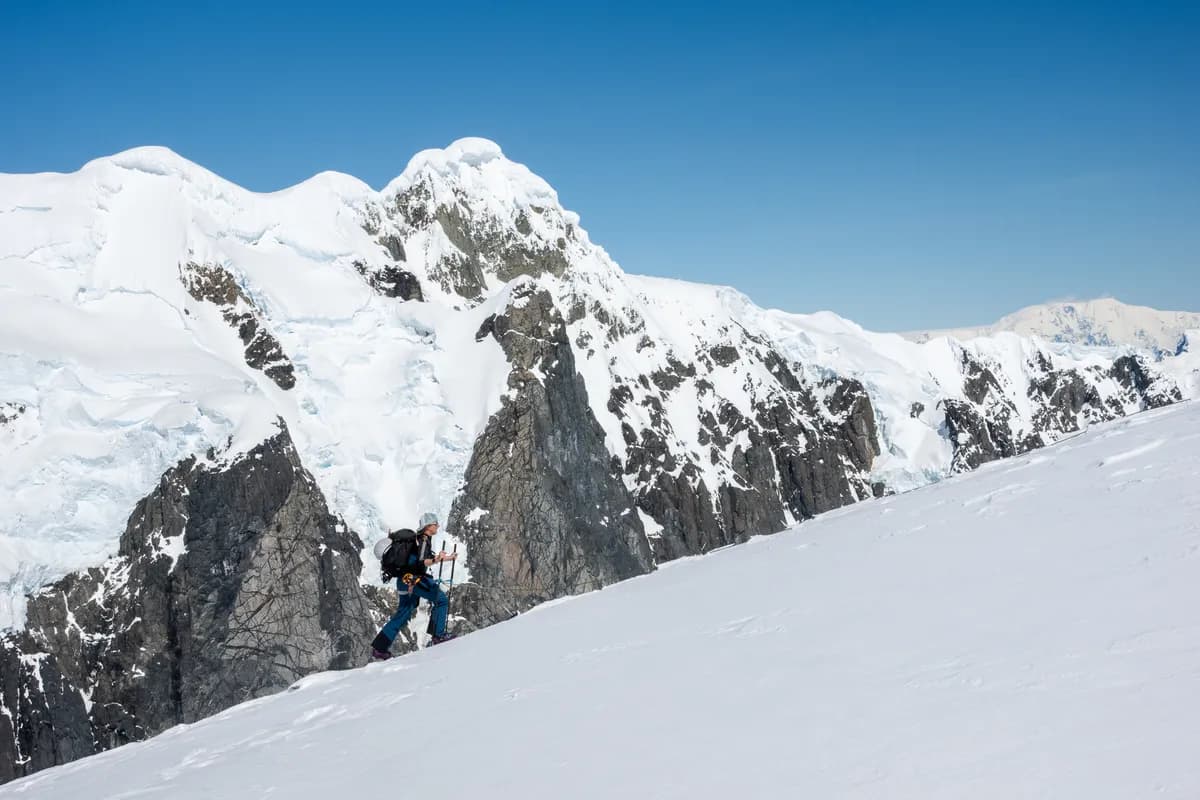
Antarctica is one of the most unusual places on Earth to travel on skis. Mountains rise directly from the ocean, glaciers spill into deep blue bays, and the terrain stretches for hundreds of kilometres in every direction.

Our expedition is built around reaching that terrain.

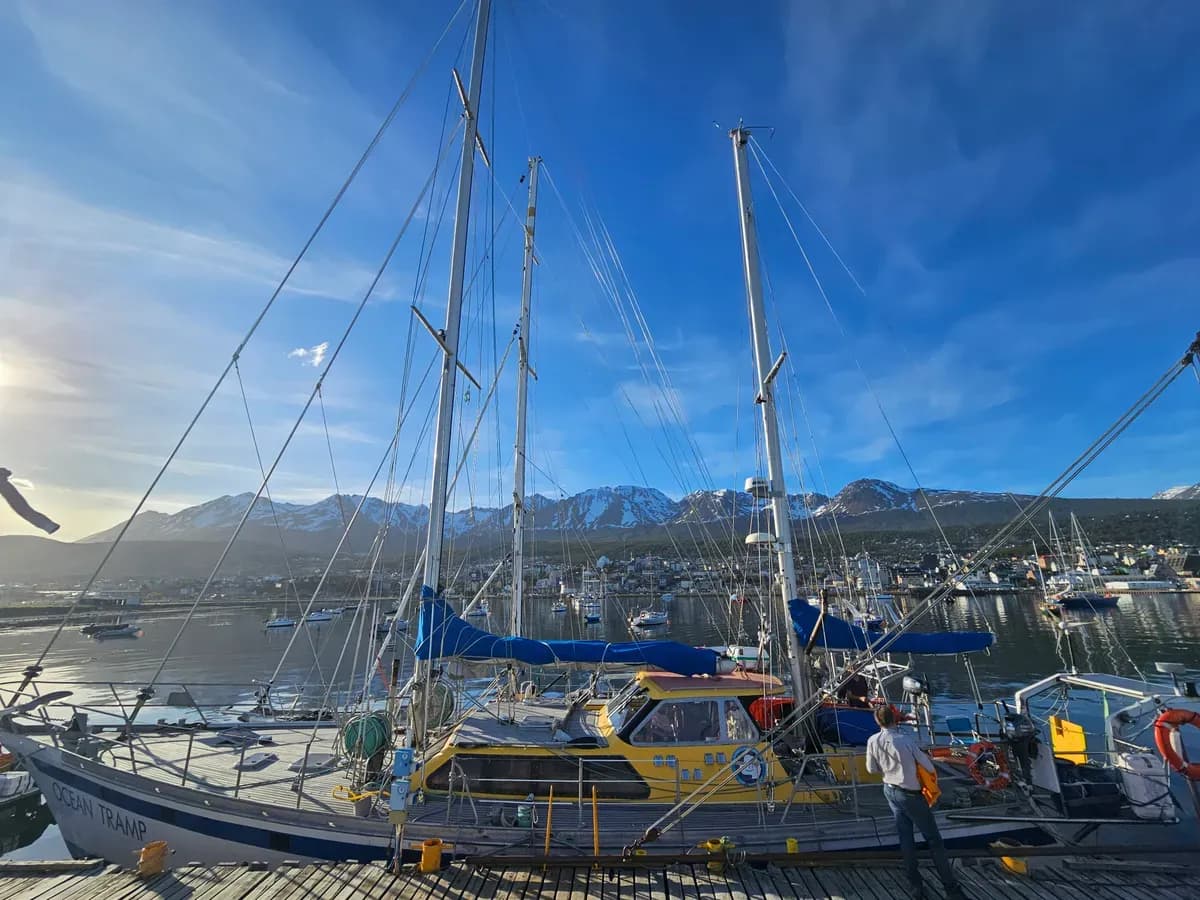
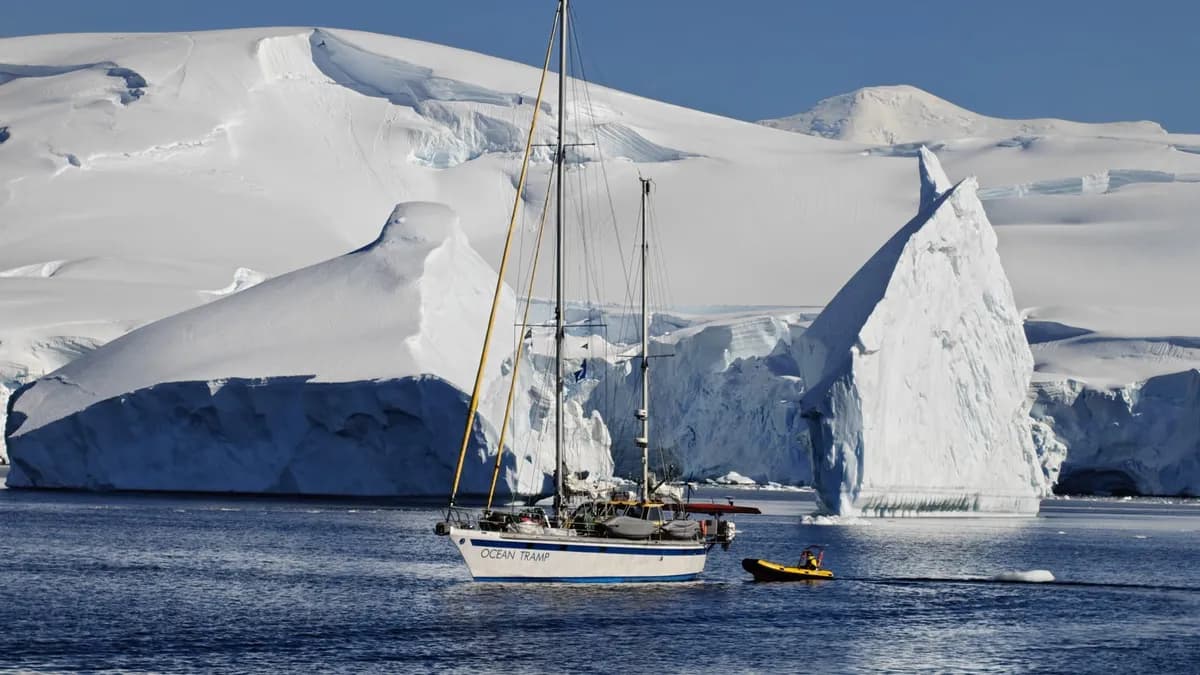
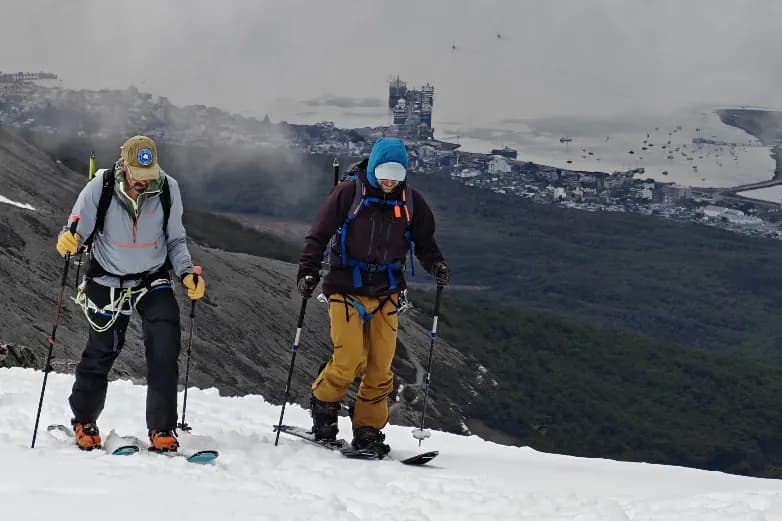
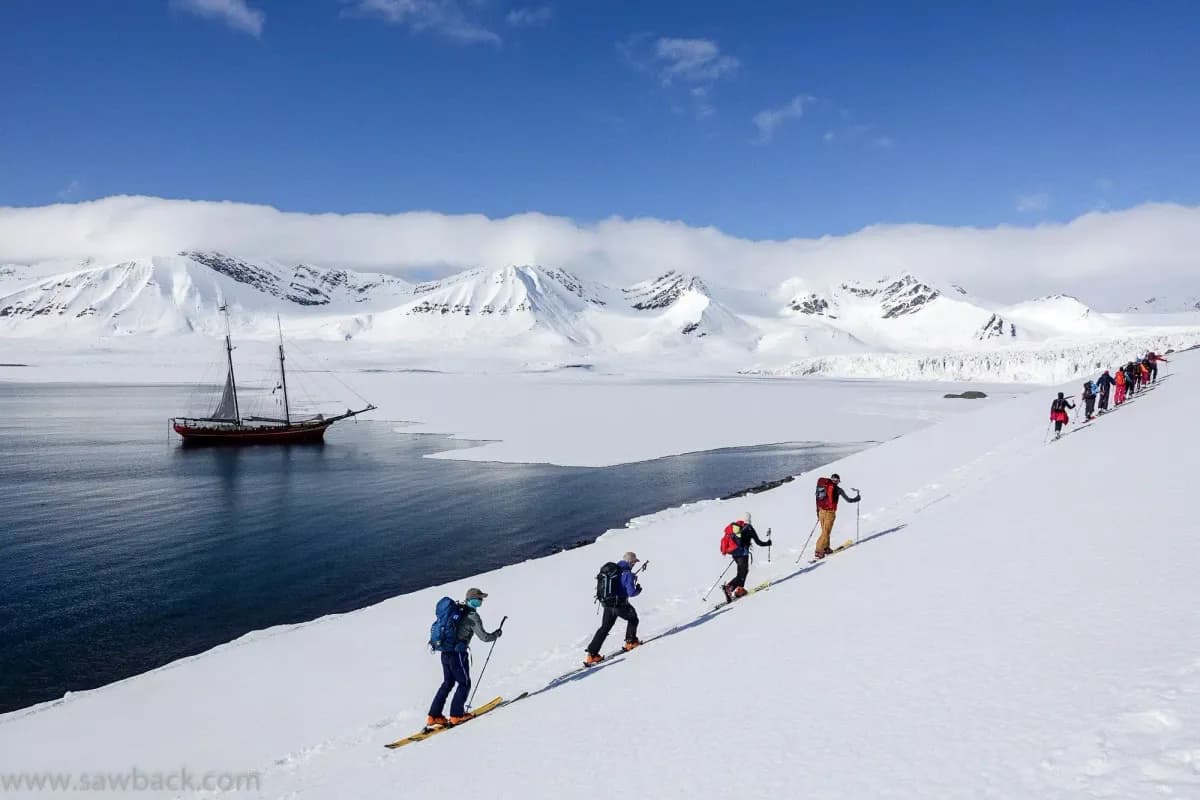
We sail from Ushuaia aboard the expedition yacht Ocean Tramp, cross the Drake Passage, and spend the following weeks exploring the islands and mountains of the Antarctic Peninsula. From the vessel we travel by zodiac to remote landing sites and begin ski tours from sea level.

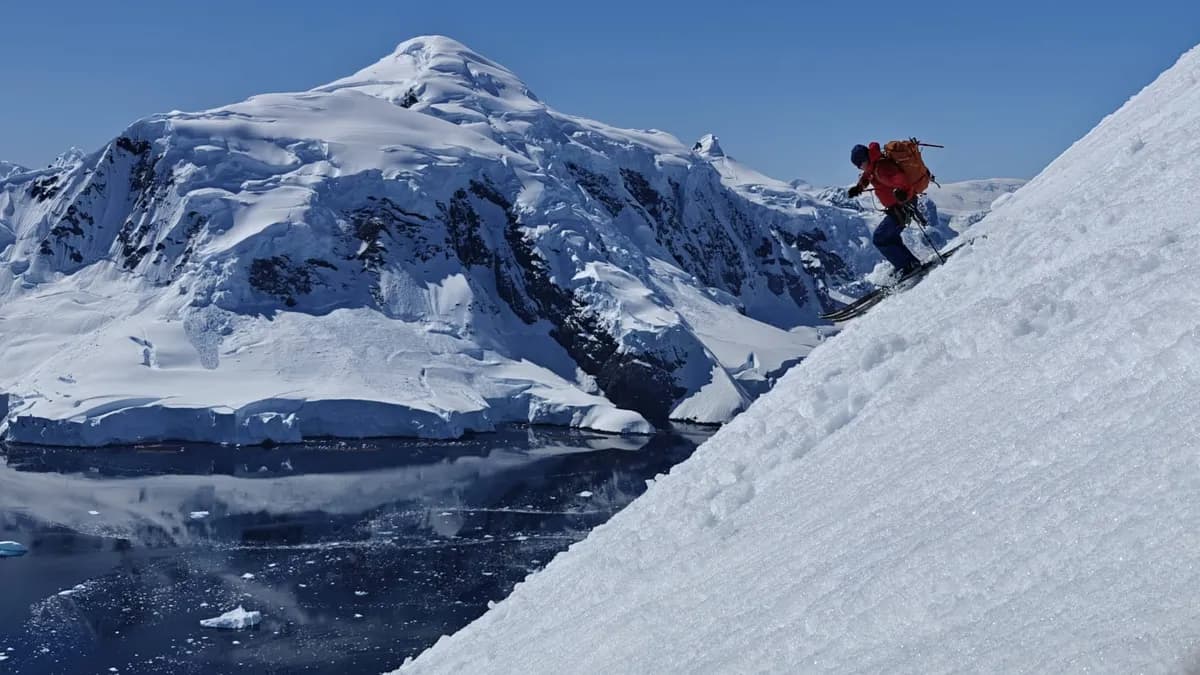
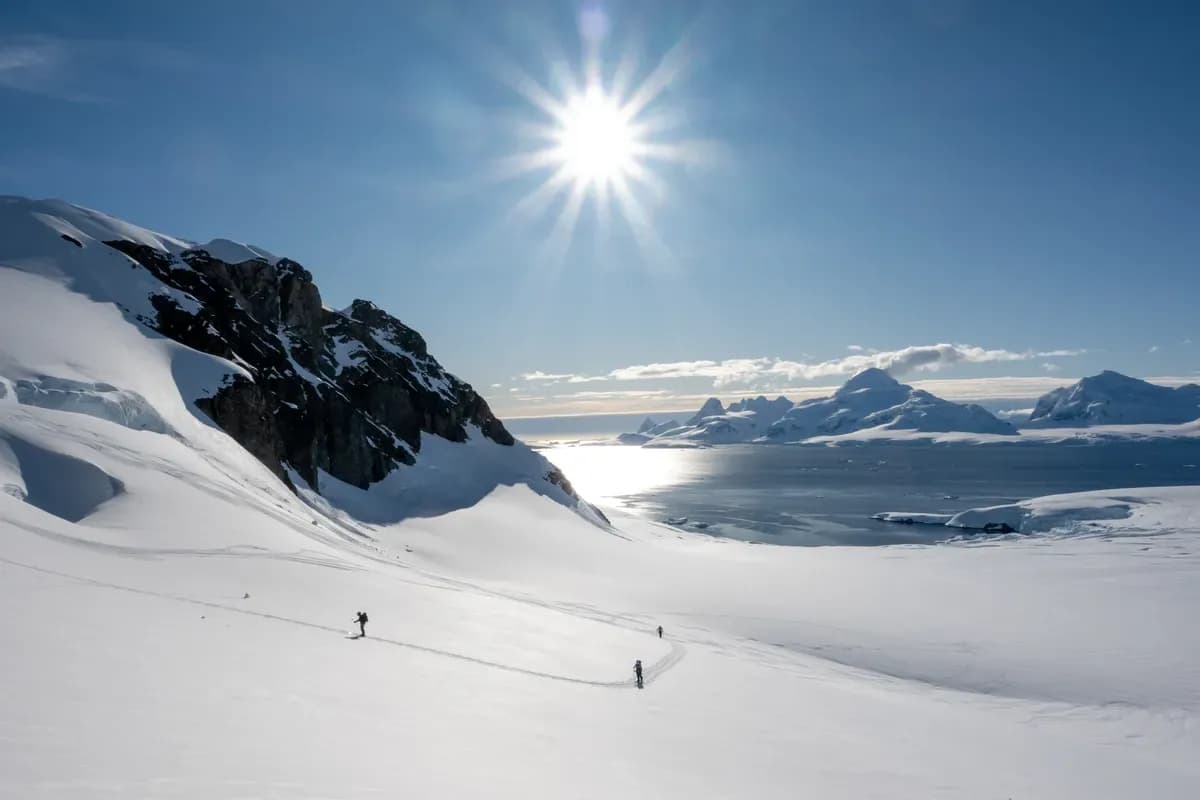
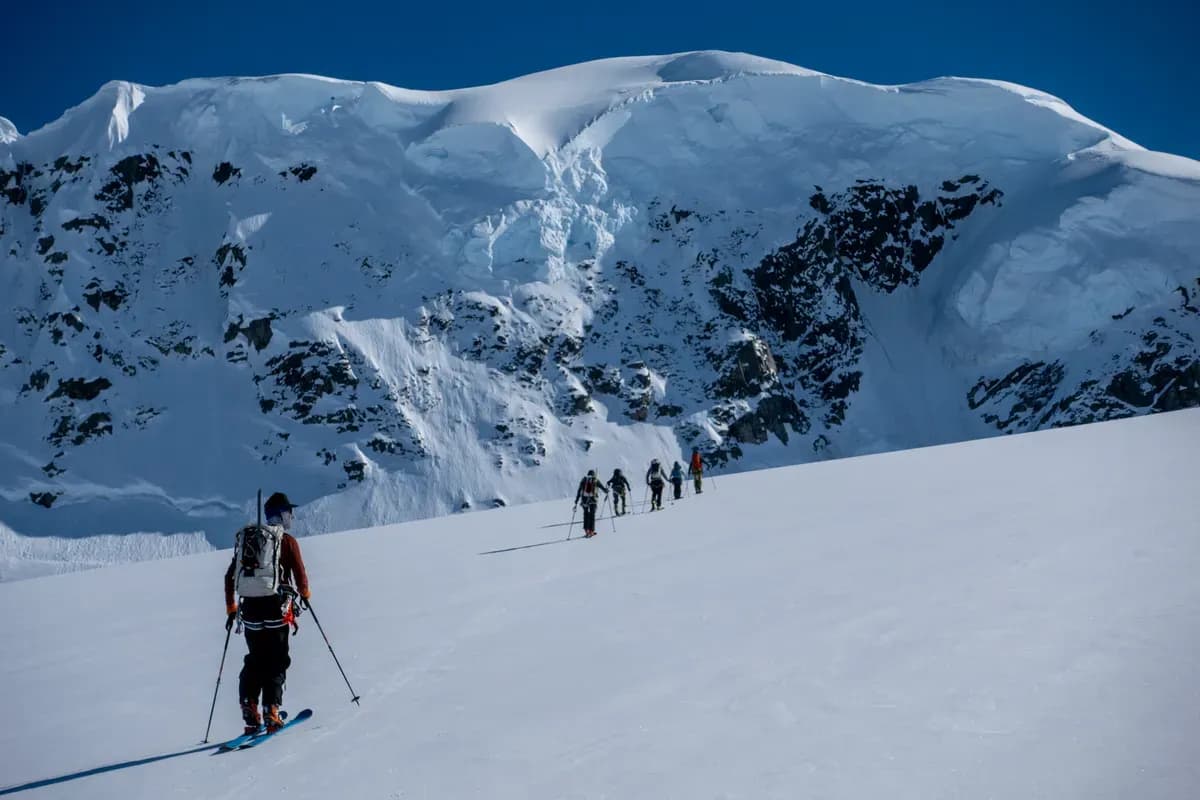
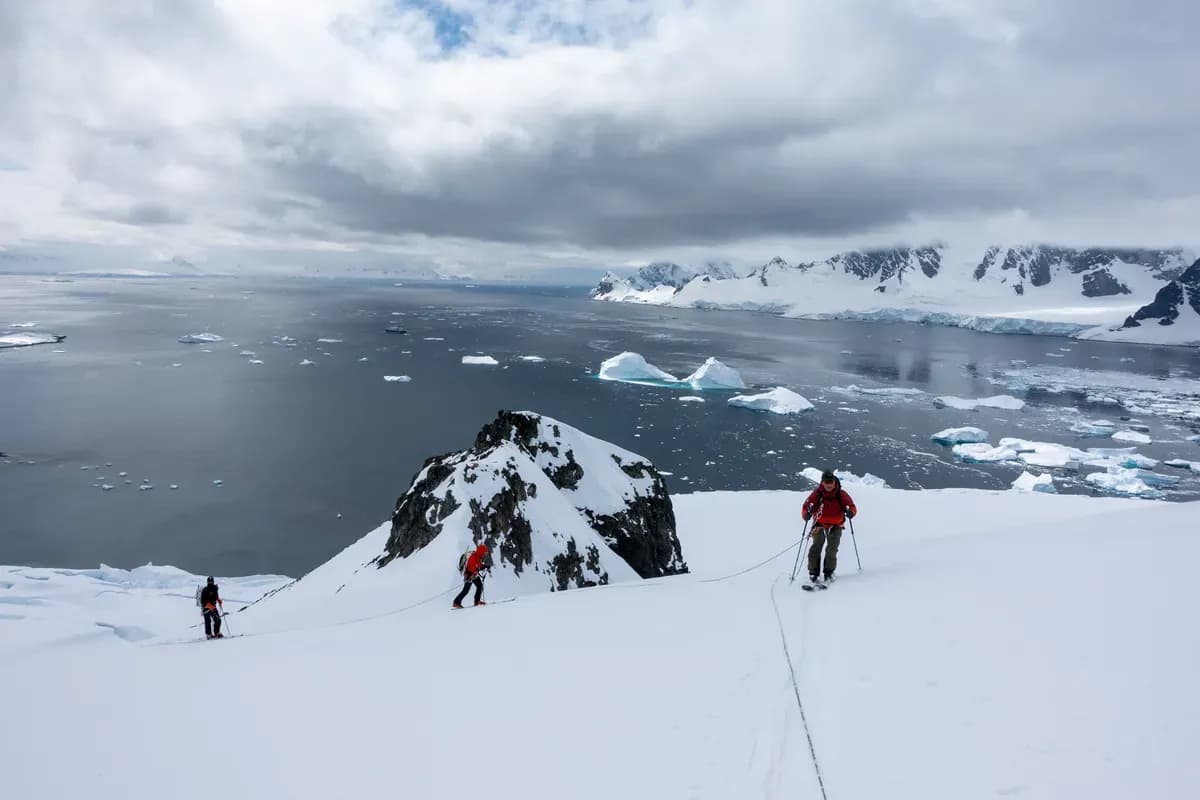
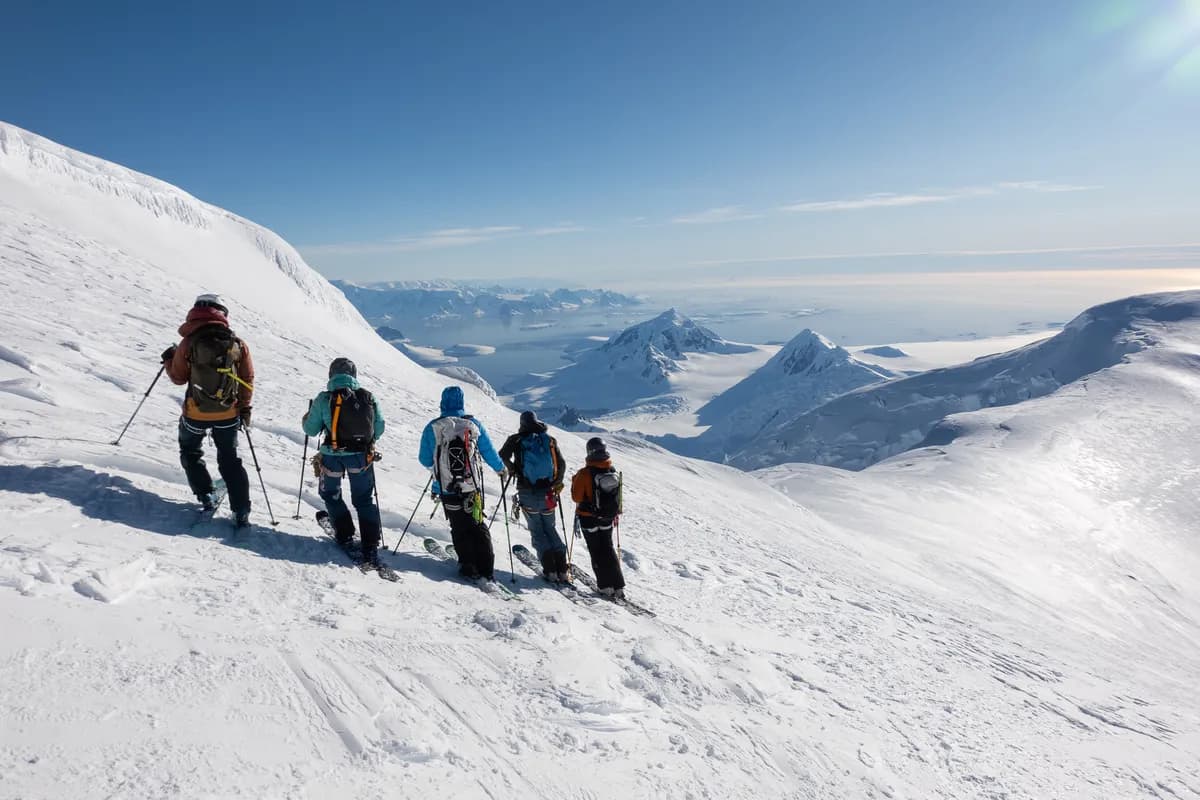
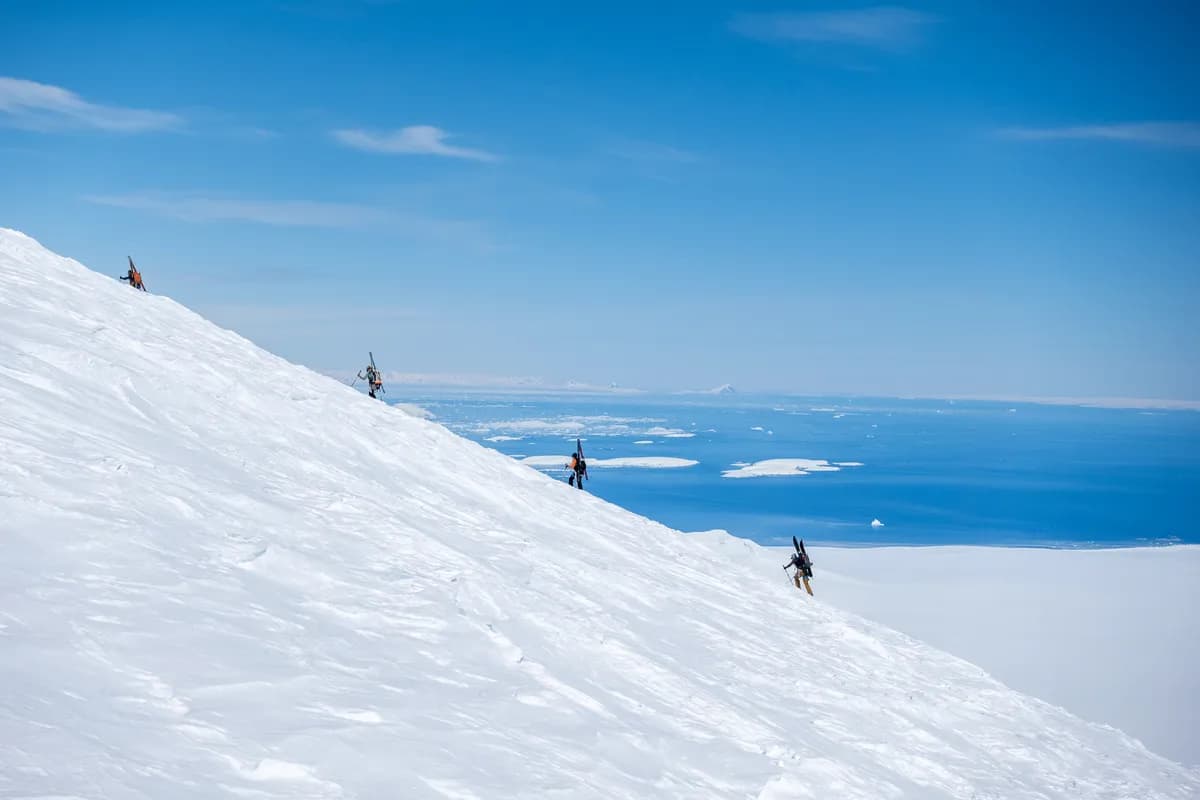
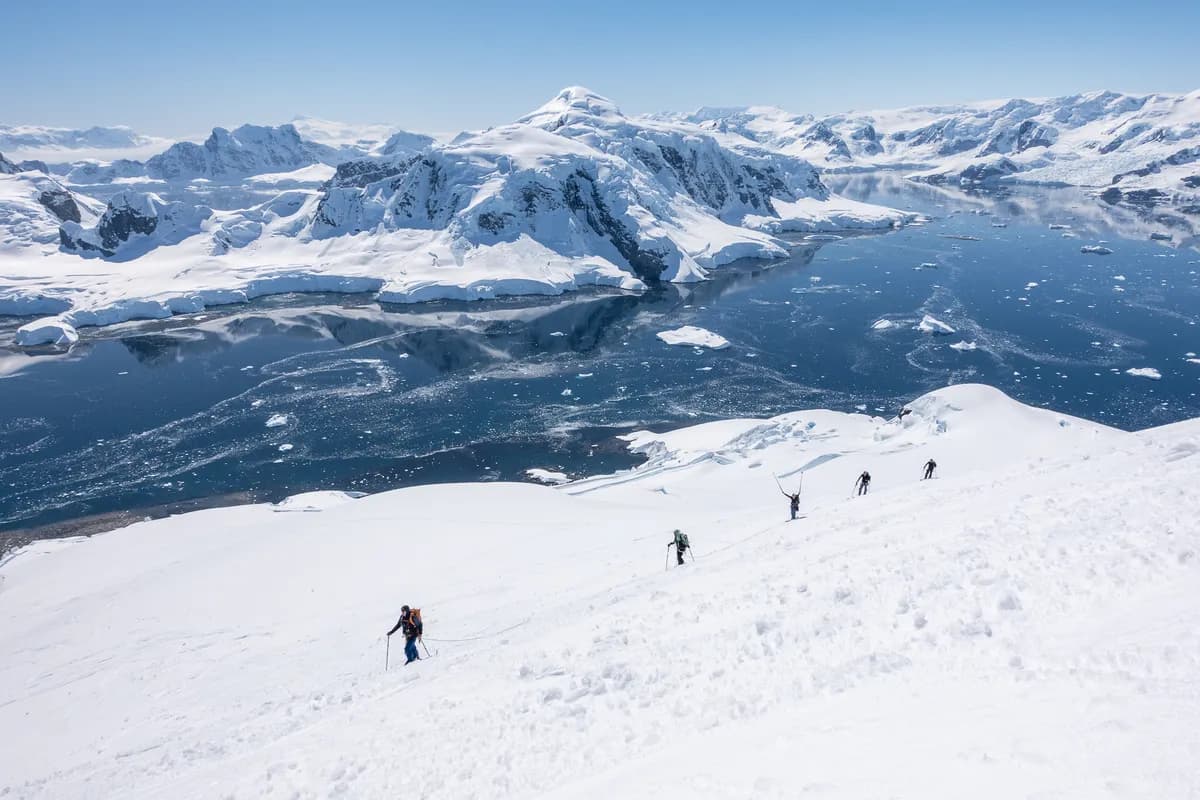
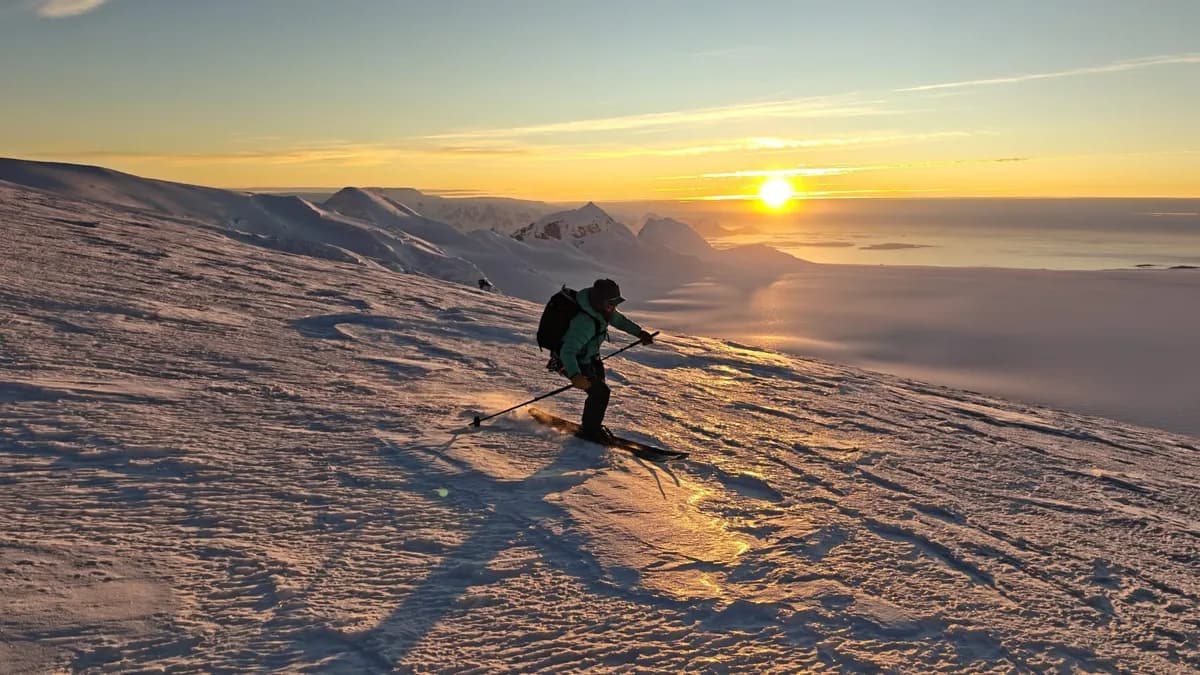
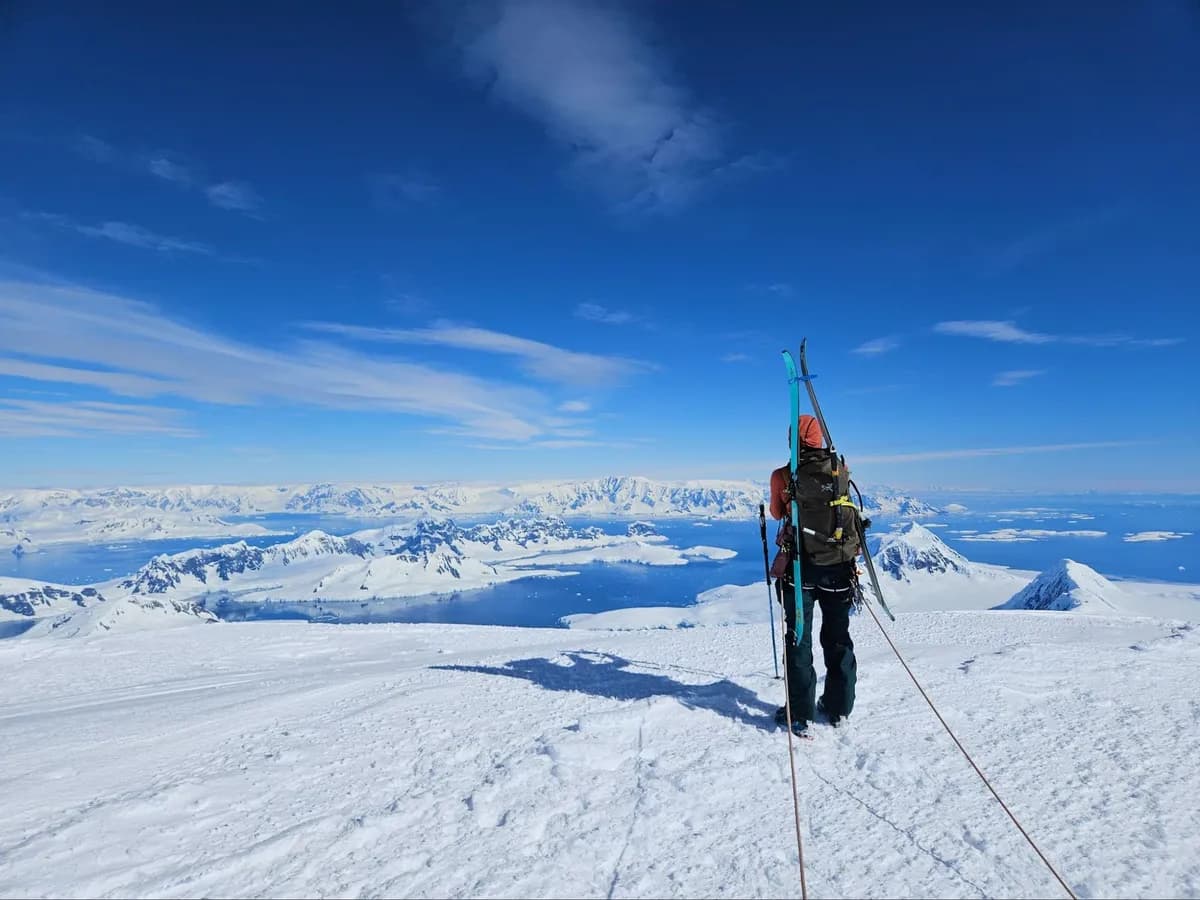
Most days involve several hours of climbing through glaciated terrain followed by long descents back toward the ocean.

Typical Ski Days

  • 700–1500 m vertical
  • 4–8 hours of travel
  • Small expedition team
  • Objectives chosen according to weather, snow, and ice conditions

This is not a cruise with skiing added on. The entire expedition is structured around ski mountaineering.

Why Ski Antarctica

Nowhere on Earth combines large mountains, maritime snow, and ocean access in the same way.

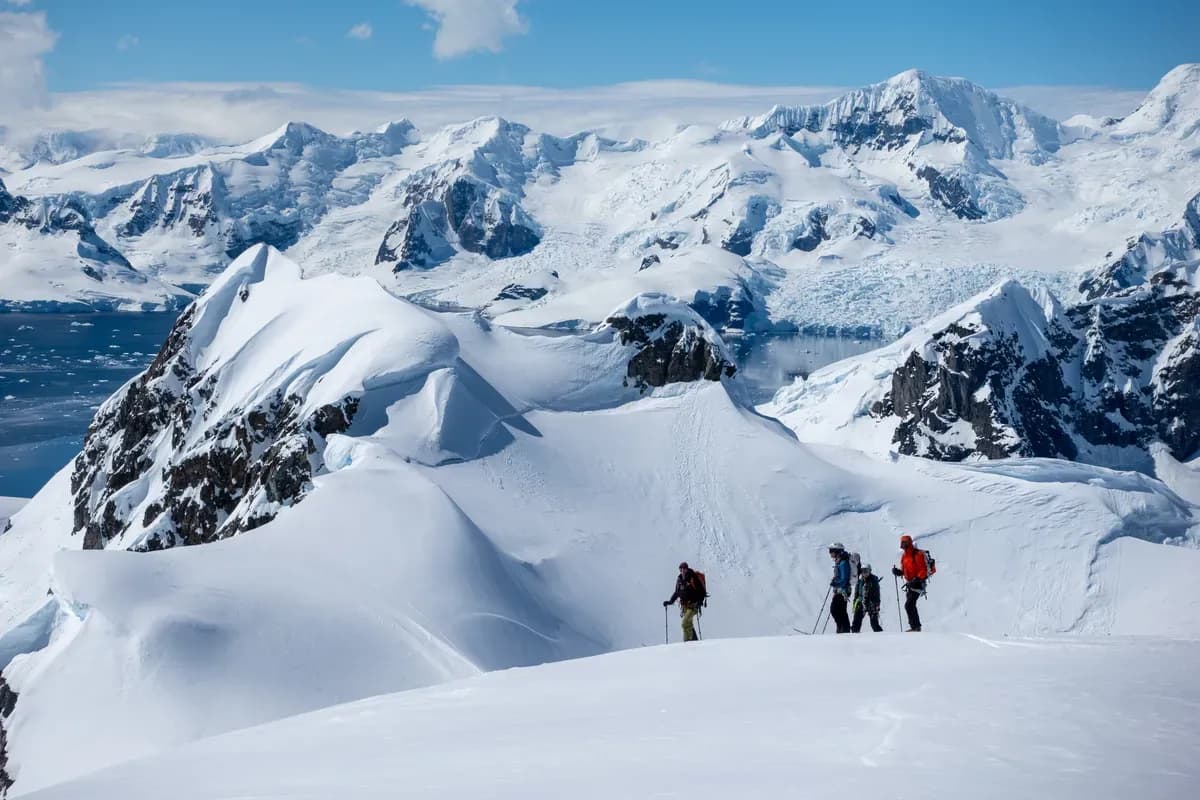
Along the Antarctic Peninsula peaks rise dramatically from the sea and glaciers descend directly to the shoreline. The result is terrain where it is possible to start a tour from the water and ski all the way back to the coast.

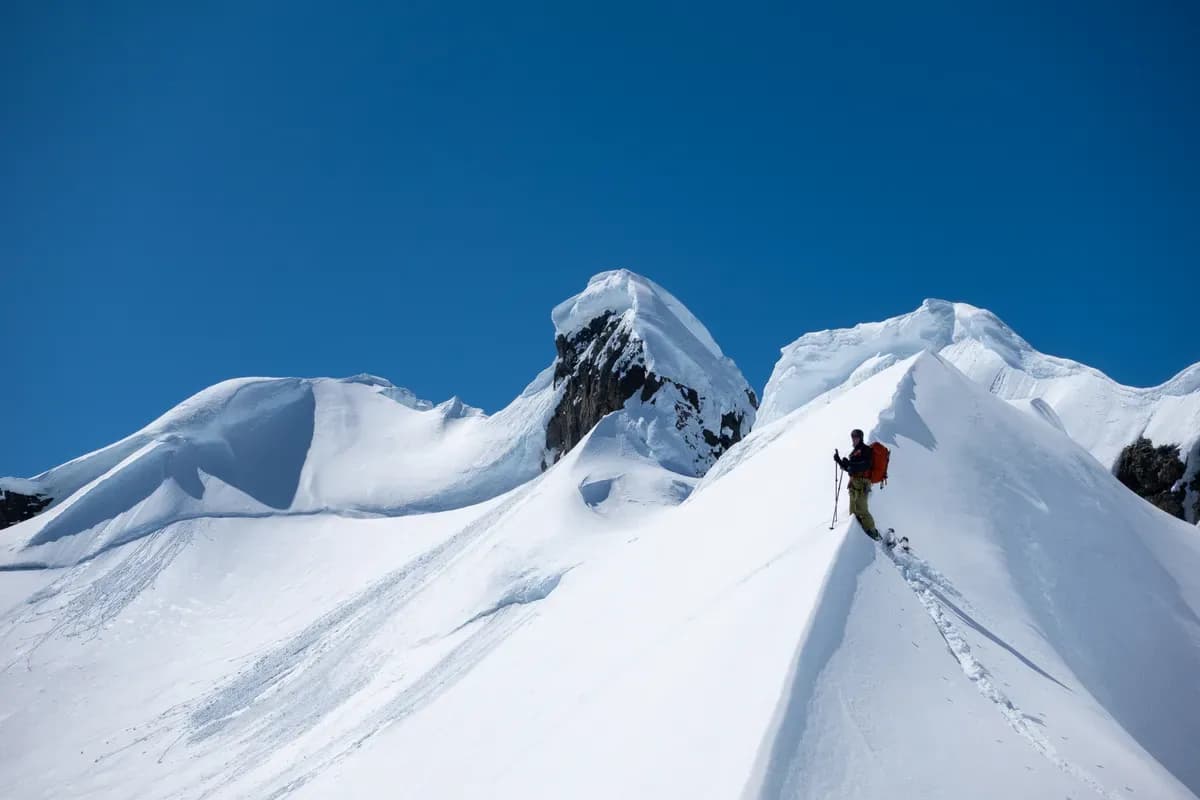
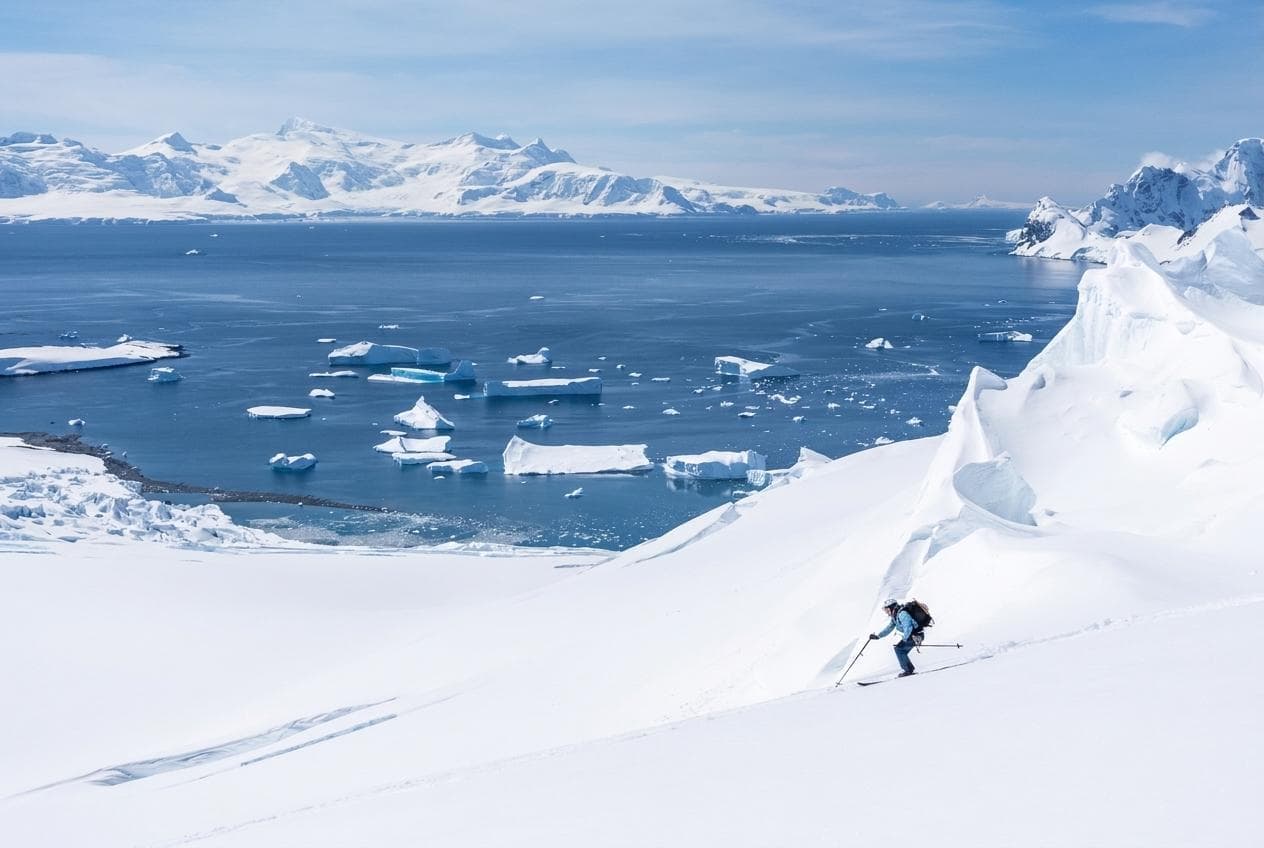
Conditions vary, but when the weather stabilizes the snowpack provides long continuous runs across broad glaciers, steep couloirs, and alpine faces.

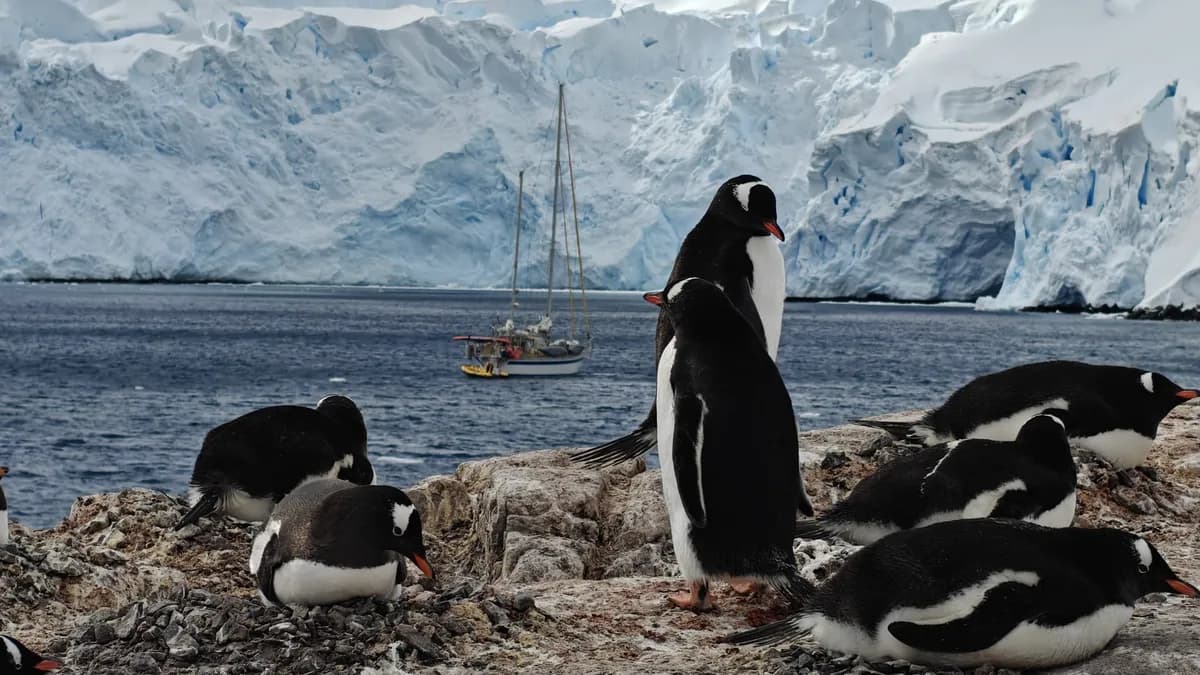
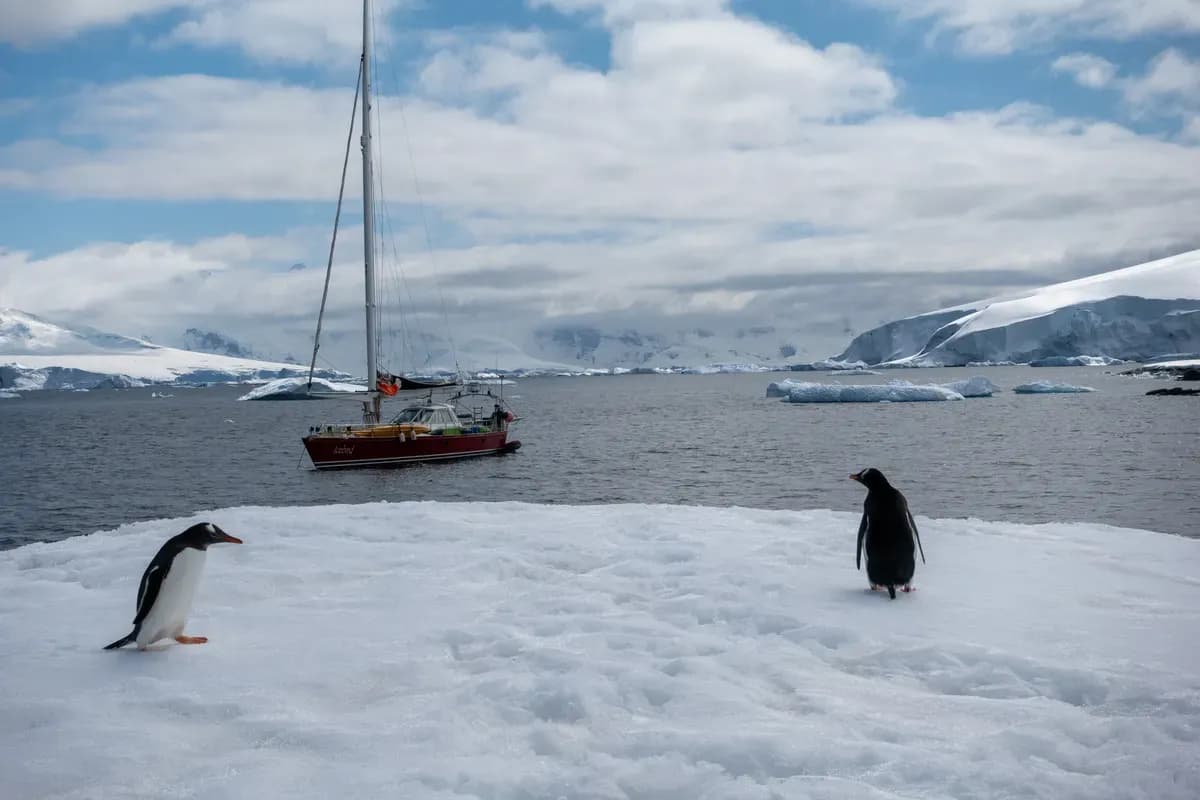
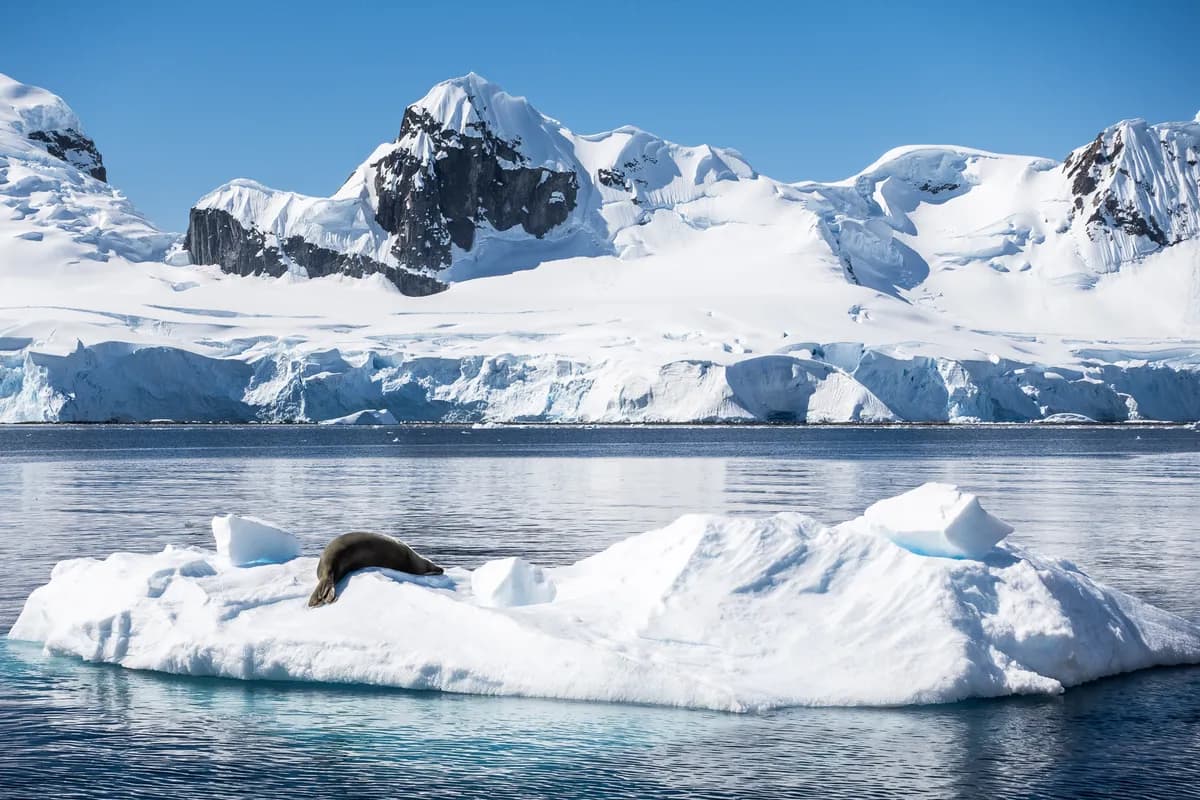
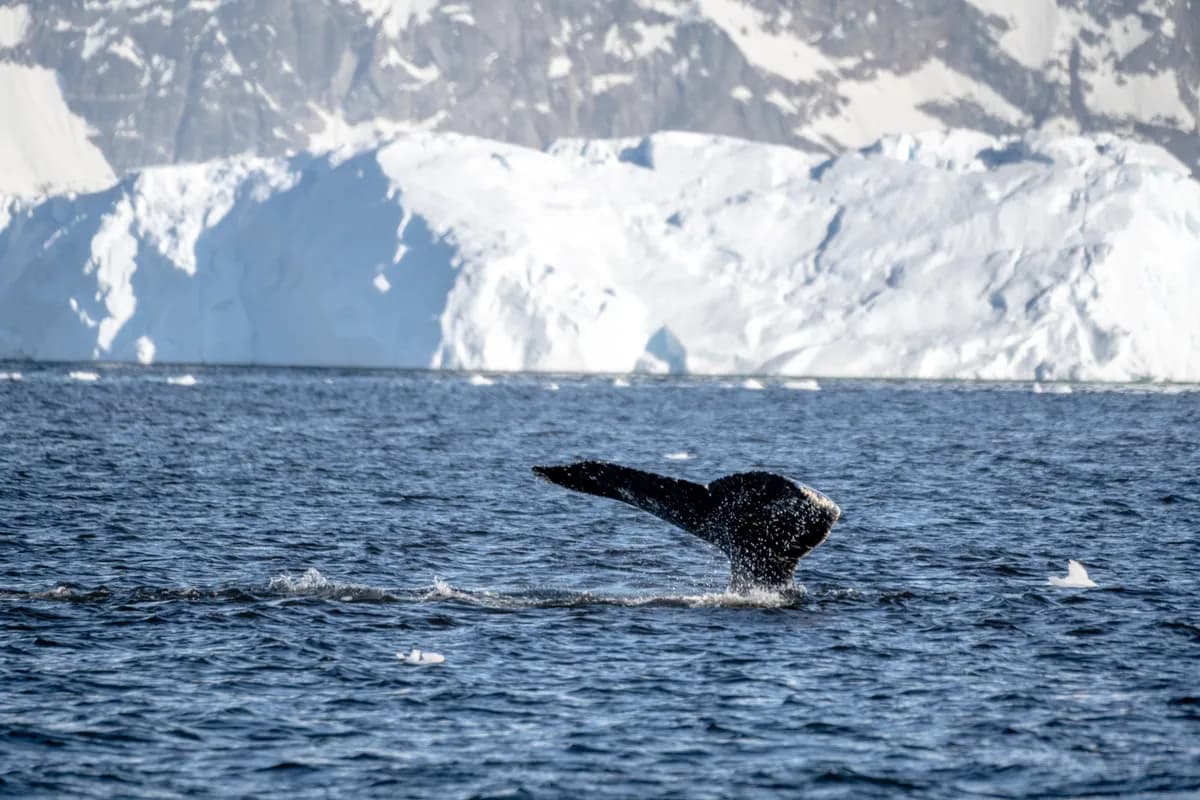
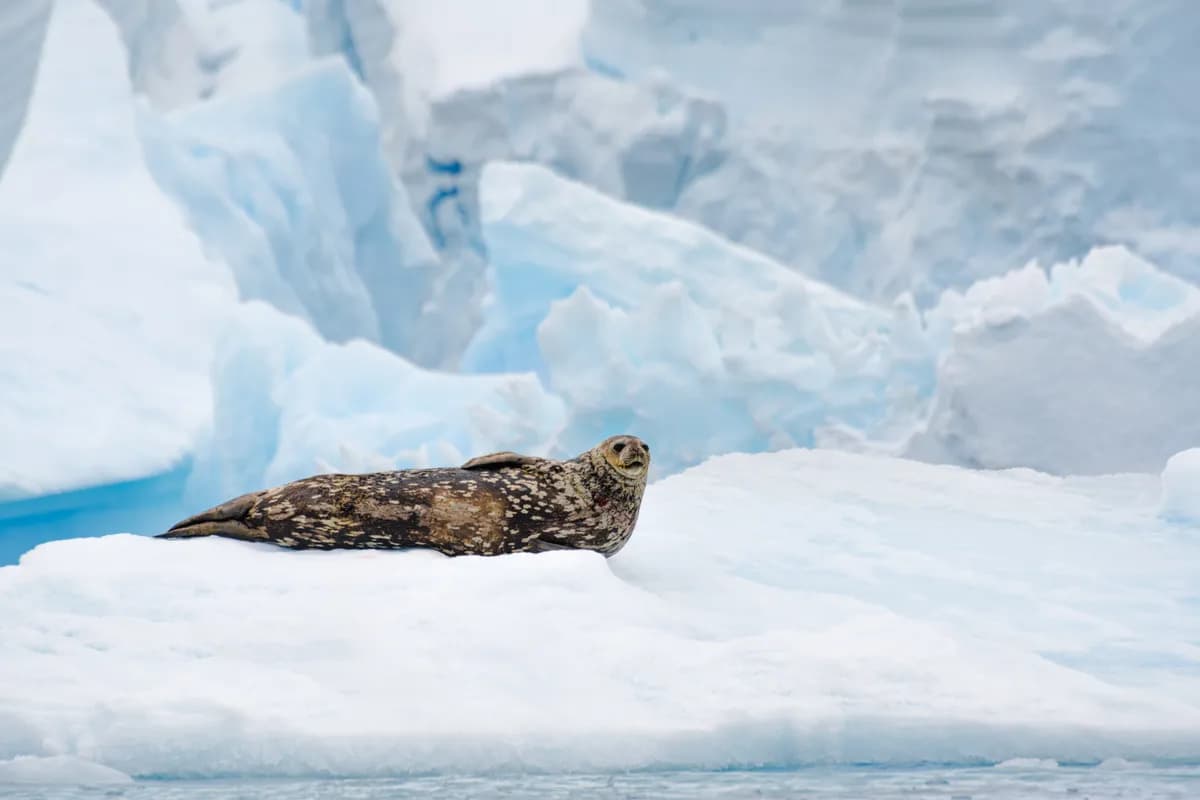
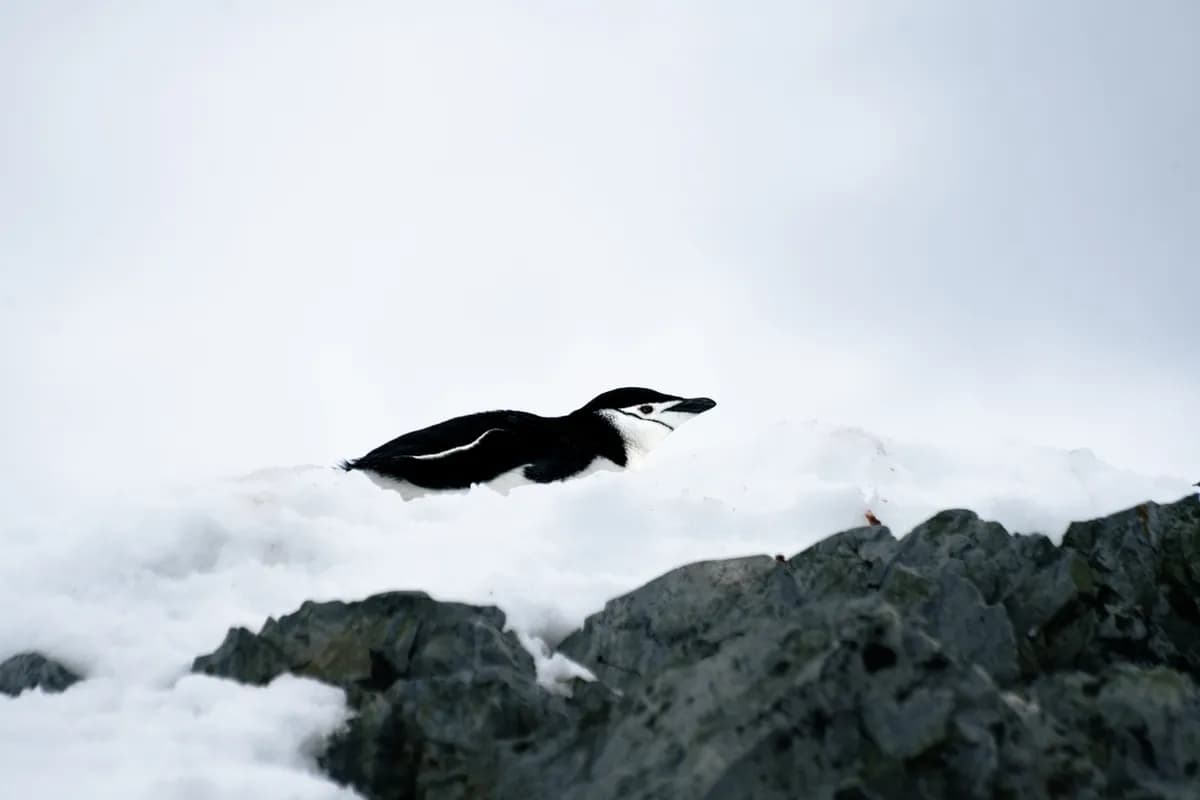
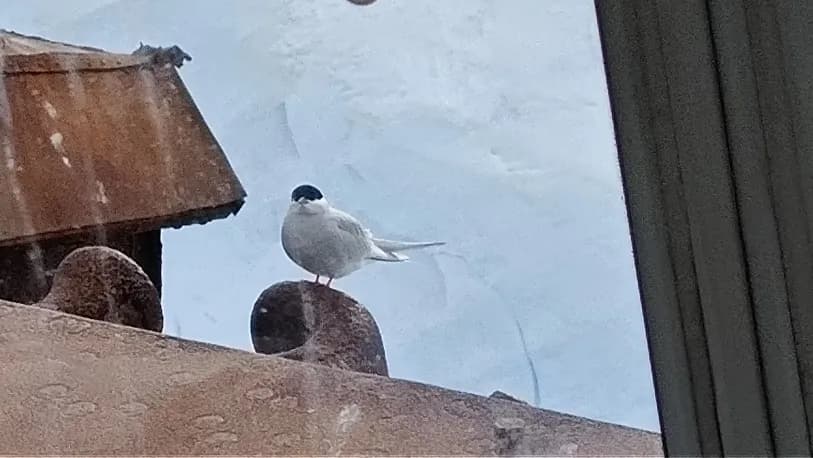
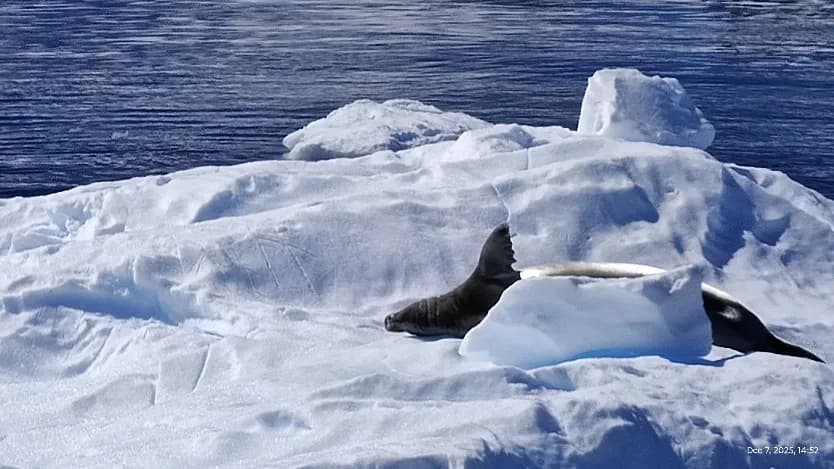
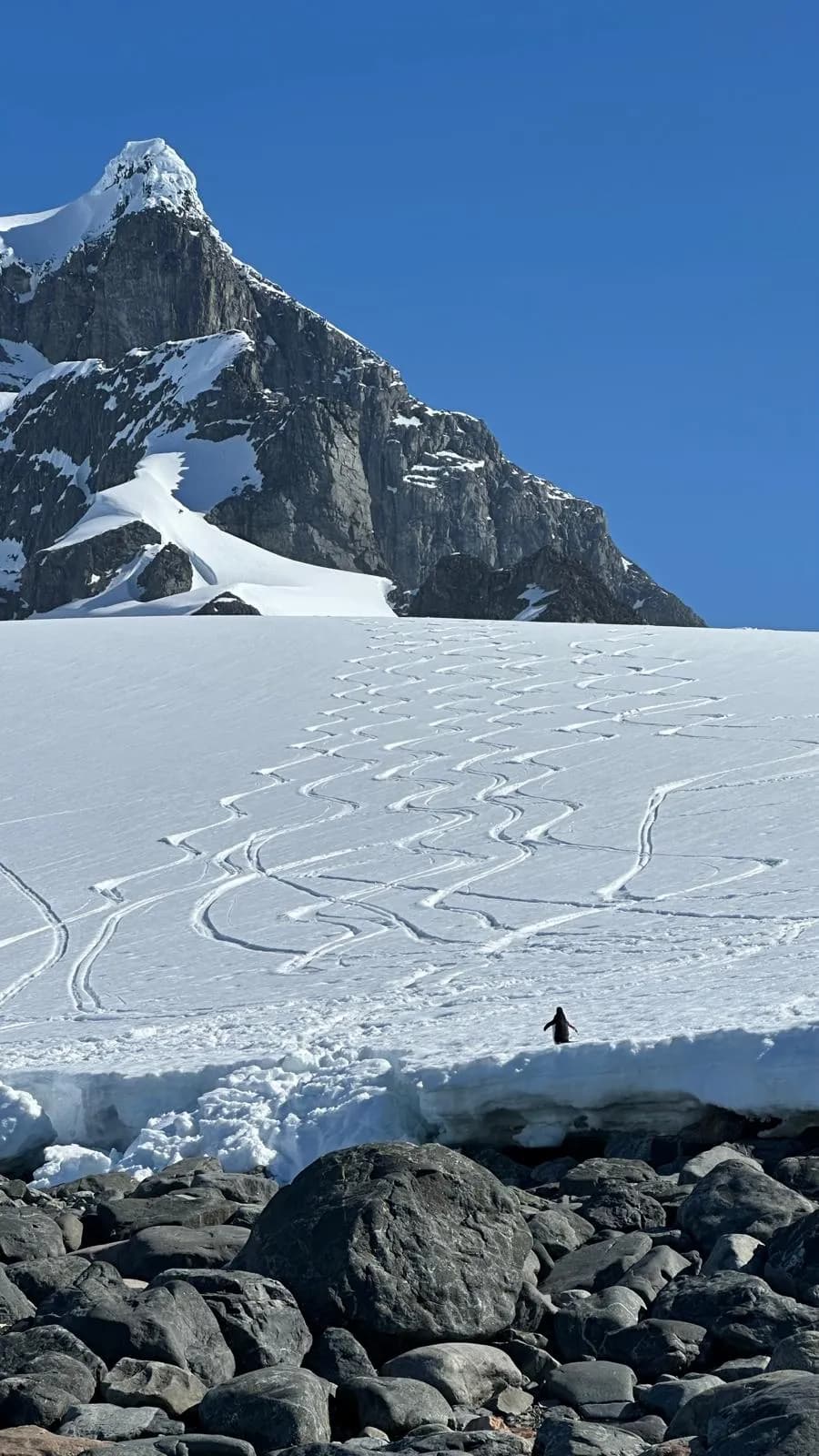
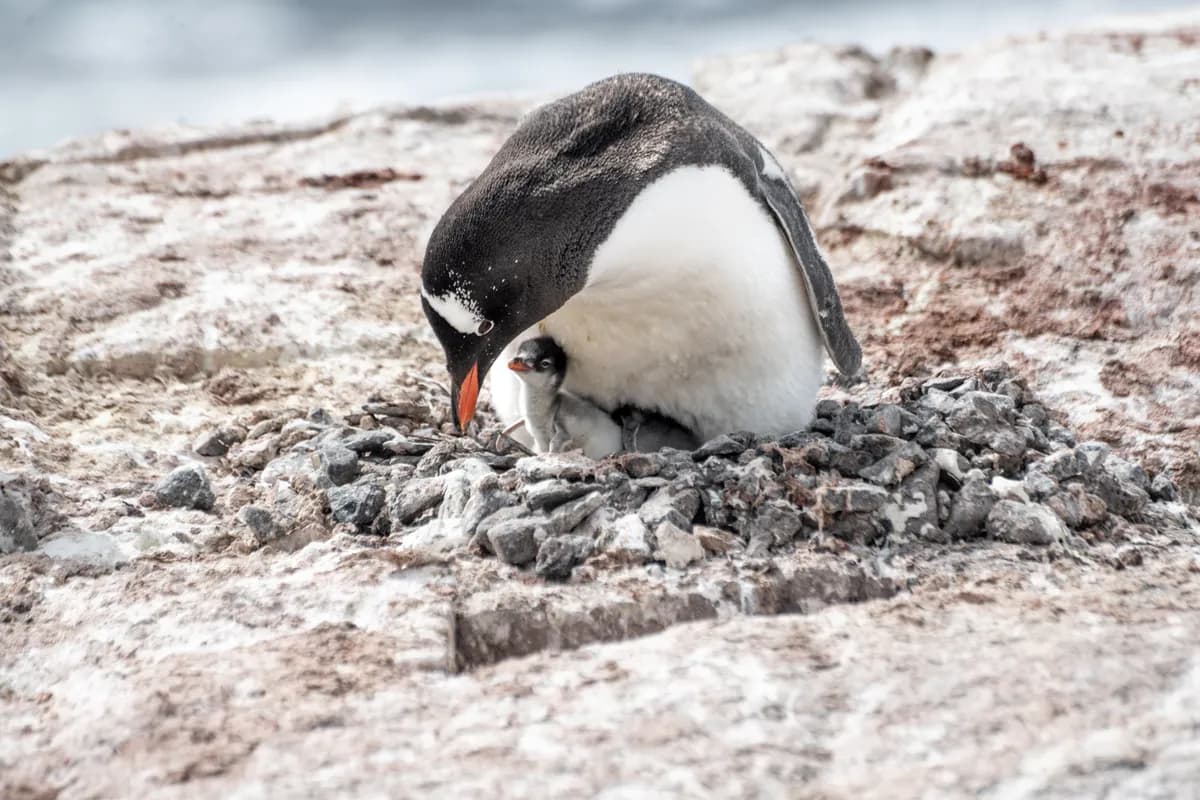
Wildlife encounters are common. Whales and orca pods move through the channels, penguin colonies line the shores, and seals rest on the ice nearby.

It is expedition skiing in its purest form.

The Expedition Vessel

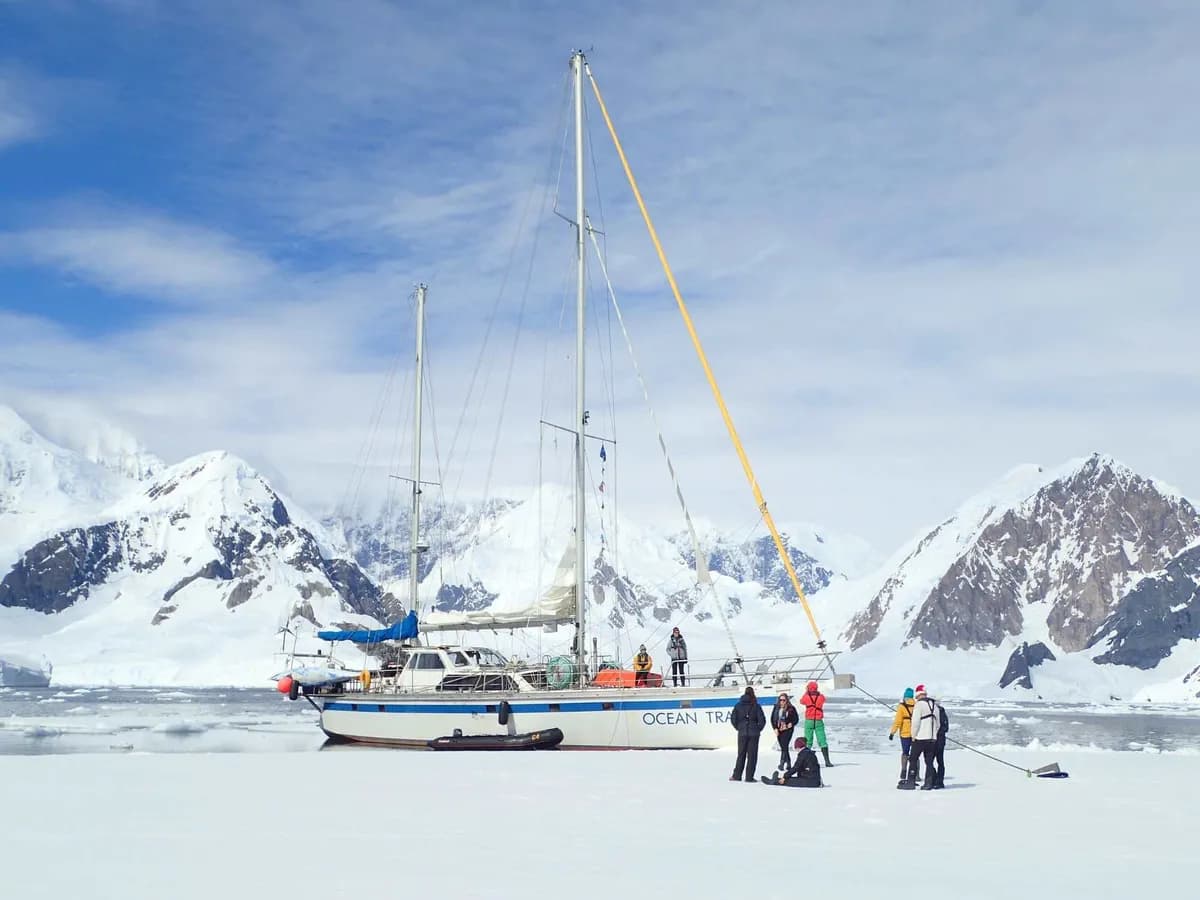
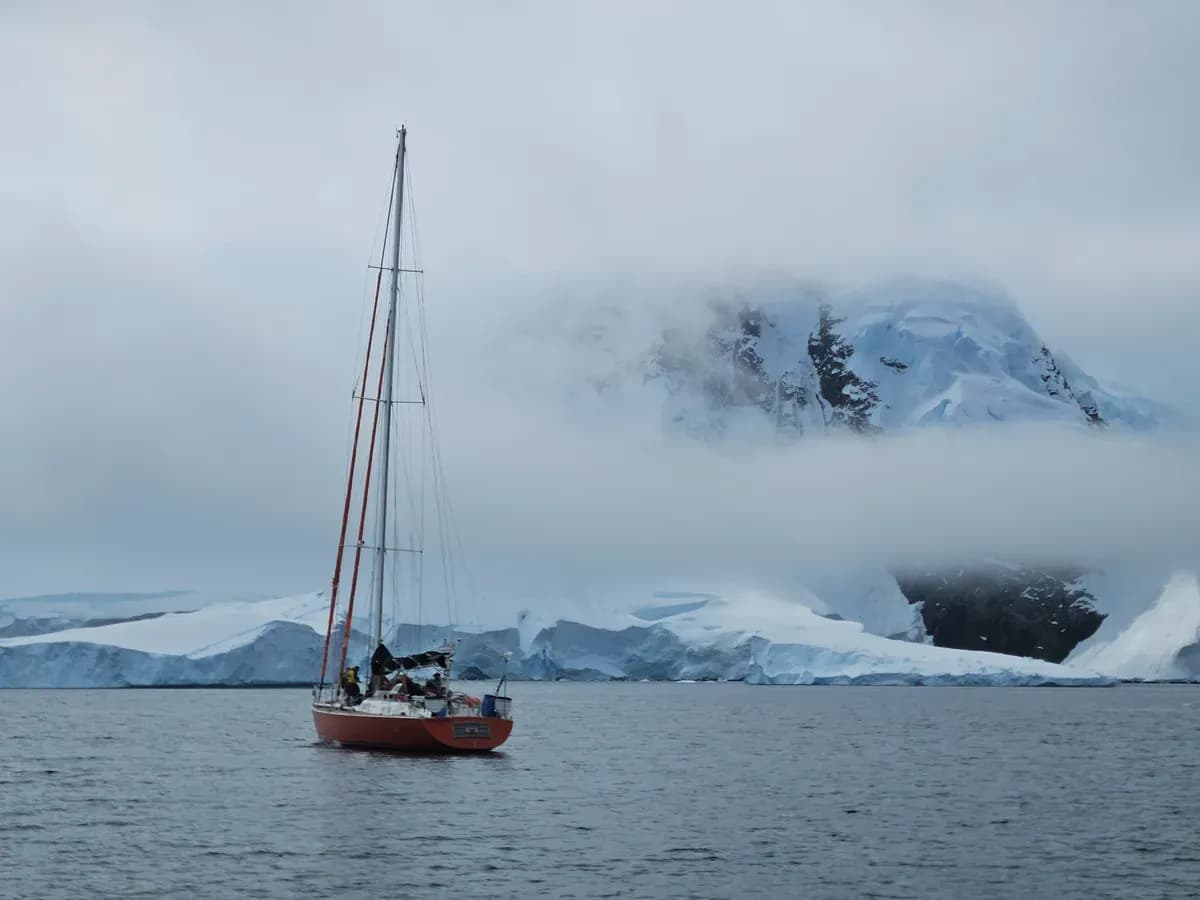
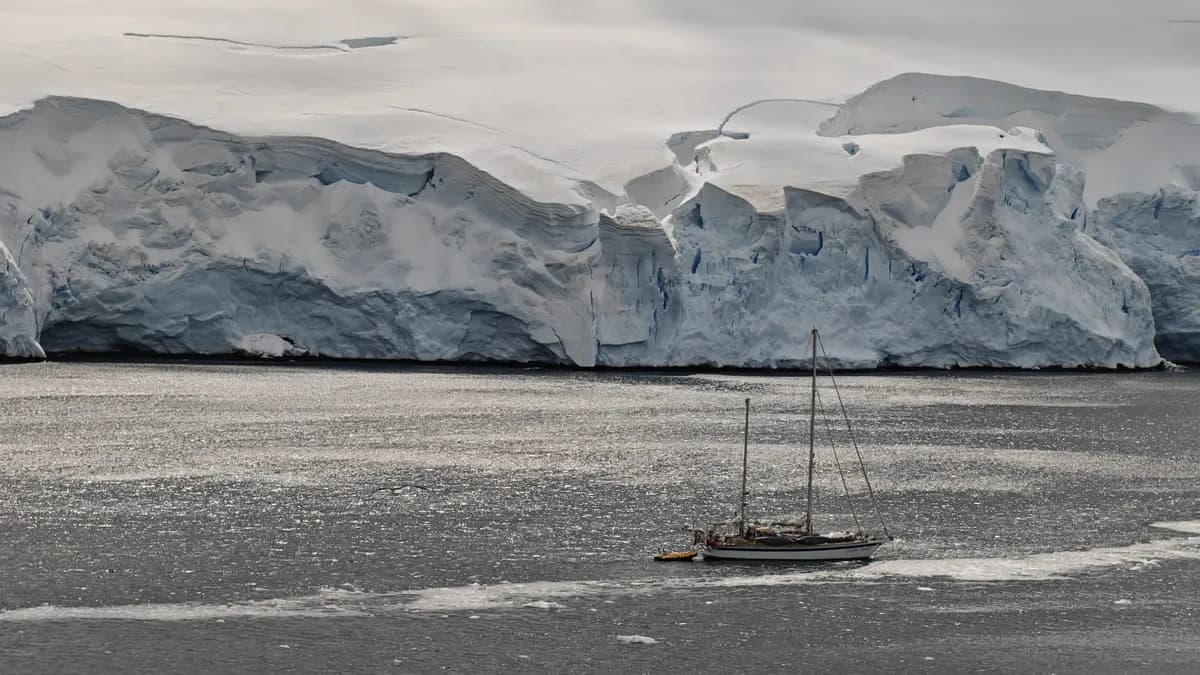
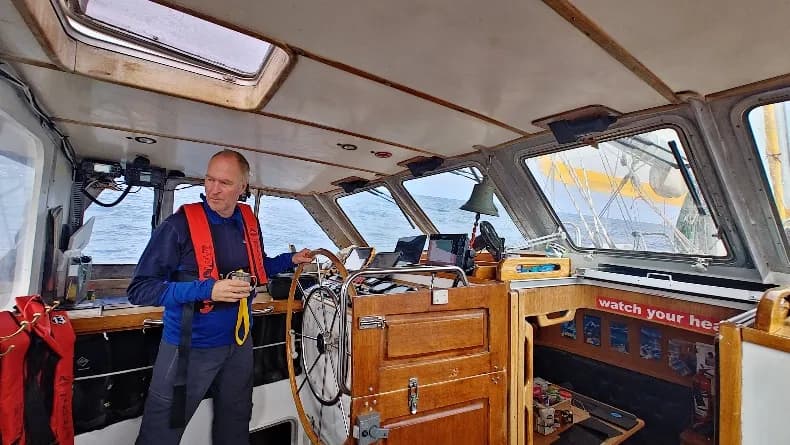
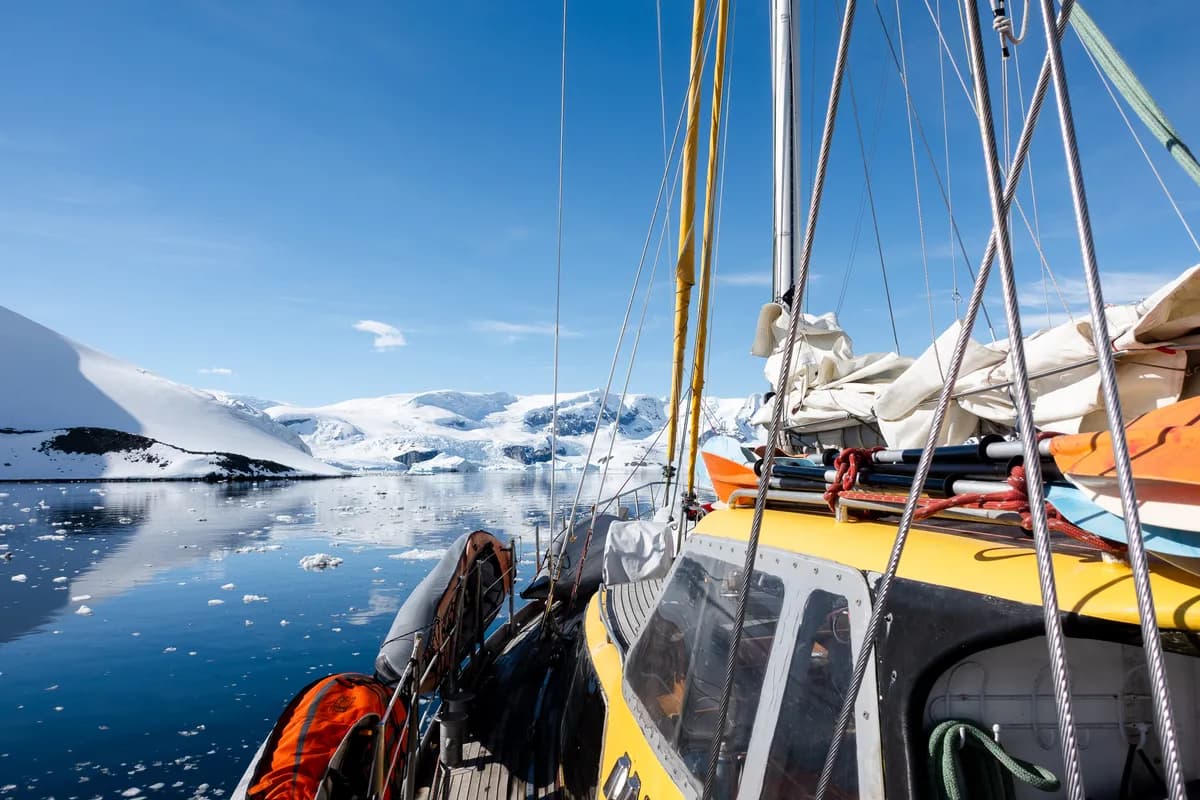
The expedition takes place aboard the Ocean Tramp, an aluminium expedition yacht purpose-built for remote Antarctic operations.

Life aboard the yacht is simple and comfortable:

  • Ocean Tramp has four double guest cabins
  • Spacious saloon and dining area
  • Large deck space for wildlife viewing and photography
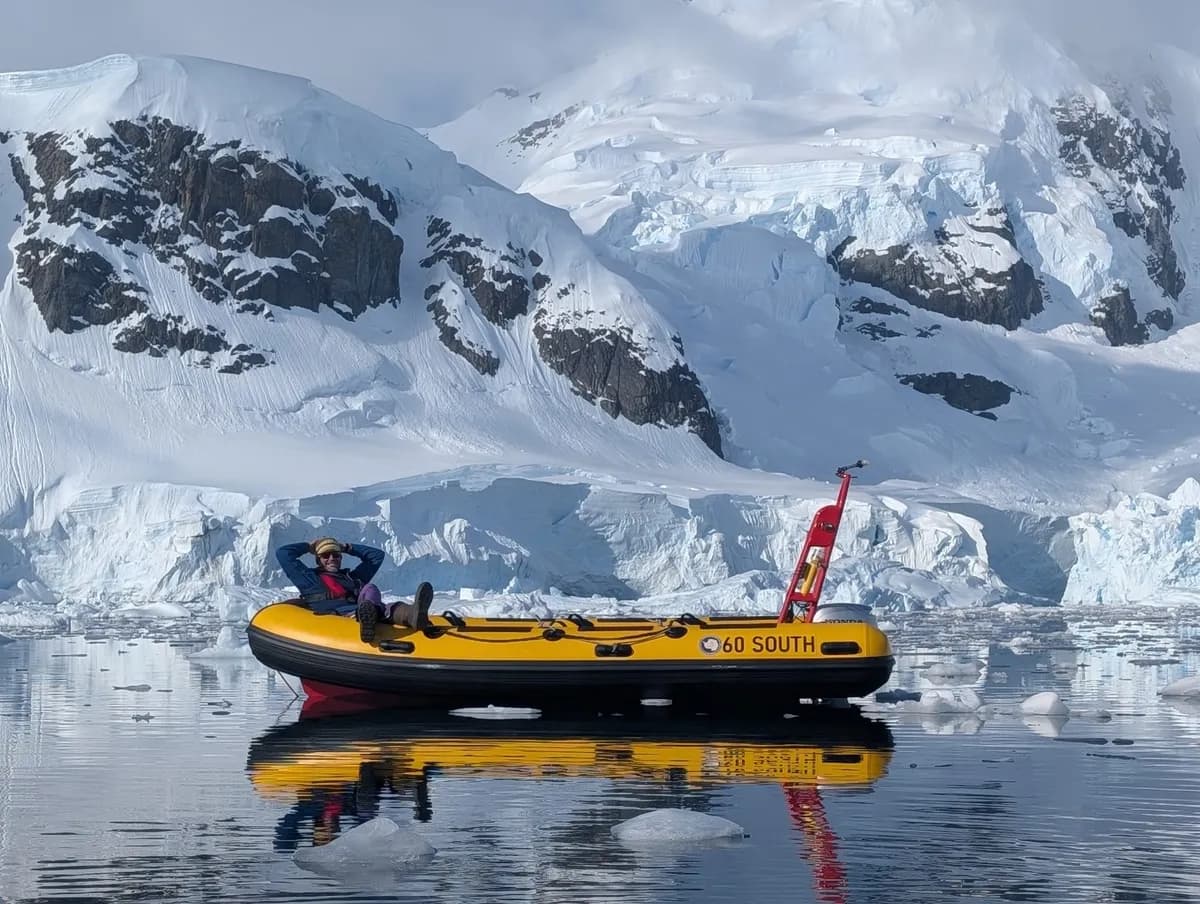
  • Zodiac for shore access

Ocean Tramp comfortably carries a small team, allowing access to areas that larger ships cannot reach in authentic expeditionary style.

Ski Objectives

The mountains of the Antarctic Peninsula offer a huge variety of terrain.

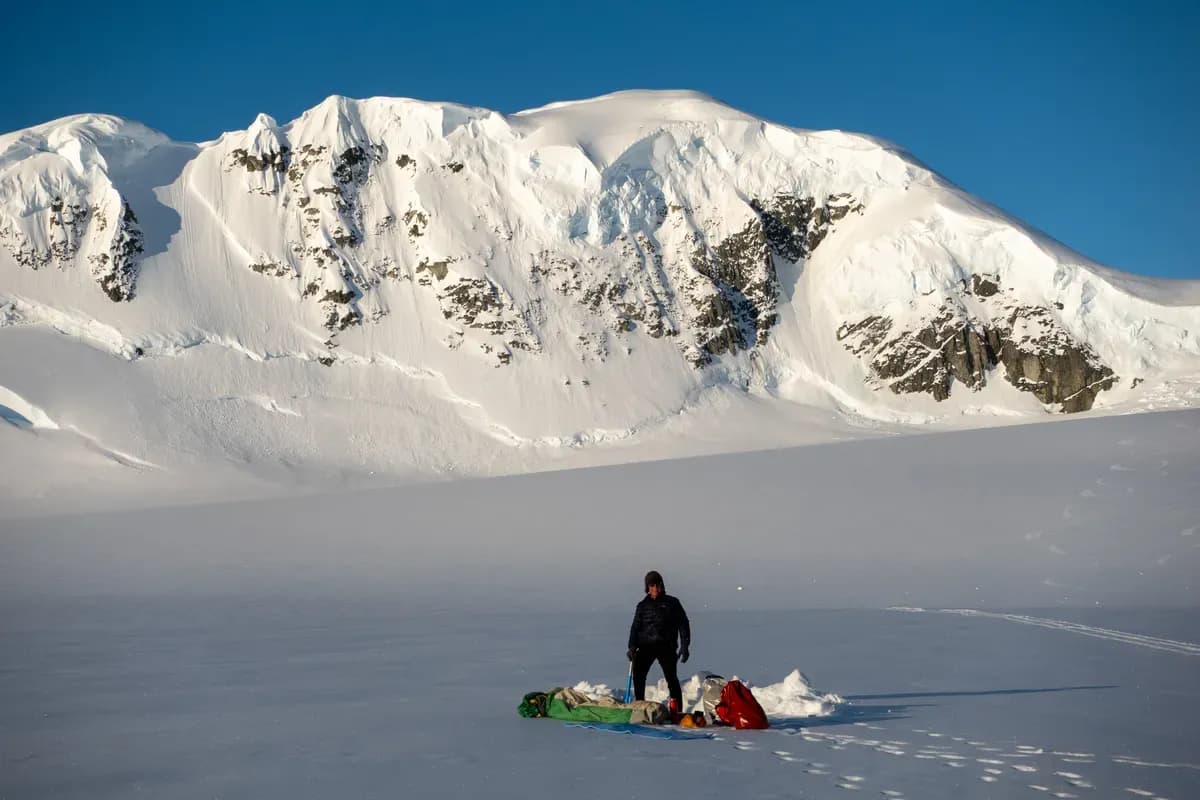
Broad glaciated peaks, technical couloirs, and long ski lines dropping toward the ocean are all possible during the expedition. On strong teams we sometimes commit to larger multi-day objectives in expedition style, establishing camps to access higher summits.

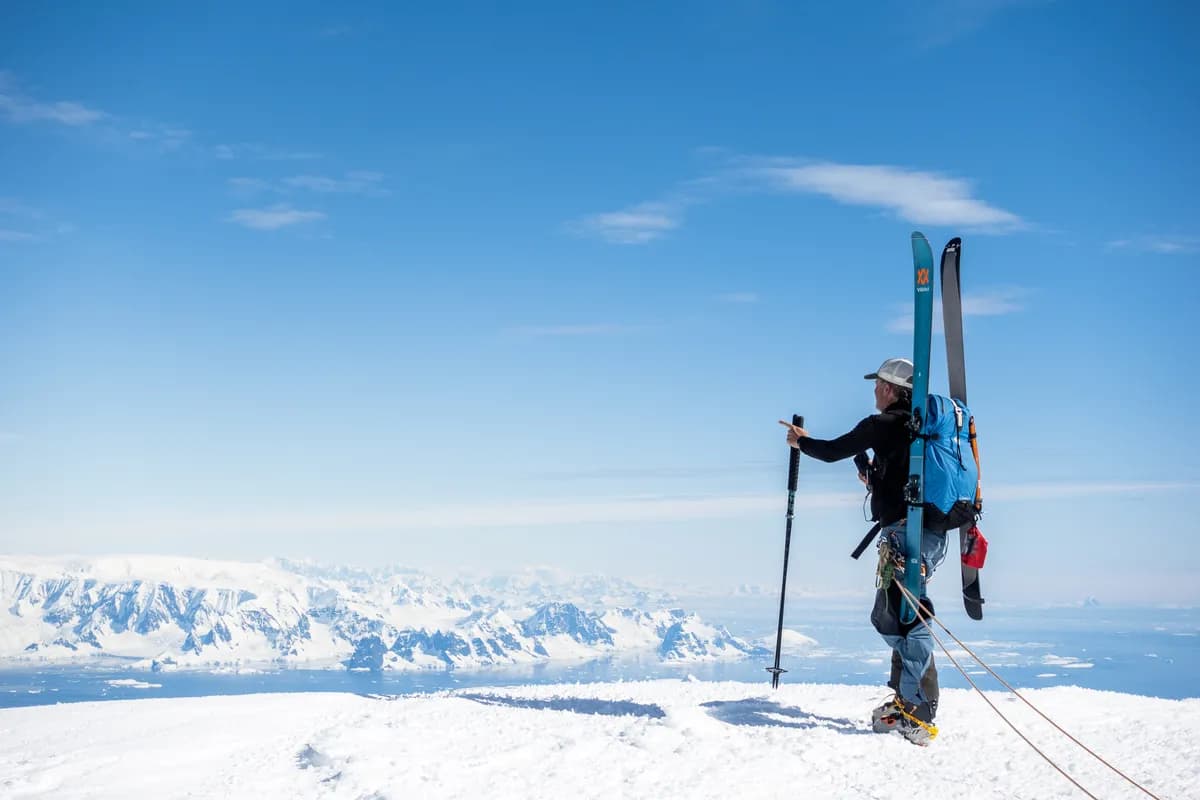
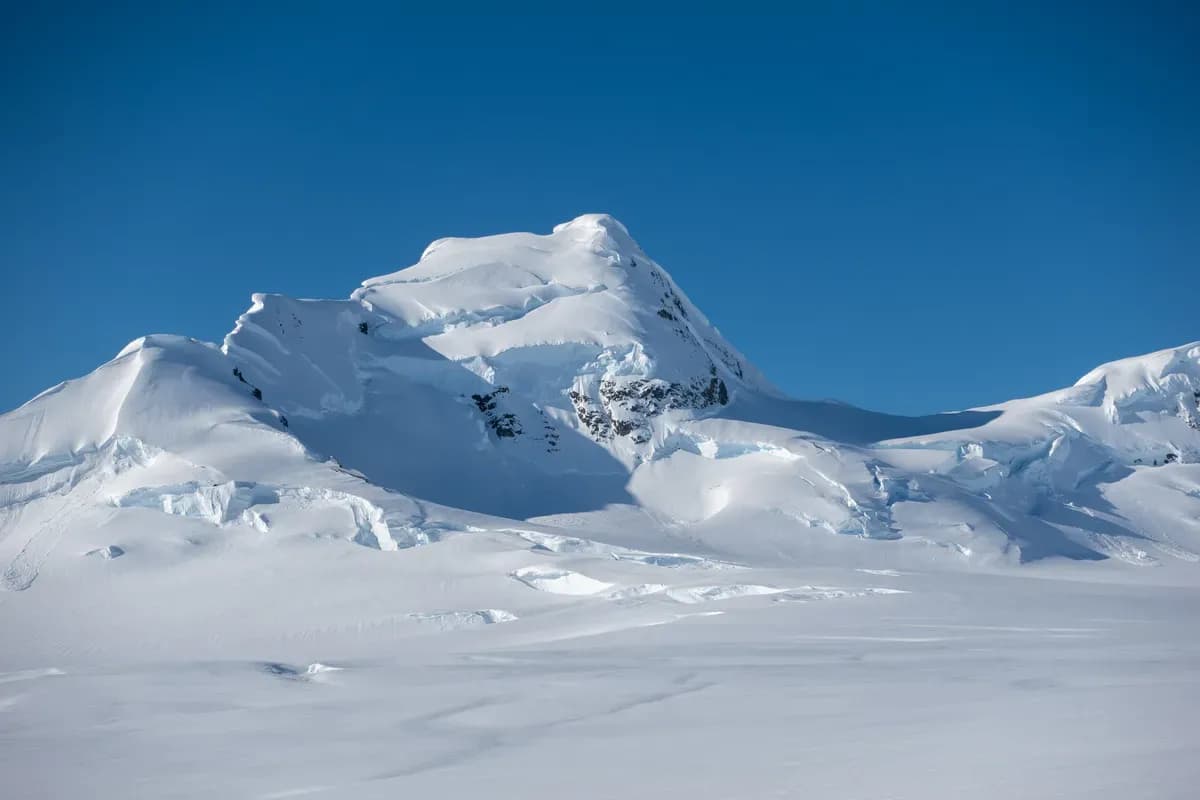
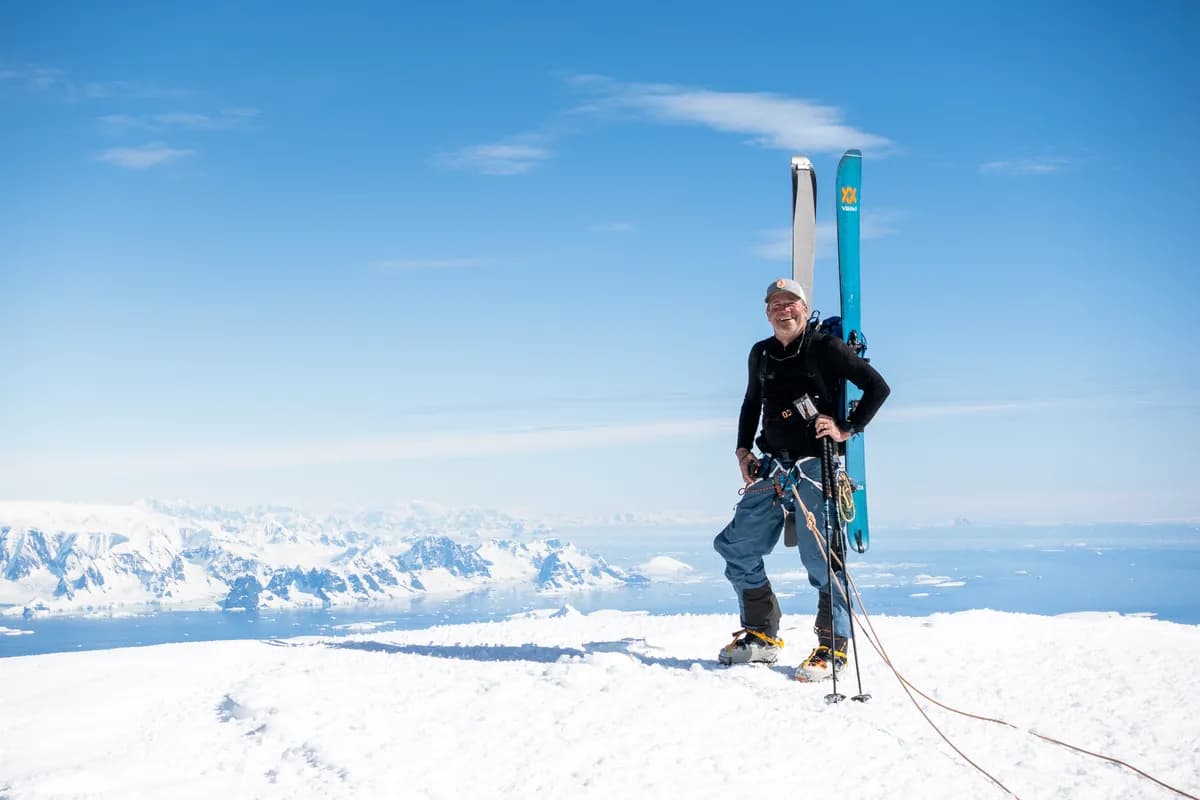
Several major peaks in the Palmer Archipelago rise more than 2500 m directly above the Southern Sea, creating some of the most dramatic ski touring landscapes in the world. Our 2025 expedition climbed Mount Français, 2822 m.

On most expeditions we get two or three days of weather that make skiing difficult or impossible. That is one reason we run a longer trip. Antarctica is a long way to travel, and shorter itineraries can easily spend a large portion of their ski days waiting for a window.

Once we are on the Peninsula we ski whenever the weather allows. When storms move through we reposition to another objective or switch gears: sea kayaking, historic sites, whales, photography. There is always something going on.

A Typical Day

A ski day in Antarctica often begins with the team gathering as the crew positions the boat near the day’s objective.

After breakfast we board the zodiacs and travel to shore.

From there the day unfolds in classic expedition style:

  • Land on a beach or sea ice
  • Climb through glaciated terrain for several hours
  • Reach a summit or high point
  • Ski long descents back toward the ocean
  • Return to the vessel for the evening

Long daylight hours during the Antarctic summer allow flexible days and often spectacular evening descents.

Sea Kayaking and Exploration

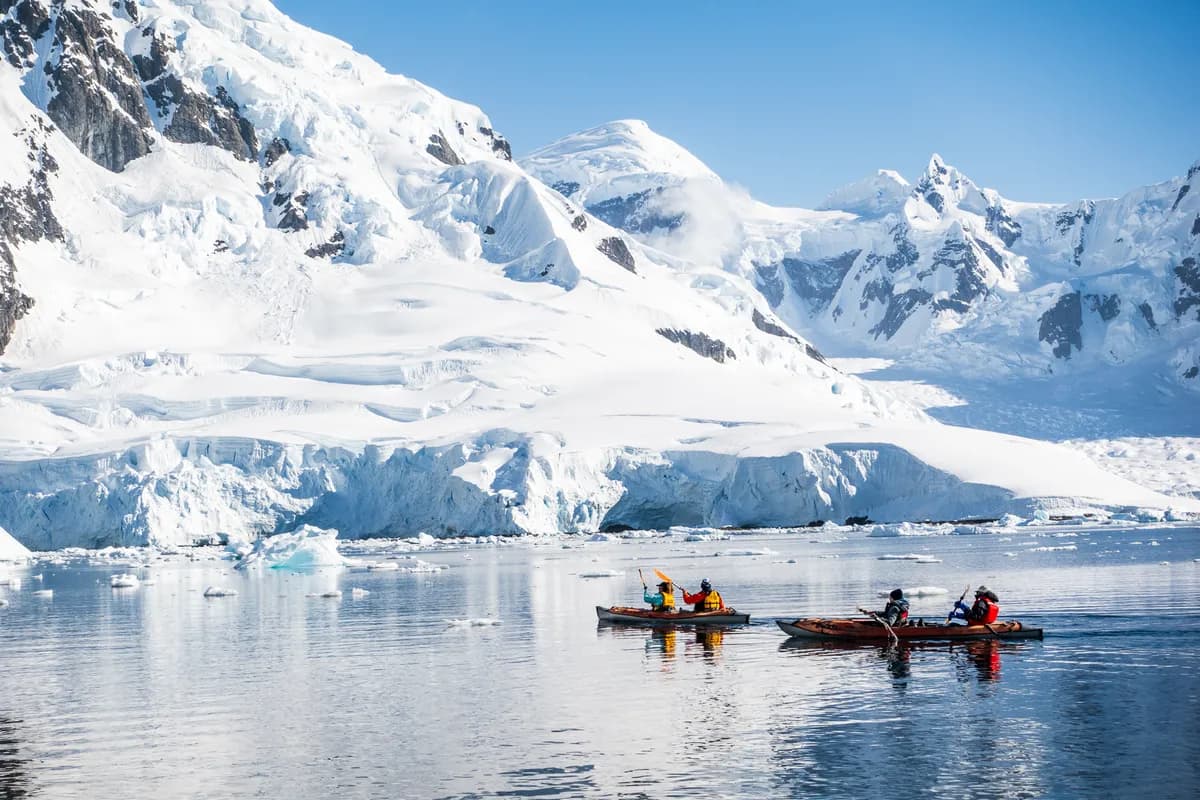
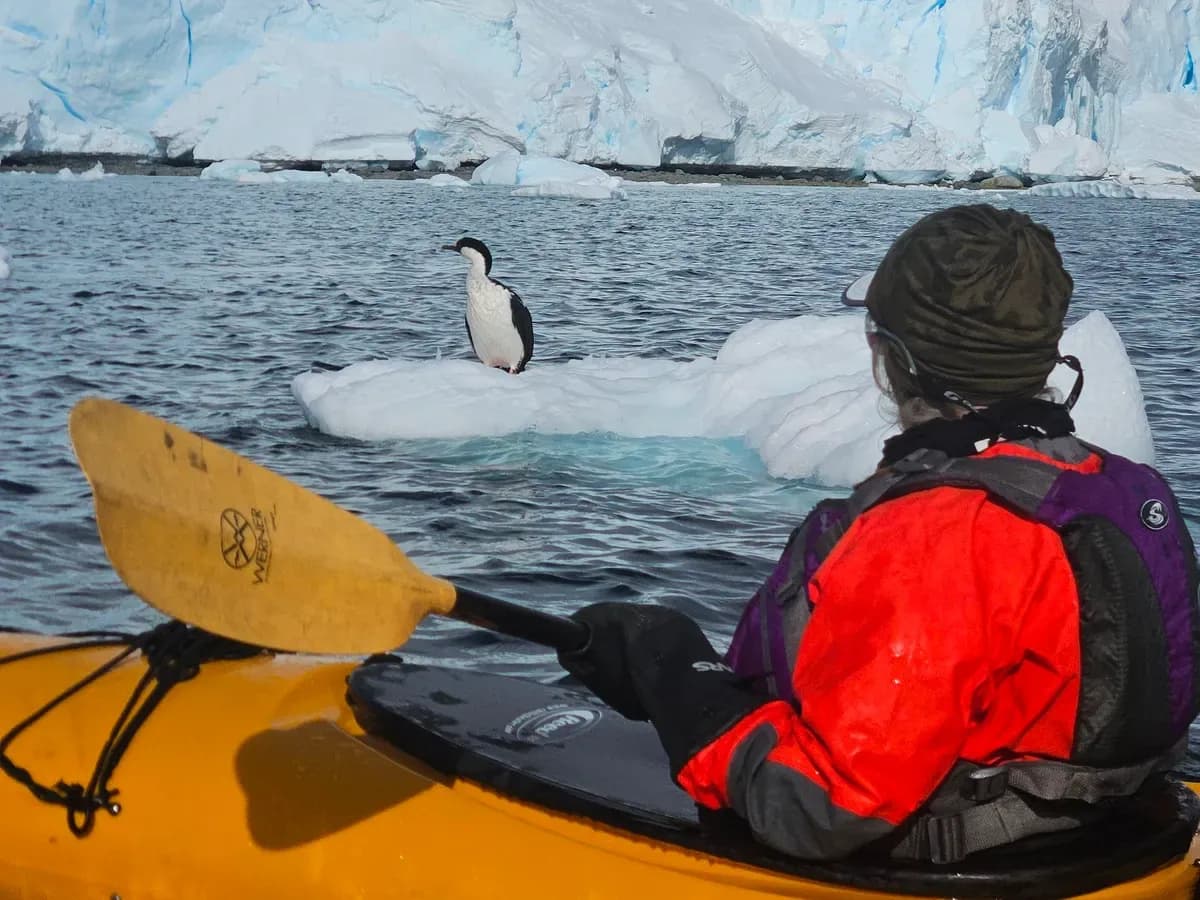
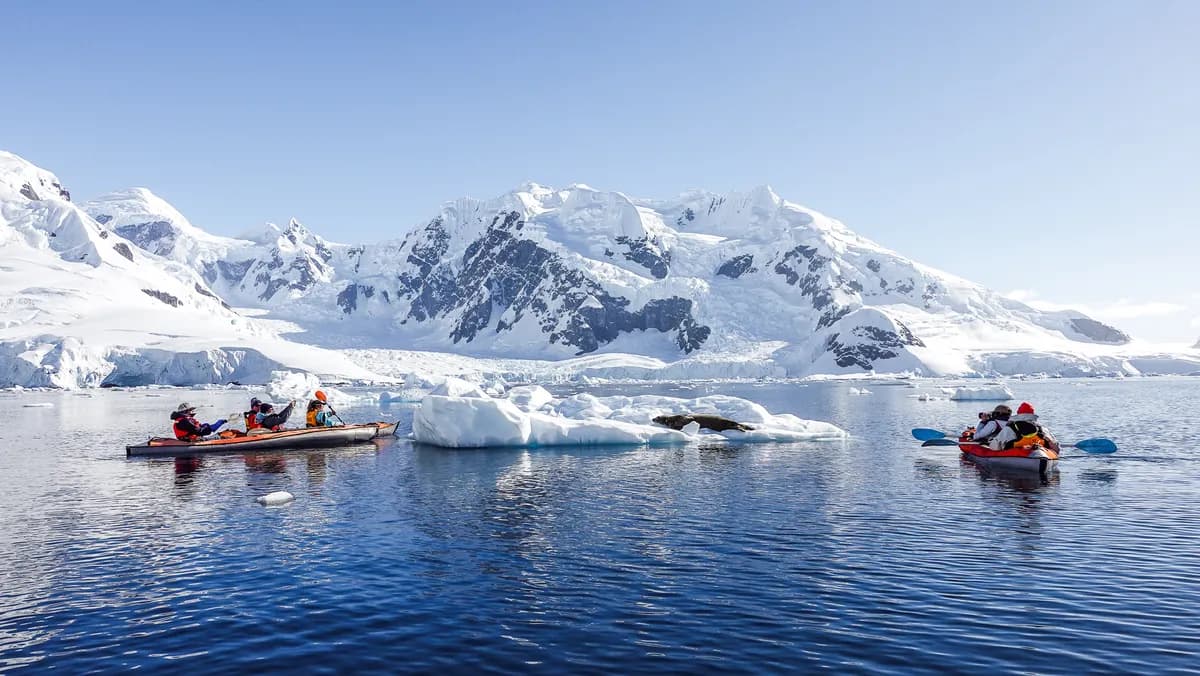
When conditions allow we also explore the coastline by sea kayak.

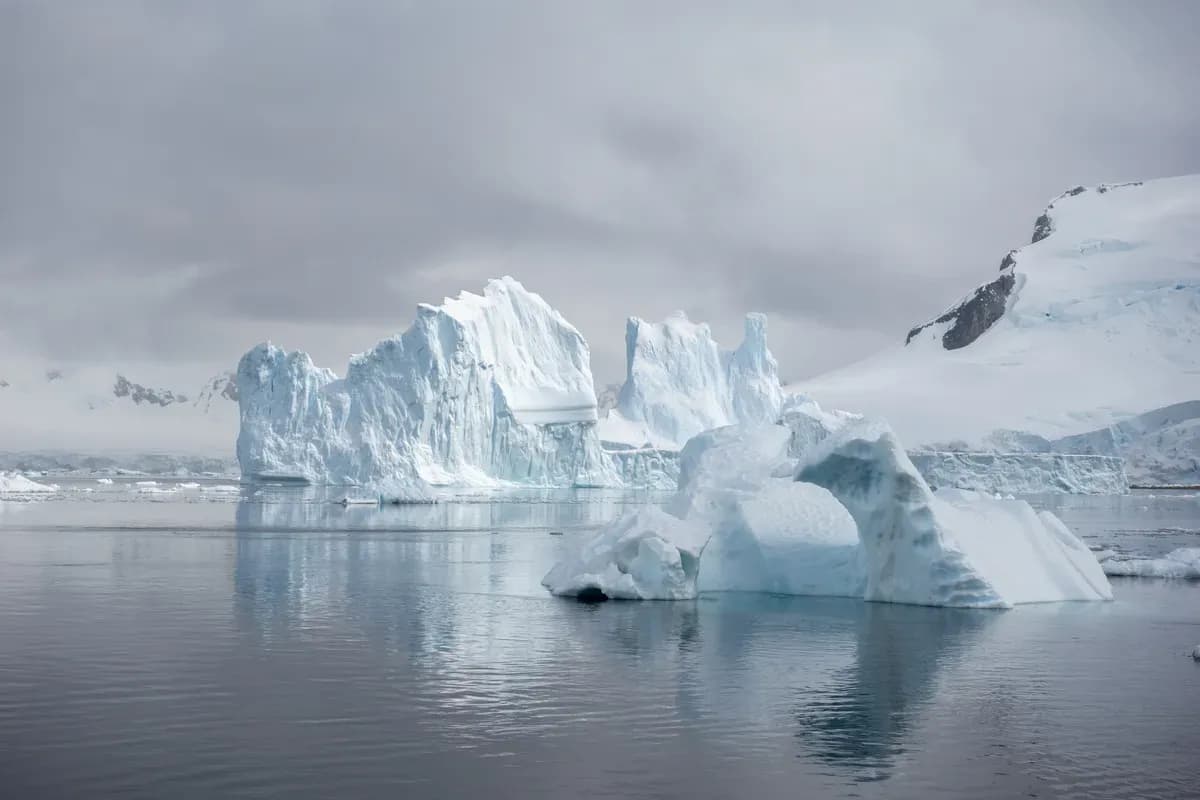
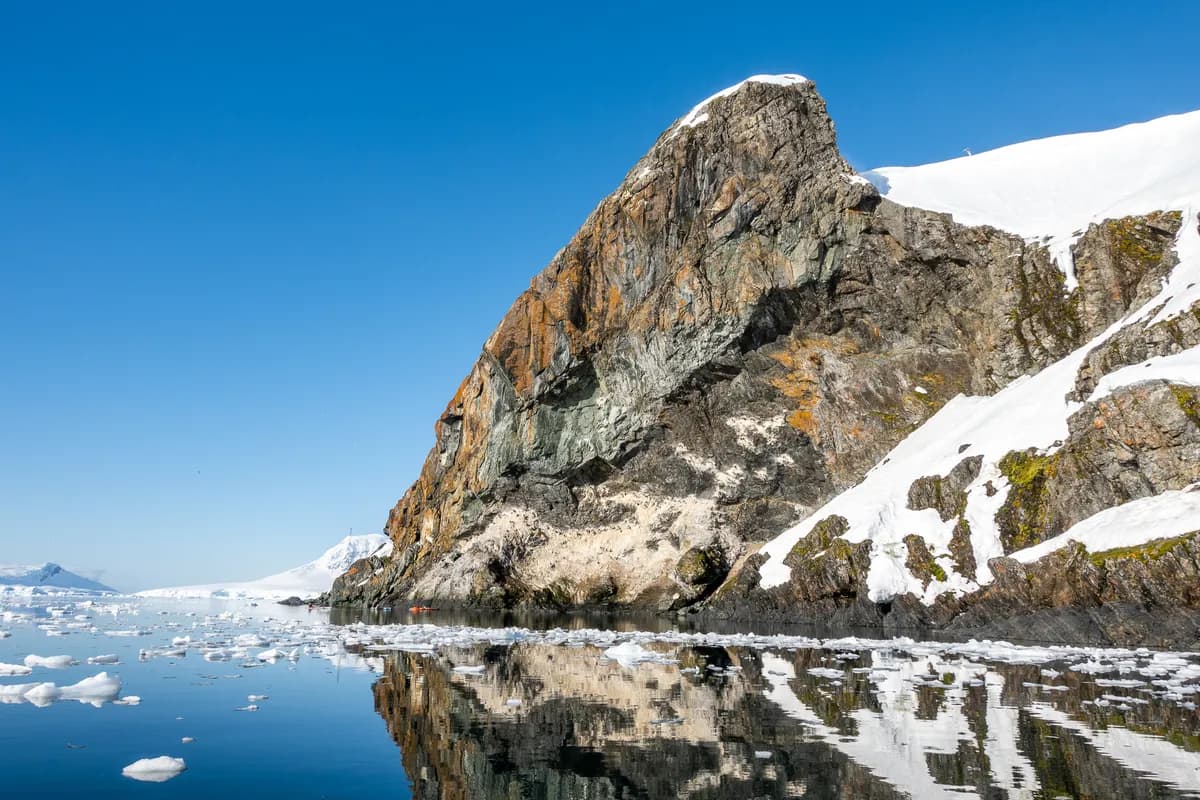
Protected bays such as Skontorp Cove are ideal for paddling among icebergs and wildlife, offering a different perspective on the Antarctic landscape.

These quieter days balance the more demanding ski objectives and allow us to explore the environment in depth.

Who This Expedition Is For

This expedition is designed for experienced ski tourers who are comfortable travelling in remote environments.

Participants should be able to:

  • Ski confidently in variable snow
  • Tour efficiently with skins and ski crampons
  • Travel safely in glaciated terrain as part of a guided team

Previous expedition experience is helpful but not required. Guides manage route finding, glacier travel, and safety systems, but everyone on the team contributes to the expedition.

You should also be comfortable spending time aboard a sailing vessel and helping with simple tasks during the voyage.

The Team

The expedition is led by an experienced polar team combining professional mountain guides and seasoned sailors.

Phil Wickens – Expedition Leader

Phil organizes and leads ski mountaineering and backcountry operations. He has more than two decades of experience guiding and running expeditions in Antarctica.

Tom Wolfe – IFMGA Mountain Guide

Tom is the founder of Sawback Alpine Adventures and has guided ski mountaineering expeditions across the Arctic, Antarctica, and major mountain ranges worldwide.

Supporting Phil and Tom is a highly experienced sailing crew responsible for navigating the vessel through Antarctic waters and positioning the team for the best objectives.

Expedition Style

Our approach is deliberately small and flexible.

Large ships visit Antarctica every year, but very few trips are designed specifically for ski mountaineering. By travelling with a small team aboard a sailing vessel we can reach quieter anchorages and respond quickly to weather and ice.

This creates opportunities that simply do not exist on larger expedition cruises.

Join the Expedition

Antarctica is not an easy place to reach, and opportunities to ski here are limited.

Each season we run a small number of expeditions with a limited number of places available.

If skiing in Antarctica has been on your mind for a while, this is the kind of trip that makes it possible.

Tour Image
Tour Image
Tour Image
Tour Image
Tour Image
Tour Image

locationMeeting place and time

Casa de los Mariscos, Ushuaia, Argentina; 18:30

planePlace and time of the end of the trip

Punta Arenas, Chile

Included

checked29 days Ski & Sail: includes crew, harbour fees

checkedpermit fees

checkedUIAGM / IFMGA mountain guide

checkedgroup gear

checkedfull board meals on ship

checked1-2 nights accommodation in Punta Arenas, the nights of Dec 20 and 21

checkedfinal dinner in Punta Arenas

Excluded

canceledtransportation to/from South America

canceledaccommodation and food in Ushuaia

canceledpersonal equipment

canceledgratuities

canceledtrip cancellation and evacuation insurance

canceledski touring equipment

canceledfood in Punta Arenas (except for final dinner)

bootsEquipment

Available on request

Our expedition platform is Ocean Tramp, a 66 ft (20 m) aluminum-hulled ketch purpose-built for high-latitude sailing and ski-sail operations. Constructed by Alu Yachtbau GmbH in Germany and designed for polar reliability, she combines speed, strength, and comfort in a compact expedition format.

Ocean Tramp is owned and operated by 60 South Expeditions, the polar division of Quixote Expeditions, a company led by experienced high-latitude sailors Laura Smith and Federico Guerrero. The vessel has been the cornerstone of their Antarctic and sub-Antarctic sailing operations since 2014 and is recognized within the polar community for her robust design, safety record, and well-managed logistics.

The yacht accommodates a maximum of eight guests in four double cabins, supported by a strong professional crew: three nautical crew (Captain Oliver Grant, First Officer, and Cook) and three field crew (guides and medical). With a beam of 5.3 m and draft of 2.2 m, Ocean Tramp maintains excellent stability in Drake Passage conditions while retaining access to shallow anchorages along the Antarctic Peninsula.

For shore and ski-touring logistics, she carries one rigid-inflatable boat (RIB) rated for eight persons, allowing efficient transfer of the full team to and from landing zones in two shuttles. All ski and climbing equipment is stored in dedicated deck lockers and dry compartments, with secure tie-downs and heated drying facilities inside for boots, skins, and clothing.

Together with the professional support of 60 South’s Antarctic logistics network, Ocean Tramp provides a proven, reliable platform for ski-sail operations in one of the most demanding maritime environments on Earth.

Accommodation image
Accommodation image

Program

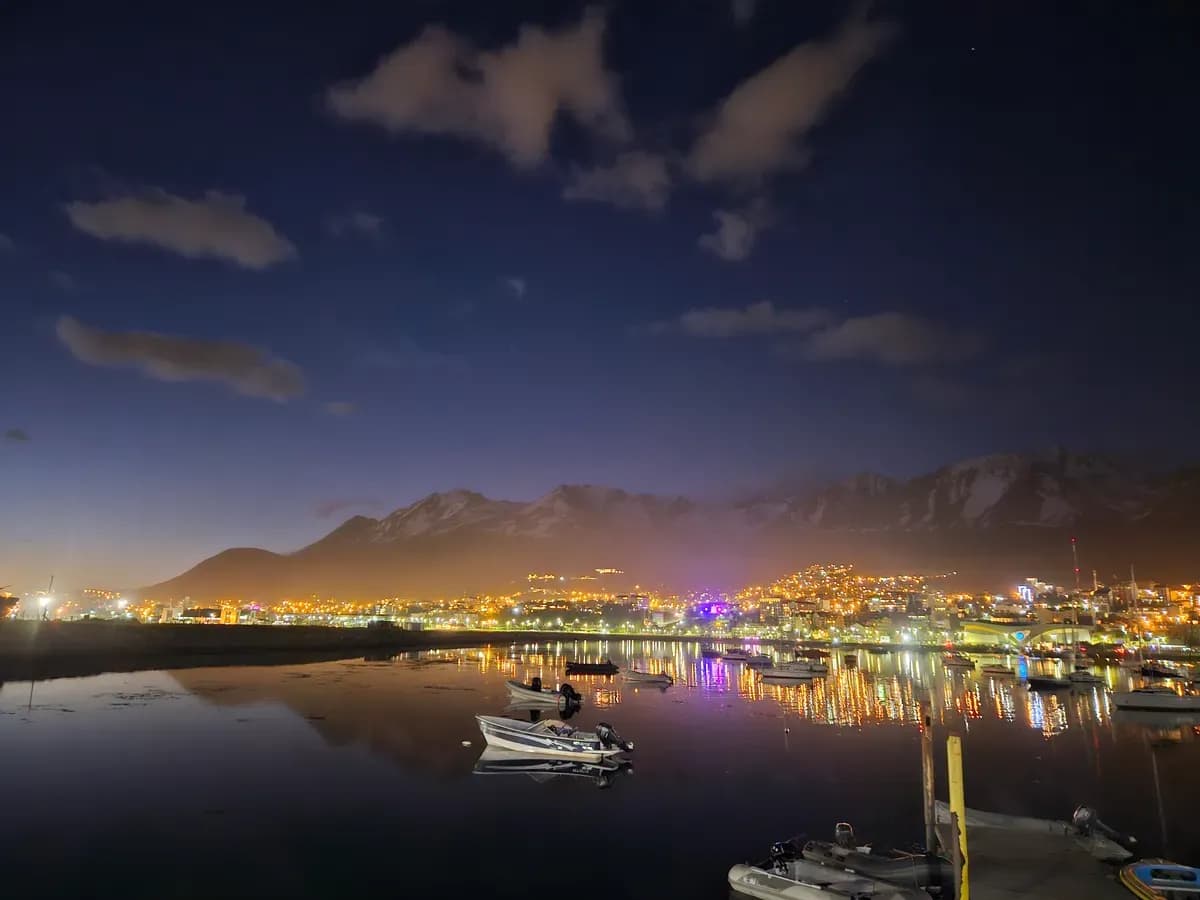
Day 1Arrival in Ushuaia (Nov 24)

If you prefer to arrive a bit early in Ushuaia, we provide three optional training days (Nov 25-27), with arrival and dinner on Nov 24 and embarkation on Nov 28. We do not provide hotel, transport or accommodation for these days -- you're on your own.

If you want to participate: arrive in Ushuaia. Meet the team. Dinner at La Casa de Los Mariscos. Great King Crab and other Argentinian seafood and local cuisine.

Day 2Ski Tour Martial Glacier

As we all know, the best way to get over jetlag is to go ski touring. Martial Glacier is a great way to stretch the legs and get (for most of us) the first turns of the “season”. Martial (pronounced "Mar - Tee - Al") is the spectacular glacier hanging above town. Approach is via a long windy road to a the local ski hill's parking lot. From there you hoof it up the trail until the snow begins. Awesome! You're on your own for dinner tonight. Lots of great options to choose from!

Day 3Expedition Prep

Camp setup, use of expedition gear, meal prep, companion rescue and glacier travel session. Dinner at Kaupe restaurant, a lovely seafood restaurant with a spectacular view of Beagle Channel.

Day 4Final day in Ushuaia

Prepare equipment, immigration at harbour services, evening dinner at Parrilla La Estancia.

Days 5-7Sailing the Drake (Nov 28)

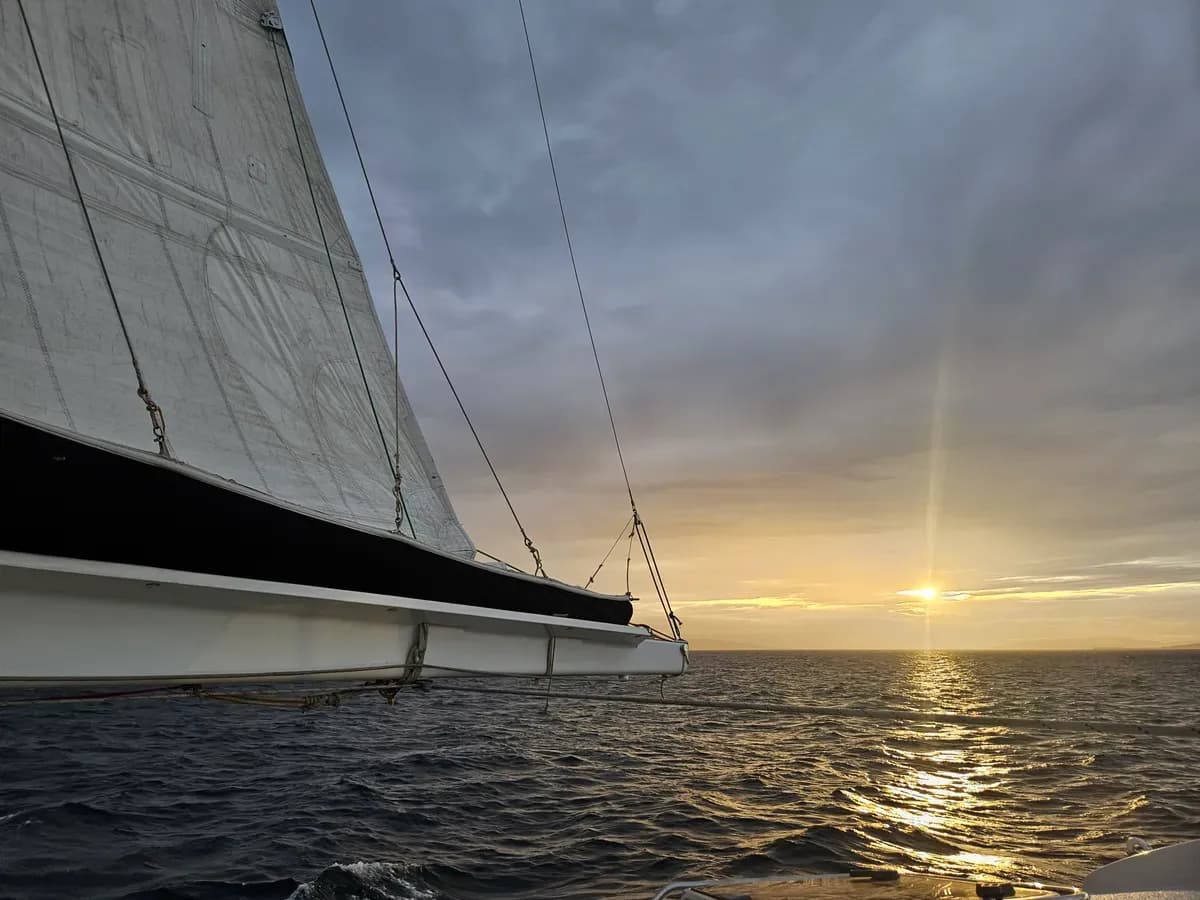
Ocean Tramp is a tough purpose built aluminium high latitude expedition yacht with creature comforts like central heating and a climate controlled pilot house that allows you to take in the 360 degree views while insulated from environmental extremes.

Come aboard, meet the crew, stow your gear and take in the briefings before we set off to sail down the spectacular mountain lined Beagle Channel in relatively calm water. Your Captain and crew will have been carefully watching the weather for a few days prior, so we may either visit an anchorage to wait…. or we may head out into the Drake Passage to commence our 560 nautical mile ocean passage, where landfall will be the snow, rock and ice of the Antarctic Peninsula. We are sailing the “furious fifties” with landfall in the “screaming sixties”, but thankfully modern weather systems aboard Ocean Tramp enable us to negotiate the deep lows the Drake Passage is legendary for. Often we are able to choose weather windows that provide a safe, comfortable and fast passage across and you’ll find that with the routine of watches at sea, the time passes quickly.

Day 8Landfall in Antarctica (Dec 1)

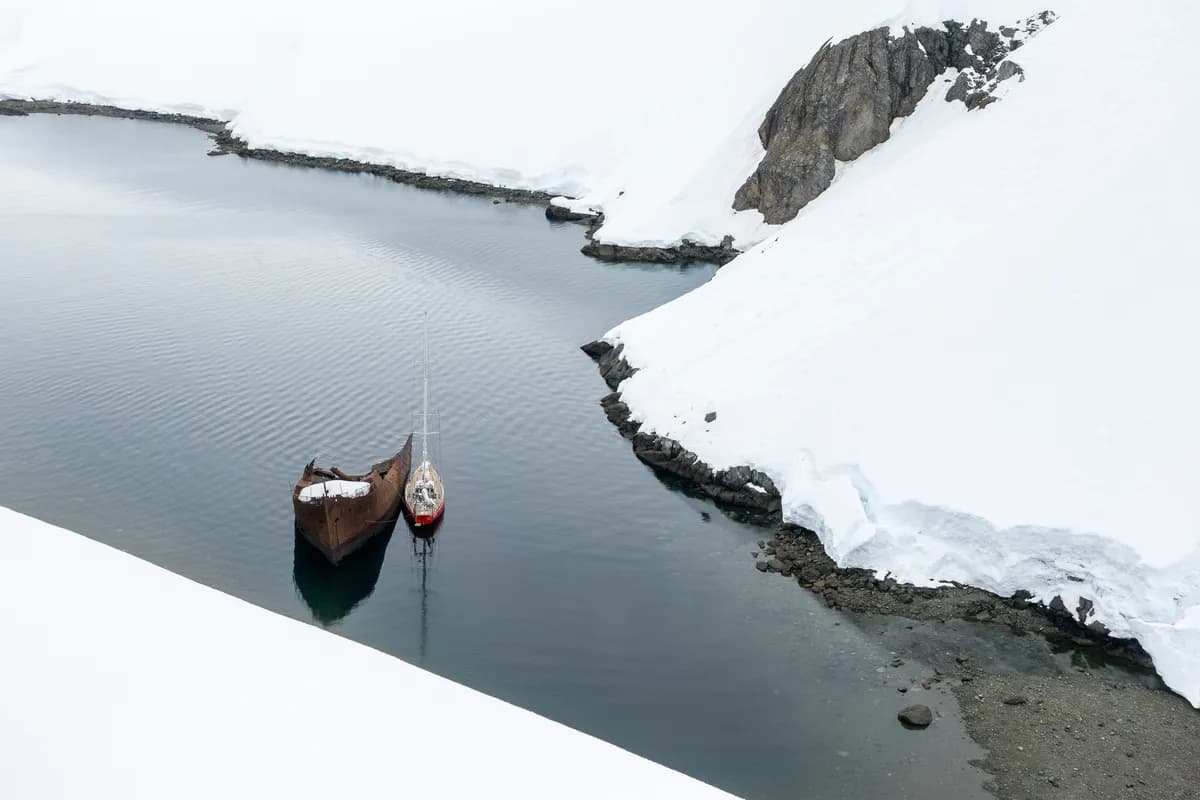
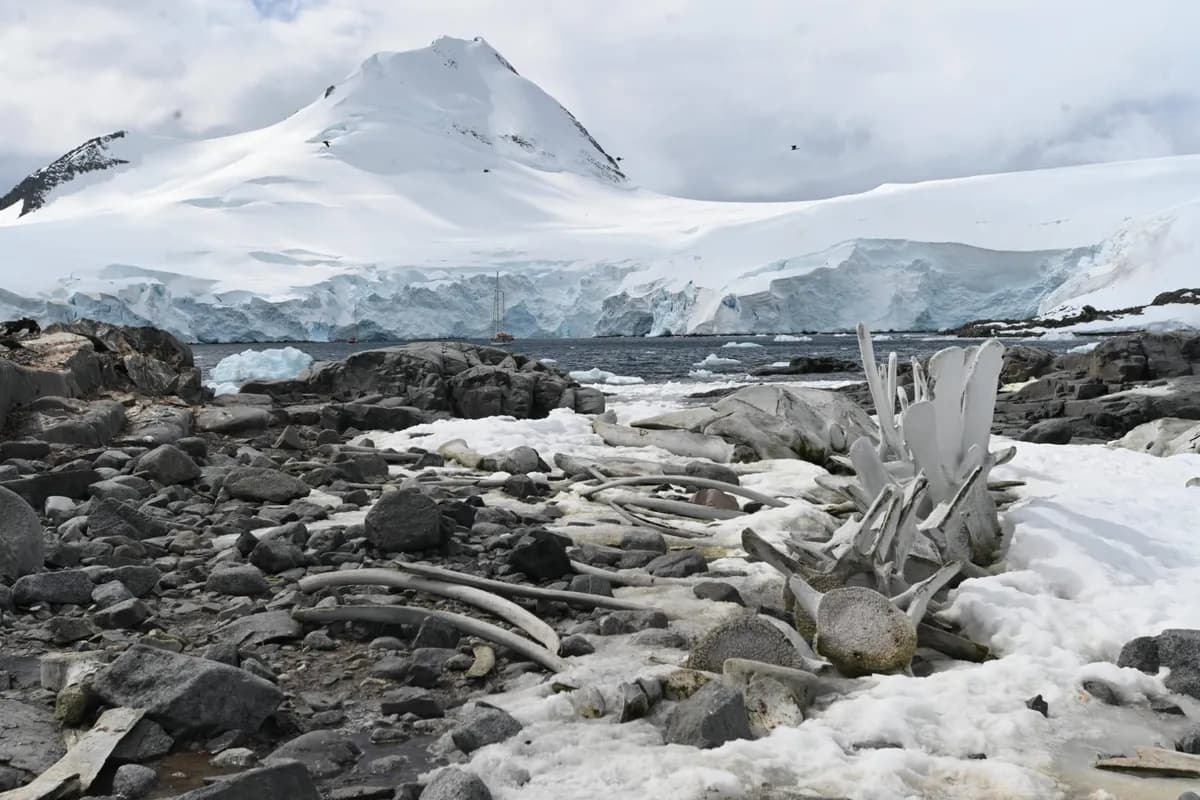
High jagged peaks, overhanging seracs, huge glaciers dropping newly formed icebergs into the ocean…… and everywhere life abounds in this icy paradise. Perhaps your first impressions of Antarctica will make you feel that you have entered an alternative reality! …and that impression will be amplified as we sail into a volcano! As we enter Port Foster on Deception Island through the narrow Neptune’s Bellows, the sunken caldera opens before us and we sight the remnants of what was once a bustling whaling industry at the turn of early 20th century, with fleets of whale catchers and factory ships anchored in the harbour and more than a few interesting anecdotes and stories to tell!

Day 9A first taste of skiing in Antarctica (Dec 2)

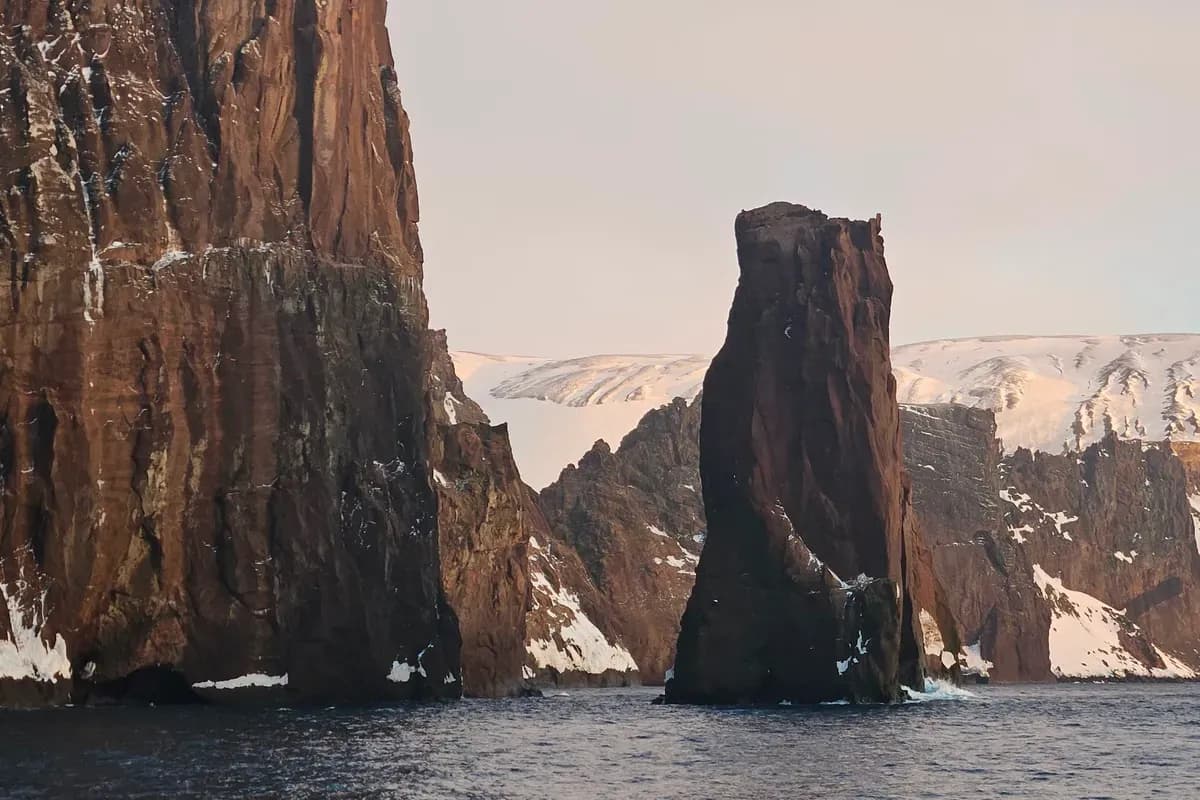
We land on the black volcanic sand beach where steam rises eerily and habituated penguins enjoy a warm bath! Skinning up the snow slopes rewards us with stunning views of the sea cliffs and “Sewing Machine Needles” rock formations…..and the incredible sight (and smell!) of penguins as far as the eye can see. Deception Island supports one of the major chinstrap penguin populations in the South Shetlands, with tens of thousands of breeding pairs.

Day 10Portal Point (Dec 3)

A morning of spectacular skiing up both summits with views over to the jagged mountain range of the peninsula. In the afternoon we pick up our lines and make the short sail over to Portal Point on the mainland, where we lift the keel to make our way into a shallow anchorage and tie in securely for the night.

Day 11Ski the Seventh Continent

Today you Ski the Seventh Continent with an ascent of Igloo Hill and a fast ski back to the yacht. Perhaps an afternoon kayak among grounded icebergs, seals and penguins.

Day 12Wilhemina Bay (Dec 5)

We sail south through Wilhelmina Bay, dodging humpbacks, and make a ski ascent of Spigot Peak, a dramatic rock spire, flanked by a snow slope behind. The exertion is rewarded by unbelievable views ranging from the interior mountain chain of the Antarctic Peninsula, across the Gerlache Strait to Brabant and Anvers Islands. Evening finds us tucked into another shallow anchorage on Cuverville Island which is home to a frenetically busy gentoo penguin colony.

Day 13Paradise Harbour (Dec 6)

Today we sail to Paradise Harbour – a spectacular cruise down Errera Channel which you may paddle if you wish, then across the head of Andvoord Bay into the eastern arm of Paradise Harbour. Again the keen paddlers are invited to take to their boats and paddle through this beautiful waterway which often affords close encounters with humpbacks, seals and penguins…even orcas sometimes! It’s a favourite spot for pods of orcas to hunt the crabeater seals lazing on floating sea ice.

We tuck into tiny Skonthorpe Cove for the night, a small amphitheatre in the ice cliffs and a favourite of the old Norwegian whalers who frequented these waters 100 years ago. The sense of tranquillity and overpowering majesty of the towering peaks is often broken by the roar of avalanches or cracking and crashing of ice falls as Avalanche Glacier continues its inexorable advance into the sea. As we go exploring in the zodiac or kayaks, it’s wise to be prepared for waves generated by the massive chunks of ice falling into the sea. Interestingly, the towering ice cliffs are actually floating on the sea as an ice shelf.

Day 14Mount Banck (Dec 7)

Today’s objective is Mt Banck. As we skin up the 970 m mountain we negotiate our way between deep crevasses and get a chance to peer into their mysterious neon blue depths. From the summit it’s a fast ski back to the waiting yacht, visible as a few pixels far below.

Day 15Bruce Island (Dec 8)

An early morning start and we head to Bruce Island for a 3 hour 400m ski ascent with the reward being a fabulous ski back to the zodiac.

Day 16Base Camp Ocean Tramp (Dec 9)

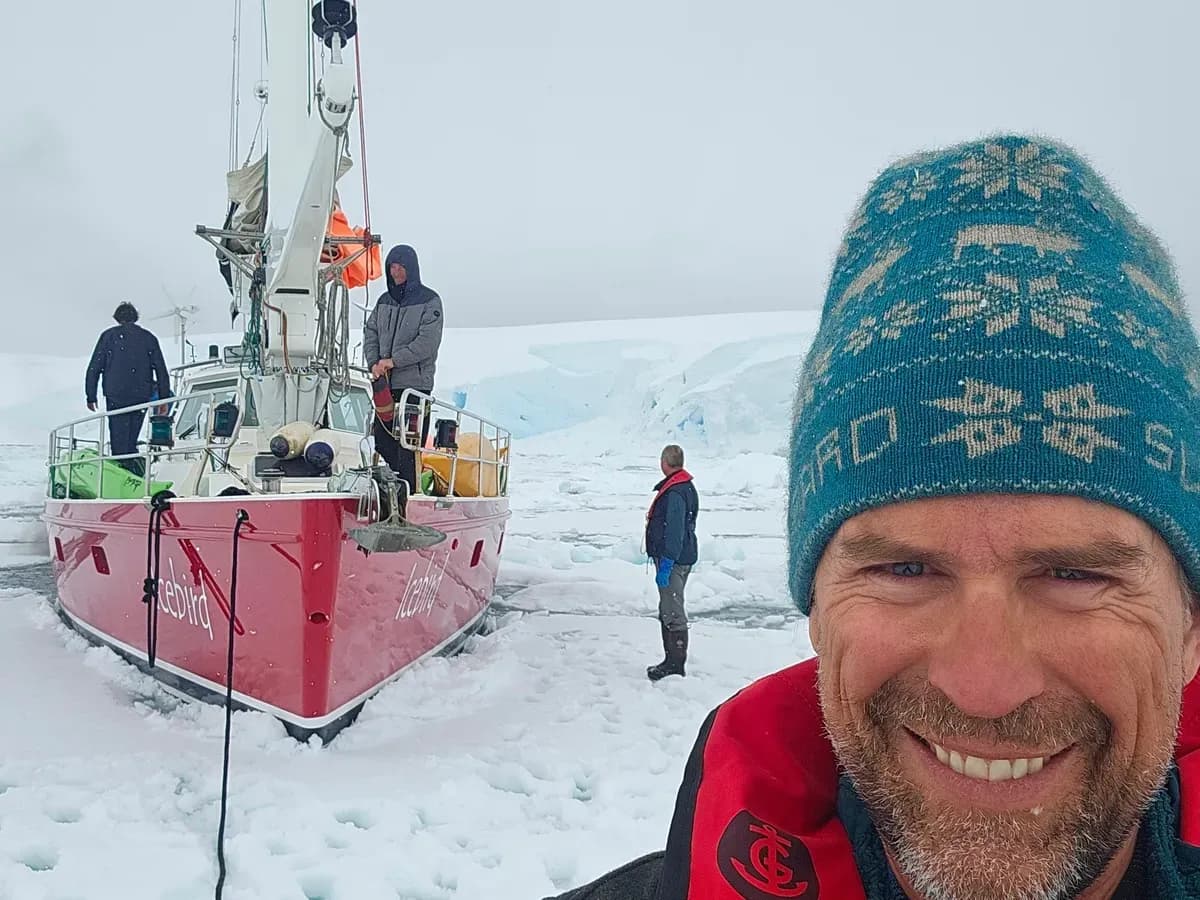
We take a brisk sail across the Gerlache Strait to enter the Neumayer Channel and as we make our way down this narrow cut between Wiencke Island and Anvers Island we’re likely to see orcas who often range through this beat. Tonight we tie ourselves into the ‘Ice Marina’, the vestiges of winter sea ice which fill Port Lockroy at this time of the year. Using ice screws and other anchors we tie the yacht securely alongside the ice and enjoy some true ski in ski out yachting from ‘Base Camp Ocean Tramp’.

Day 17Jabet Peak (Dec 10)

We drop our skis straight off the yacht onto the sea ice and skin over to the tide crack from where we ascend onto Harbour Glacier and traverse across to the base of Jabet Peak. A three hour climb rewards us with spectacular views, Thunder Glacier to the north with the Fife Brothers range towering above, and across the Neumayer Strait snowy Mount Français, one of the highest peaks in the Antarctic Peninsula region and the high point of Anvers Island on the peninsula at 2760m, rises majestically above all else. A fast ski down to traverse the glacier once again, and back home to Ocean Tramp.

Day 18Port Lockroy Base (Dec 11)

A morning visit to historic Port Lockroy Base better known as the Penguin Post Office where the UK Antarctic Heritage Trust has carefully preserved the historic base dating from 1944. Port Lockroy was pivotal to the early days of exploration and of fascinating Operation Tabarin, a secret wartime mission to establish a permanent British presence in Antarctica. The carefully preserved artefacts, even tins of food and antiquated risqué paintings of 1940’s temptresses, contribute to an acute sense of time warp. For the afternoon – a quick ski over to Dorian Bay and a visit to another historic hut which was used as a refuge for ski plane operations to Port Lockroy in the 1970s.

Days 19-20Minaret Peak (Dec 12-13)

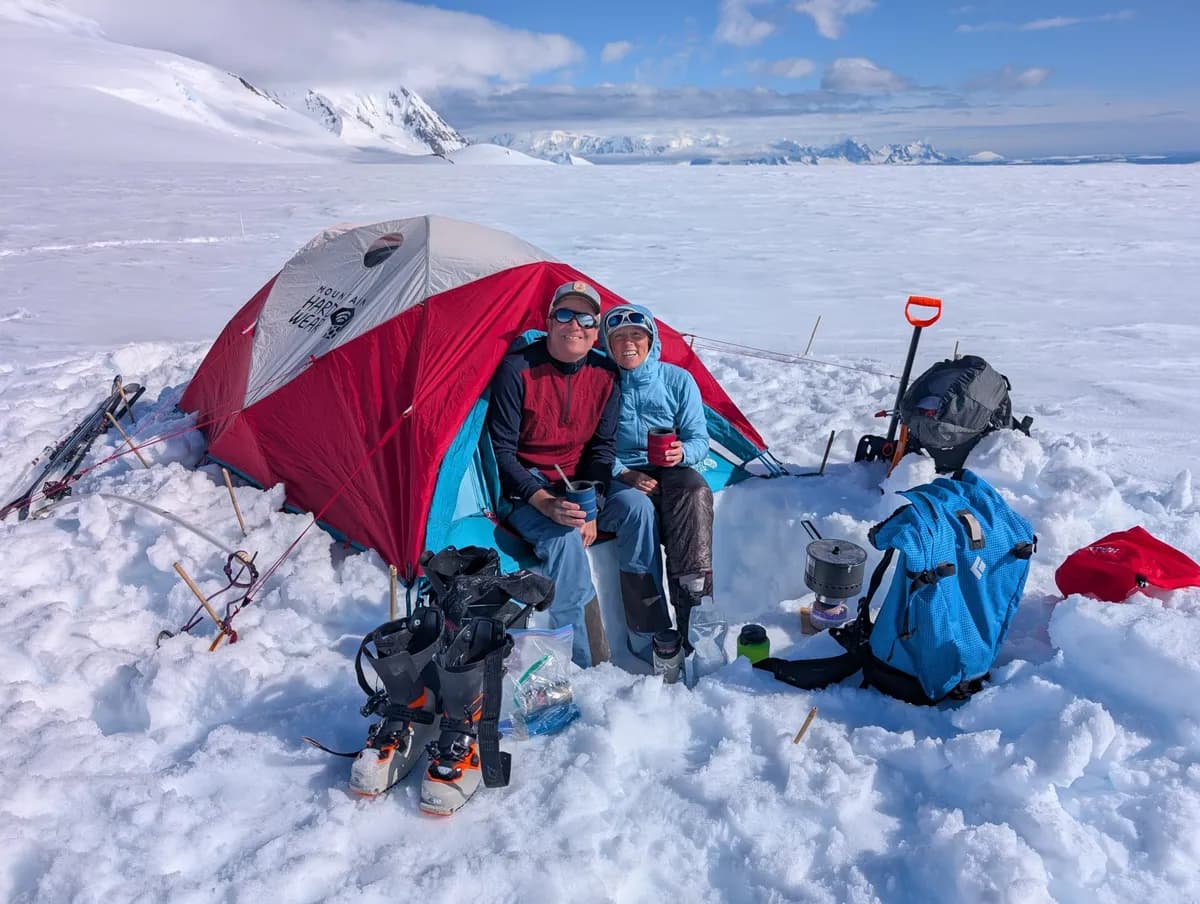
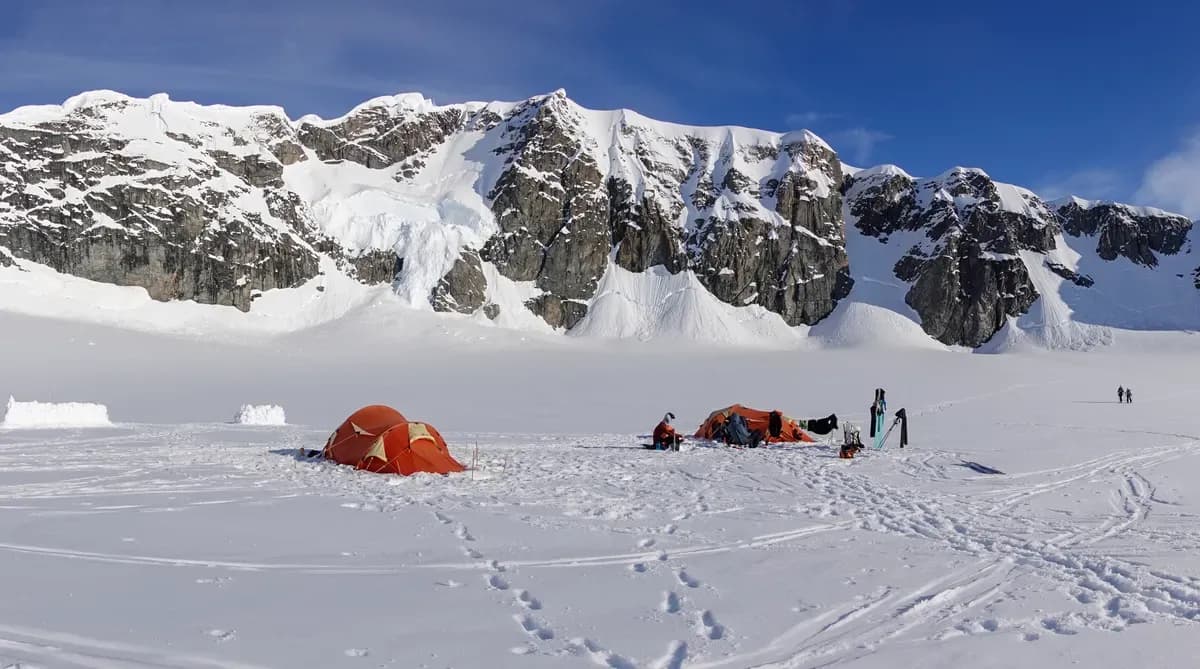
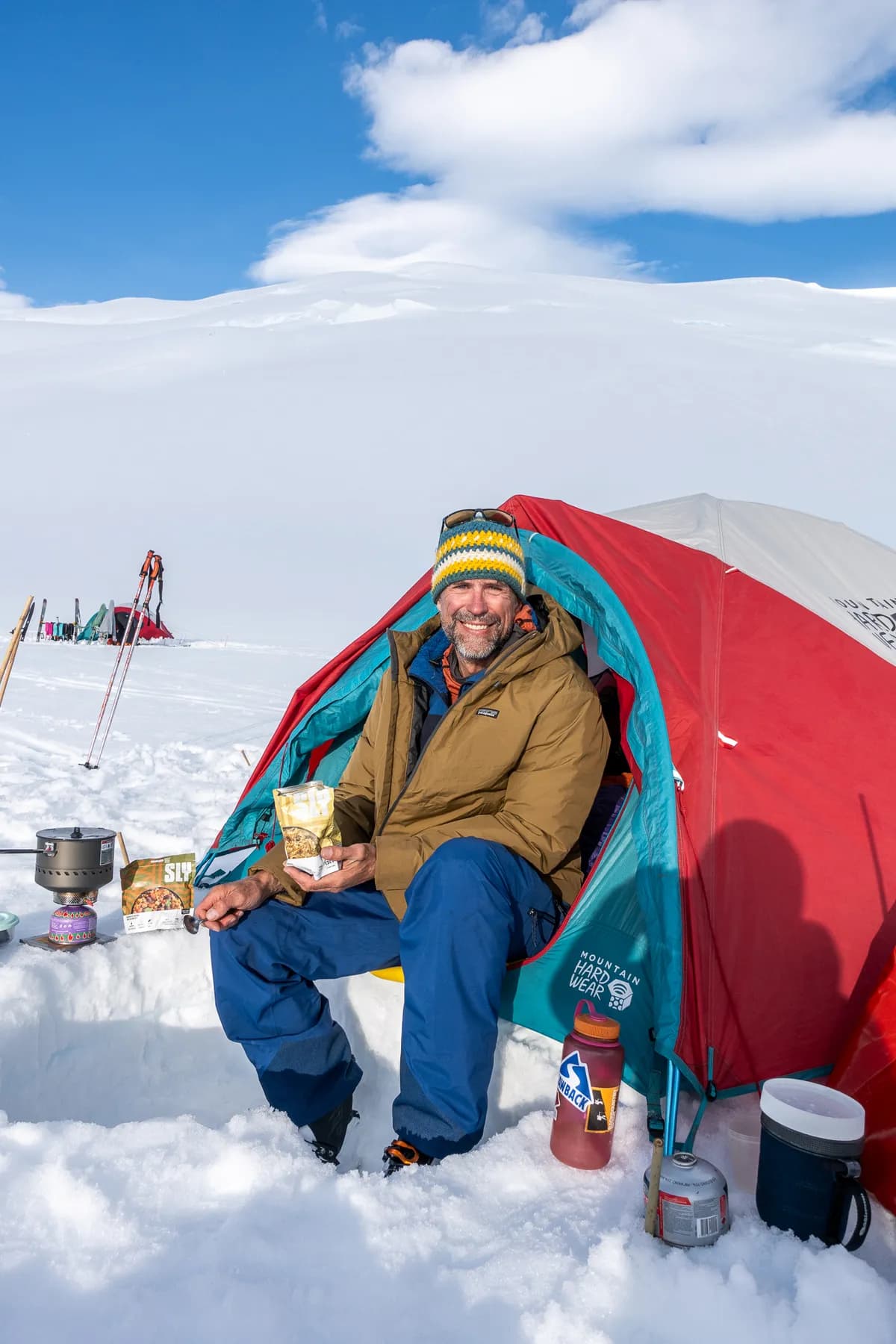
We untie from the Ice Marina and as we steam towards Canty Point on Anvers Island the team prepares for a 3 day ski tour to Minaret Peak. This is your chance to experience Antarctic snow camping and the near 24 hour daylight with spectacular sunsets that merge into sunrises and keep the mountains glowing pink for hours.

Day 21Lemaire Channel (Dec 14)

After three days in the mountains, the ski team breathes a sigh of relief as Ocean Tramp appears amongst the icebergs and the smell of fresh baked bread and delicious food wafts across to those waiting for pick up on the beach! After a hearty meal, back aboard Base Camp Ocean Tramp, a brisk sail across the Gerlache Channel takes us to Cape Reynard and the entrance to the famed Lemaire Channel where the dark waters of its narrow channel are overhung by precarious seracs and snow cornices that make us hesitant to sail too near the rocky cliffs.

Day 22Petermann Island (Dec 15)

A day to explore Petermann Island and the resident Adélie and gentoo penguin colonies. Perhaps a circumnavigation by kayak.

Day 23Ascent of Mt. Scott (Dec 16)

We make an early start, land our gear and crampon up the initial ice slope to easier snow slopes. If conditions are right this is a 4-5 hour climb, and from the summit the yacht and climbers can see each other! Those who prefer sea kayaking can explore nearby Pleneau Bay often known as The Iceberg Graveyard where currents and shallow water combine to trap and break up the ice monoliths. It makes for interesting sea kayaking, when the spectacle of hundreds of tons of ice grinding on the sea floor is likely to explode into fragments. So it’s wise to observe the rules relating to iceberg approach!

Day 24Vernadsky (Dec 17)

Ice conditions permitting we head south down the Penola Strait, which were named by Australian John Rymill of the winemaking family when he led the British Graham Land Expedition in 1932. A fascinating story of success and competence, and perhaps ‘The Expedition’ which marked the post-heroic Age of polar exploration. We thread our way into the rocky maze of the Argentine Islands, home of the ex-British base ‘Faraday’, now Ukrainian “Vernadsky” continues important atmospheric and ozone research, including long-running Dobson spectrophotometer observations. Often we are invited to join the scientists for an evening of merriment. For the afternoon, nearby ice cliffs provide an excellent opportunity to try out an ice climb with technical ice axes and top ropes. The kayaks are also deployed to explore the maze of islands and grounded icebergs.

We tie ourselves into a tiny rock-pool at Port Circumcision on Petermann Island where the French explorer Charcot spent a winter on the ‘Porquoi Pas’ in 1909. From our anchorage we can study Mt Scott directly across the Penola Straits, although much of its ascent route is hidden from view.

Day 25Sail North (Dec 18)

Time to head back north towards King George Island.

Day 26Two Hummock Island (Dec 19)

En route to King George Island we plan to stop at Two Hummock Island to break up the trip. Our route takes us through iceberg littered waters and dodging humpback whales. On arrival we tuck into a tiny cove surrounded by towering ice cliffs and tie the yacht securely to rocks on shore.

Day 27King George Island, Flight to Punta Arenas (Dec 20)

A return to relative civilisation, but Ushuaia’s claim to being El Fin del Mundo will leave you sceptical, as like most people who travel to Antarctica, you will be forever haunted by the landscapes and thriving inhabitants of ‘that other world’…….that lies to the south, bound by ice but rich in life.

Day 28Punta Arenas buffer / wrap-up, Dec 21 and Day 29: Depart Punta Arenas, Dec 22

After a night in Punta Arenas to wrap up our trip. The hotel stay and a last night’s dinner are included in trip trip fee. We recommend you book your flights home for Dec 22 out of Punta Arenas. There's a late evening flight Dec 21 if you like to gamble. But in any event, be sure you have flex tickets and/or travel insurance that covers delays for charter flights (basic insurance might not be enough)

What are the tours like?

Every member is an active member of the expedition team. Our focus is on adventure and safety, under the guidance of the most experienced team of sailors and skiers operating in Antarctica who enjoy sharing their love for Antarctica and the experience of traveling there with like-minded adventurers. Our tours are challenging, but immensely rewarding. The skiing that we do is in a very spectacular setting, and on all types of snow, from deep fresh snow to spring corn. Most people find the level of glaciation quite overwhelming since it is like no-where else on earth; virtually the whole coastline comprises ice cliffs, and almost every inch is covered by glacier. That is where our experience and knowledge comes in. We encourage guests to camp ashore at least once since that gives a very different perspective to Antarctica, and to truly experience its vastness and silence. We also encourage guests to use our sea kayaks. It is a great option when the clouds are low, and a great way to experience the wildlife and icebergs.

What was the inspiration for Antarctica and the use of a yacht?

The landscape is spectacular, the wildlife is in your face, and the history of exploration of these areas really brings them to life. Travelling by yacht and in small groups gives the freedom and flexibility that is impossible otherwise, and allows us to tailor our trips according to the aspirations and abilities of the guests. Using yachts also makes it a much bigger and more rewarding adventure, and closer to the original spirit of adventure of the pioneers of Antarctic exploration. Since everyone is involved with the sailing and running of the yacht we become a close-knit team, and everyone comes away with a fantastic sense of achievement.

What electrical outlets are avaiable on Ocean Tramp?

Ocean Tramp has 220V Euro style electrical sockets.

When should I book my flights and accommodation?

Please review the trip dates and travel instructions carefully before purchasing flights or hotels. You must arrive in Ushuaia with enough time to account for delayed flights or baggage and to attend the scheduled pre-departure meeting and equipment check.

We strongly recommend arriving at least one full day before the scheduled embarkation date. Earlier arrival provides a greater buffer, particularly when travelling with skis and expedition equipment. Do not plan a flight out of Ushuaia until after the scheduled return of the vessel, and allow additional time before any onward international connection.

Guests are responsible for arranging and paying for their flights and accommodation before and after the voyage.

Where can I find the equipment list?

The Antarctica equipment requirements are more specialized than our standard ski-touring list. Registered guests receive a comprehensive preparation package through Google Drive.

Phil Wickens manages equipment preparation for the expedition. He will provide the current list and answer questions about skis, boots, clothing, glacier equipment, personal equipment, packing, and equipment that may be shared or supplied.

Please review the package before buying or renting equipment, as some requirements are specific to ship-based ski mountaineering in Antarctica.

What medical information must I provide?

Guests must disclose any medical condition, recent illness, surgery, injury, medication, or other issue that could affect their participation or require treatment during the expedition.

Because Antarctica is remote and the skiing is physically demanding, guests recovering from a significant medical event or procedure should obtain confirmation that they are fit for the proposed activities and remote travel. Sawback or the vessel operator may request additional medical information or clearance before departure.

Medical information allows the guides and expedition team to plan appropriately. Disclosure does not necessarily prevent participation, but incomplete information can create serious problems in a remote environment.

Will Sawback supply IFMGA/UIAGM guides?

Yes, Sawback Alpine Adventures will provide fully certified IFMGA/UIAGM mountain guiding for this Antarctic ski-sail expedition. The trip is guided by Tom Wolfe, IFMGA/ACMG Mountain Guide and owner of Sawback Alpine Adventures, in partnership with Phil Wickens, Expedition Leader and founder of Ski-Antarctica.

While Phil is not an IFMGA guide, he has over two decades of Antarctic field leadership experience and has led more than twenty yacht-based expeditions to the Antarctic Peninsula. His background includes three years as a British Antarctic Survey field guide, over 800 days of ski mountaineering in Antarctica, and more than 50 first ascents. His combination of navigation, polar fieldcraft, and deep regional knowledge is unmatched in the private expedition sphere.

The expedition will also include a dedicated onboard medical professional (a nurse or doctor) who participates actively in both vessel operations and shore-based field travel. This ensures continuous medical readiness and rapid response capability throughout the voyage.

Together, this team provides a uniquely high standard of technical guiding, field safety, and medical oversight, combining international mountain guiding certification with world-class Antarctic expedition experience.

Antarctica is pretty remote. What are the provisions for emergency response in the event of an injury or medical event?

Onboard Medical Professional

A dedicated medical professional (RN or MD) sails with the team and joins shore operations. They:

  • Lead patient assessment and treatment (trauma, hypothermia, altitude-related and general medical issues).
  • Administer parenteral meds / IV fluids, advanced wound care, analgesia, and sedation per standing orders.
  • Maintain the medical inventory, controlled-drug custody, and daily readiness checks.
  • Coordinate telemedicine with shore-based duty physicians and manage medical documentation and hand-over for medevac.

Onboard Medical Supplies

Comprehensive offshore kit (comprehensive offshore medical kit plus expedition trauma gear) plus expedition trauma gear:

  • Advanced first-aid, trauma, and suture materials
  • Analgesics, antibiotics, and IV fluids
  • Splints, airway adjuncts, and oxygen supply
  • AED
  • Medical reference protocols and telemedical contact lists

Training

  • Skipper/Crew: STCW Medical Care at Sea
  • Guides (Tom Wolfe IFMGA; Phil Wickens, Expedition Leader): Wilderness First Responder / Advanced First Aid with extensive polar field experience
  • Medical Professional: RN or MD with remote / expedition medicine background

Communications & Coordination

Redundant communications for medical and SAR coordination:

  • Iridium satphone and data terminal
  • SSB/HF and fixed / handheld VHF radios
  • AIS transponder and registered EPIRB
  • PLBs / inReach units with ski teams for real-time tracking and two-way text messaging

Medevac Plan (Weather-Dependent, Multi-Stage)

  1. Stabilize on scene under the medical professional’s lead: analgesia, hemorrhage control, airway/oxygen, rewarming, IV/antibiotics as indicated.
  2. Return to vessel by RIB for continued care and telemedical consultation; prepare documentation and packaging for transfer.
  3. Sail to King George Island (KGI) for air access (typically 1–3 days depending on position and conditions).
  4. Airlift to Punta Arenas, Chile, via Antarctic charter aircraft (Twin Otter or King Air) arranged through operator or insurer.
  5. Hospital handover in Punta Arenas or onward repatriation.

⚠️ Delays of several days are possible; all guests must accept this as inherent to Antarctic expedition operations.


Guest Insurance Requirements

Guests must obtain mandatory expedition insurance explicitly covering:

  • Emergency medical evacuation from Antarctica to South America (minimum USD 300,000 recommended)
  • Hospitalization and medical repatriation
  • Trip cancellation/interruption and baggage
  • Ski mountaineering and yacht-based travel in polar regions

Guests must carry expedition insurance that explicitly covers emergency medical evacuation from Antarctica to South America, hospitalization, medical repatriation, trip cancellation or interruption, baggage, ski mountaineering, glaciated terrain, and yacht-based travel in polar regions. Proof of coverage is required before embarkation.

Some guests may be able to obtain suitable coverage through providers such as Global Rescue, Ripcord / Redpoint, GEOS, World Nomads, or equivalent insurers, but coverage must be confirmed in writing for this specific itinerary and activity profile.

Is your itinerary fixed or is it flexible?

Itinerary & Flexibility

Our itinerary is intentionally flexible. While the itinerary proposes a schedule, every Antarctic ski-sail expedition is guided by the prevailing weather, sea ice, and snow conditions, as well as the goals and abilities of the group.

There is a vast array of route options and ski objectives throughout the Antarctic Peninsula — from coastal summits and island traverses to inland glacier camps — and our small team format allows us to adapt in real time.

We treat each day as a collaborative decision-making process: guides, skipper, and guests work together to select safe, rewarding, and achievable objectives that match both conditions and collective aspirations.

In short, nothing is fixed — and that’s exactly what makes these expeditions so exceptional.

Do you handle all of the IAATO permits and landing registration?

Permits & IAATO

Yes. All Antarctic permitting and IAATO compliance are handled directly by our team.
We operate under 60 South Expeditions’ IAATO framework, ensuring that all landings, environmental documentation, and yacht operations fully conform to the International Association of Antarctica Tour Operators (IAATO) guidelines.

This includes coordination of:

  • Landing site applications and environmental impact assessments
  • Passenger and crew manifests
  • Operational and waste management plans
  • Vessel registration and permitting under 60 South’s IAATO membership

All required paperwork and reporting are completed by 60 South and Ski-Antarctica on behalf of the charter group, so clients and guides are covered under an existing, fully compliant IAATO operator structure.

What insurance do I need?

All guests must carry comprehensive travel medical and emergency evacuation insurance valid for Antarctica and for the activities included in the expedition. The policy should cover ski touring, ski mountaineering, glacier travel, emergency medical treatment, evacuation, repatriation, trip interruption, and the full non-refundable value of the trip.

Trip cancellation insurance is also strongly recommended. Once Sawback commits payments to vessels and other suppliers, trip payments cannot generally be refunded or transferred because a guest becomes unable to participate.

Guests with a pre-existing condition, recent medical event, surgery, or change in medication should disclose it to the insurer and obtain written confirmation that coverage remains valid.

What happens if I become ill or injured during the expedition?

The vessel carries an expedition team and medical resources appropriate to the voyage. The guides, ship’s crew, medical personnel, vessel operator, and insurer will coordinate the response to any illness or injury.

Depending on the circumstances, treatment may take place aboard the vessel, at a nearby research station or medical facility when available, or through evacuation to South America. The timing and method of evacuation depend on the vessel’s location, weather, sea and ice conditions, aircraft or ship availability, and the nature of the emergency.

Antarctica is remote, so immediate evacuation cannot be guaranteed. This is why accurate medical disclosure and insurance that explicitly covers Antarctic emergency evacuation are essential.

Where should I stay in Ushuaia?

If you want decent yet affordable hotel accommodation we recommend Hotel Ushuaia.

If you're looking for something unique, we recommend using Booking.com or Airbnb to find accommodation close to downtown Ushuaia. The restaurants used for the group dinners during the first few evenings are a useful reference for the general area, as staying nearby makes it easy to walk to restaurants, shops, and meeting points.

There is a wide range of hotels, apartments, and guesthouses in central Ushuaia, so the best choice will depend on your budget and preferences.

Accommodation outside the downtown area can also work well, but you will probably need to use Uber or taxis for meals and group activities. Uber is generally convenient in Ushuaia and fares are usually reasonable.

Will Sawback supply an IFMGA/UIAGM guide for this trip?

Yes, Sawback Alpine Adventures will provide fully certified IFMGA/UIAGM mountain guiding for this Antarctic ski-sail expedition. The trip is guided by Tom Wolfe, IFMGA/ACMG Mountain Guide and owner of Sawback Alpine Adventures, in partnership with Phil Wickens, Expedition Leader and founder of Ski-Antarctica.

While Phil is not an IFMGA guide, he has over two decades of Antarctic field leadership experience and has led more than twenty yacht-based expeditions to the Antarctic Peninsula. His background includes three years as a British Antarctic Survey field guide, over 800 days of ski mountaineering in Antarctica, and more than 50 first ascents. His combination of navigation, polar fieldcraft, and deep regional knowledge is unmatched in the private expedition sphere.

The expedition will also include a dedicated onboard medical professional (a nurse or doctor) who participates actively in both vessel operations and shore-based field travel. This ensures continuous medical readiness and rapid response capability throughout the voyage.

Together, this team provides a uniquely high standard of technical guiding, field safety, and medical oversight, combining international mountain guiding certification with world-class Antarctic expedition experience.

Do people love it or find it challenging?

Both. Everyone will be challenged at some point and this makes the experience richer all the more rewarding. Many people who join us have no previous sailing experience and so learning new skills and heading out into the Southern Ocean is obviously a big challenge, but it is something that most people are more than capable of doing. Others will find skinning uphill a challenge, particularly if we are heading out with tents, but the rewards make it well worth it. Challenge is a good thing, and means that everyone comes away with an enormous sense of achievement. Everyone falls in love with Antarctica, but it is difficult to say why. That is why I keep going back, and that is why so many of our guests keep coming back.

Where are the majority of your guests from?

Our groups are very mixed, with guests from the UK, Australia, New Zealand, USA, Canada, Turkey, South Africa, Italy, Switzerland, Norway…

What has been the best adventure?

That is a very hard question to answer indeed! There has been no single best adventure, more a collection of amazing experiences, and we have those on every single trip. I know that all sounds a bit corny, but because I always have something new up my sleeve, of exploring somewhere that others have never visited, it is hard to put any one adventure above the rest. I loved being the first to explore and ski the mountains around Cierva Cove, of summiting the virgin summits that overlook the Lemaire Channel, and of pioneering a route to reach the untouched mountains of the Kiev Peninsula, and what really made each of these trips so great was the fantastic teams that I took with me. The best adventure is that of traveling back to Antarctica, gradually exploring new areas and skiing new mountains, and sharing the place and the experience that I love with others.

What can guests expect?

Our guests can expect to have an adventure of a lifetime, and the unique experience of being part of an expedition team that sails and skis in one of the most spectacular places on earth.

Ski Antarctica

from CA$49993

Guides

Tom Wolfe

Tom Wolfe

Owner / Lead Guide Mountain Guide IFMGA/ACMG

Tom began Sawback in 1995. He spends his ski season guiding across Western Canada, Japan, Norway, Svalbard and Antarctica. Tom is also the owner of the Burnie Glacier Chalet, one of Canada's premier backcountry ski lodges located in the pristine and remote wilderness of Northern British Columbia. Tom splits his summers between guiding climbing trips in the mountains of British Columbia and guiding paddling trips on rivers in Canada’s western shield country including northern Saskatchewan, Manitoba and Nunavut. Tom has lived with his wife Deb in Canmore, Alberta, since 1995 where they raised their two now-adult children Rohan and Ruth.

Deborah Lantz

Deborah Lantz

Owner / Nurse, Hiking Guide ACMG

Deb has been a Registered Nurse since 2002 and an ACMG certified Hiking Guide since 1999. This year she is helping with many facets of Sawback's operations, including helping manage Burnie Glacier Chalet, organising the food for our Bow Yoho and Wapta trips as well as taking a month-long position as ship's nurse on our Antarctica voyage.

Phil Wickens

Phil Wickens

Expedition Leader

Phil studied biology at Imperial College in London, England. After completing his PhD in plant pathology, he worked for two winters and three summers as a field guide for the British Antarctic Survey, combining his passion for natural science with that of mountain exploration and photography. He has led numerous climbing and skiing expeditions to Antarctica, Tibet, India, Pakistan, Nepal, Peru, East Greenland, the Caucasus and Canada, and was Vice President of the Alpine Club in 2006-7. Phil works as a freelance photographer, polar guide, expedition leader, naturalist and lecturer in expeditions, polar geology and history. When not working or playing in far-flung places he lives in England on the edge of Peak District National Park.

Gallery

Tour Image
Tour Image
Tour Image
Tour Image
Tour Image
Tour Image
Tour Image
Tour Image
Tour Image
Tour Image
Tour Image
Tour Image
Tour Image
Tour Image
Tour Image
Tour Image
Tour Image
Tour Image
Tour Image
Tour Image
Tour Image
Tour Image
Tour Image
Tour Image
Tour Image
Tour Image
Tour Image
Tour Image
Tour Image
Tour Image
Tour Image
Tour Image
Tour Image
Tour Image
Tour Image
Tour Image
Tour Image
Tour Image
Tour Image
Tour Image
Tour Image
Tour Image
Tour Image
Tour Image
Tour Image
Tour Image
Tour Image
Tour Image
Tour Image
Tour Image
Tour Image
Tour Image
Tour Image
Tour Image
Tour Image
Tour Image
Tour Image
Tour Image
Tour Image
Who is Sawback Alpine Adventures?

Sawback is owned and operated by Tom Wolfe, a professional mountain guide living in Canmore, Alberta. Sawback employs a number of other guides, all chosen for their expertise and experience in the mountains. See our Guides and Staff page.

Where are you located?

We are based in Canmore, Alberta. However, we run trips across Western Canada, and to many far flung and beautiful locations around the world. Some of our guides are based in Golden, British Columbia, along with other locations.

Can I do something that isn’t listed?

Absolutely. Please contact us to inquire about doing something that isn’t listed on our website. We are always keen to help organize custom trips. Apart from skiing, we can also organize and guide trips involving ice climbing, mountaineering, rock climbing, and hiking!

How much experience & fitness do I need?

It depends on the trip! We can accommodate total beginners on some, and there’s always the option of creating a custom trip. Many of our trips have more than 1 guide, which allows the group to be split to accommodate different levels. The difficulty of each trip is rated - see our Trip Rating page. Please feel free to contact us if you have any questions about your experience or fitness.

How are your guides trained?

All of our guides are certified by the ACMG (Association of Canadian Mountain Guides) and/or the IFMGA (International Federation of Mountain Guide Associations). These certifications represent the highest level of training in mountain / ski guiding and risk management in the world. Becoming fully certified as a mountain guide requires many years of experience skiing and climbing, before embarking in a rigorous training and exam process that takes between 4 to 8 years to complete.

Do participants have to sign a Waiver to participate?

Yes, all guests, or their parent or legal guardian for guests under 18, are required to review and agree to Sawback’s Release of Liability, Waiver of Claims, Assumption of Risk and Indemnity Agreement (the “Waiver”) as a condition of participating in any trip or activity with us and will apply to your participation in the trip. If the Waiver is not completed, the individual will not be permitted to participate. The Waiver will apply to all your activities with us for a period of 24 months from the date you sign it. By signing the Waiver, you will waive or give up certain legal rights, including the right to sue for negligence, breach of contract, or breach of the Occupiers Liability Act or claim compensation following an accident. The form of Waiver can be viewed and downloaded here. PLEASE READ THE WAIVER CAREFULLY PRIOR TO BOOKING ANY TRIP!

What Terms and Conditions Apply to my Booking?

Our Booking Terms & Conditions can be viewed here. When you book a trip, you are deemed to have accepted our Booking Terms & Conditions on behalf of yourself and all individuals who wish to participate in your booking. Our Booking Terms & Conditions contain important terms about the booking, including our payment and cancellation policies and waiver requirement. Please review these carefully before booking.

How safe are your trips?

Every trip in the mountains involves certain hazards and not all hazards can be mitigated or avoided. Our waiver outlines many of these. The safety of our guests is our absolute number one priority. Every day, the guide(s) on your trip will go through a formalized process to discuss and identify hazards, along with planning risk mitigation strategies. This process sets the stage for ongoing risk assessment through the day as new information is gathered. We strive to communicate this to our guests as much as feasible – a morning briefing about current conditions at a minimum. If you have any questions about safety at any point before or during your trip, please don’t hesitate to speak up!

Frequently asked questions

Didn't find an answer to your question?

Is there something you're uncertain about? Reach out to our welcoming team for assistance.

What Our Clients Say

Testimonials from customers who have already used our services.

Safety is a Forefront!

Tom guided our week at Burnie and provided the group with expert knowledge of the terrain and a superb week. Safety was always at the forefront of the decisions made and the group felt safe in his hands, along with his fellow guide for the week. Communication was excellent and professional. Would highly recommend and am looking forward to many future trips with Tom and Co.

client avatar
google

Tom Smith

You won’t regret it.....

Tom Wolfe and Svalbard, Norwegian Arctic on the Noorderlicht. I’ve done a few great trips with Tom over the years so when he emailed a year ago and asked if I wanted to go to the Arctic and ski from a steel hulled yacht I said yes without thinking... Good call. Svalbard was mind-boggling. I had expectations but it beat them. Getting into the zodiac everyday and skiing was amazing. Sea ice, glaciers, seals, walruses, beluga whales and polar bears. Huge huge glaciers, peaks as far as the eye can see. Just amazing scenery.

client avatar
google

Alan Johnson

Recommend without hesitation

I met Tom in April 2011 when we camped outside Fairy Meadow hut at the end of the N Selkirks traverse, he was guiding another group. Since meeting him I’ve done 3-4+ trips with him (Burnie, Sorceror, etc.) and found him to be one of the top guides I’ve had the pleasure to travel with over the last 20 years. I’m at that spot in life (almost 61) where I am getting slower and his daily trip planning does a good job accomodatiing the full range of abilities (even if some of still have lots of enthusiasm, but less stamina than in our 40"s) and still incorporates us as part of the group, not just some straggler OTB(off the back, an old cycling term). Safety conscious, good judgment and all around top notch & smart guy. Recommend without qualification.

client avatar
google

Jim Cossitt

Related tours

Svalbard Ski & Sail tripView details about Svalbard Ski & Sail trip

Svalbard Ski & Sail

8 day(s)Norway

Longyearbyen, Svalbard

Arctic Ski Touring from a Small Expedition Vessel | 8-12 Guests

A ski touring and sailing expedition along the west coast of Spitsbergen, in the high Arctic between mainland Norway and the North Pole.

The Svalbard archipelago consists of more than 60 largely uninhabited islands in the high Arctic, at over 78° north—level with Ellesmere Island and northern Greenland.

Skiing here is defined by its setting: steep mountains rising directly from the sea, accessed by small boat and zodiac. Each day is shaped by weather, sea ice, and conditions, with the flexibility to move between fjords and choose objectives accordingly.

Despite its latitude, Svalbard is straightforward to reach, with regular flights into Longyearbyen and a short transfer to the harbour.

Expedition Vessels

We operate on three distinct sailing vessels in Svalbard: Noorderlicht, Meander, and Rembrandt van Rijn, each offering a different balance of space, comfort, and expedition style.

  • Noorderlicht — 12 guests; classic schooner with exceptional space per guest and a traditional expedition atmosphere
  • Meander — 10–12 guests; compact, efficient platform with strong logistics and modern systems and amenities
  • Rembrandt van Rijn — up to 29 guests; larger vessel with private cabins and a more comfortable onboard experience

Learn more about the vessels by clicking the Accommodation tab above

Ski Antarctica tripView details about Ski Antarctica trip

Ski Antarctica

29 day(s)Antarctica

Antarctic Peninsula

A Ski Mountaineering Expedition to the Antarctic Peninsula

Now accepting applications for 2026 and 2027

Antarctica is one of the most unusual places on Earth to travel on skis. Mountains rise directly from the ocean, glaciers spill into deep blue bays, and the terrain stretches for hundreds of kilometres in every direction.

Our expedition is built around reaching that terrain.

We sail from Ushuaia aboard the expedition yacht Ocean Tramp, cross the Drake Passage, and spend the following weeks exploring the islands and mountains of the Antarctic Peninsula. From the vessel we travel by zodiac to remote landing sites and begin ski tours from sea level.

Most days involve several hours of climbing through glaciated terrain followed by long descents back toward the ocean.

Typical Ski Days

  • 700–1500 m vertical
  • 4–8 hours of travel
  • Small expedition team
  • Objectives chosen according to weather, snow, and ice conditions

This is not a cruise with skiing added on. The entire expedition is structured around ski mountaineering.

Why Ski Antarctica

Nowhere on Earth combines large mountains, maritime snow, and ocean access in the same way.

Along the Antarctic Peninsula peaks rise dramatically from the sea and glaciers descend directly to the shoreline. The result is terrain where it is possible to start a tour from the water and ski all the way back to the coast.

Conditions vary, but when the weather stabilizes the snowpack provides long continuous runs across broad glaciers, steep couloirs, and alpine faces.

Wildlife encounters are common. Whales and orca pods move through the channels, penguin colonies line the shores, and seals rest on the ice nearby.

It is expedition skiing in its purest form.

The Expedition Vessel

The expedition takes place aboard the Ocean Tramp, an aluminium expedition yacht purpose-built for remote Antarctic operations.

Life aboard the yacht is simple and comfortable:

  • Ocean Tramp has four double guest cabins
  • Spacious saloon and dining area
  • Large deck space for wildlife viewing and photography
  • Zodiac for shore access

Ocean Tramp comfortably carries a small team, allowing access to areas that larger ships cannot reach in authentic expeditionary style.

Ski Objectives

The mountains of the Antarctic Peninsula offer a huge variety of terrain.

Broad glaciated peaks, technical couloirs, and long ski lines dropping toward the ocean are all possible during the expedition. On strong teams we sometimes commit to larger multi-day objectives in expedition style, establishing camps to access higher summits.

Several major peaks in the Palmer Archipelago rise more than 2500 m directly above the Southern Sea, creating some of the most dramatic ski touring landscapes in the world. Our 2025 expedition climbed Mount Français, 2822 m.

On most expeditions we get two or three days of weather that make skiing difficult or impossible. That is one reason we run a longer trip. Antarctica is a long way to travel, and shorter itineraries can easily spend a large portion of their ski days waiting for a window.

Once we are on the Peninsula we ski whenever the weather allows. When storms move through we reposition to another objective or switch gears: sea kayaking, historic sites, whales, photography. There is always something going on.

A Typical Day

A ski day in Antarctica often begins with the team gathering as the crew positions the boat near the day’s objective.

After breakfast we board the zodiacs and travel to shore.

From there the day unfolds in classic expedition style:

  • Land on a beach or sea ice
  • Climb through glaciated terrain for several hours
  • Reach a summit or high point
  • Ski long descents back toward the ocean
  • Return to the vessel for the evening

Long daylight hours during the Antarctic summer allow flexible days and often spectacular evening descents.

Sea Kayaking and Exploration

When conditions allow we also explore the coastline by sea kayak.

Protected bays such as Skontorp Cove are ideal for paddling among icebergs and wildlife, offering a different perspective on the Antarctic landscape.

These quieter days balance the more demanding ski objectives and allow us to explore the environment in depth.

Who This Expedition Is For

This expedition is designed for experienced ski tourers who are comfortable travelling in remote environments.

Participants should be able to:

  • Ski confidently in variable snow
  • Tour efficiently with skins and ski crampons
  • Travel safely in glaciated terrain as part of a guided team

Previous expedition experience is helpful but not required. Guides manage route finding, glacier travel, and safety systems, but everyone on the team contributes to the expedition.

You should also be comfortable spending time aboard a sailing vessel and helping with simple tasks during the voyage.

The Team

The expedition is led by an experienced polar team combining professional mountain guides and seasoned sailors.

Phil Wickens – Expedition Leader

Phil organizes and leads ski mountaineering and backcountry operations. He has more than two decades of experience guiding and running expeditions in Antarctica.

Tom Wolfe – IFMGA Mountain Guide

Tom is the founder of Sawback Alpine Adventures and has guided ski mountaineering expeditions across the Arctic, Antarctica, and major mountain ranges worldwide.

Supporting Phil and Tom is a highly experienced sailing crew responsible for navigating the vessel through Antarctic waters and positioning the team for the best objectives.

Expedition Style

Our approach is deliberately small and flexible.

Large ships visit Antarctica every year, but very few trips are designed specifically for ski mountaineering. By travelling with a small team aboard a sailing vessel we can reach quieter anchorages and respond quickly to weather and ice.

This creates opportunities that simply do not exist on larger expedition cruises.

Join the Expedition

Antarctica is not an easy place to reach, and opportunities to ski here are limited.

Each season we run a small number of expeditions with a limited number of places available.

If skiing in Antarctica has been on your mind for a while, this is the kind of trip that makes it possible.

Fjords of Northern Norway tripView details about Fjords of Northern Norway trip

Fjords of Northern Norway

8 day(s)Norway

Lyngen Alps, Tromsø, West-Finnmark

Explore Arctic Norway by Sailboat and Skis

Our Fjords of Northern Norway program is a one-week ski and sail adventure aboard the Saeftinghe, a classic expedition sailing vessel perfectly suited to exploring the rugged coastline of Arctic Norway. Each itinerary focuses on a different region and seasonal window, moving progressively north through the islands, fjords, and alpine terrain that make northern Norway one of the world’s great ski touring destinations.
From the granite peaks of Lofoten and Vesterålen to the dramatic mountains of Senja, the glaciated summits of the Lyngen Alps, and the remote fjords of West Finnmark, these trips combine exceptional skiing with the flexibility and atmosphere that only a sailing vessel can provide.

Far From the Crowds

Northern Norway has become one of the world’s premier ski touring destinations, particularly in the Lyngen Alps where spring conditions can attract significant traffic on the classic routes. Travelling by sailboat changes the experience completely.
Rather than operating from roads and fixed accommodations, we move with the conditions, anchoring deep within fjords and close to ideal ski objectives. This allows access to quieter terrain, remote islands, and long summit-to-sea descents rarely reached by day-tourers. Combined with the experience of travelling aboard a classic Arctic sailing vessel under the guidance of an experienced captain and crew, the result is a true expedition-style ski touring experience.

2027 Itineraries

Week 1: Lofoten and Vesterålen

  • February 27 - March 6
  • Embarkation: Harstad
  • Disembarkation: Harstad

This early-season itinerary explores the maritime ski touring terrain of Lofoten, Vesterålen, and southern Troms. Depending on conditions, the route may extend into the northern Lofoten Islands before working back through the fjords and islands surrounding Harstad, Grytøya, and Andørja. Early March offers excellent opportunities for northern lights viewing combined with increasingly long Arctic days.

Week 2: Vesterålen, Senja, and Troms

  • March 6 - 13
  • Embarkation: Harstad
  • Disembarkation: Tromsø

Beginning in Harstad and working north toward Tromsø, this itinerary links together the steep coastal mountains of Vesterålen and Senja with the alpine terrain of northern Troms. Sharp granite peaks, deep fjords, and long summit-to-sea descents define this spectacular section of coastline. Northern lights viewing often remains possible during clear evenings.

Week 3: Lyngen Alps and West Finnmark

  • March 13 - 20
  • Embarkation: Tromsø
  • Disembarkation: Alta

This itinerary explores the classic ski touring terrain between Tromsø, the Lyngen Alps, and West Finnmark. Possible destinations include Kågen, Arnøya, Seiland, and the fjords surrounding Øksfjord and Stjernøya. Long spring descents directly to the sea, glaciated alpine terrain, and increasingly stable snow conditions define this period of the season.

Week 4: West Finnmark, Lyngen, and Troms**

  • March 20 - 27
  • Embarkation: Alta
  • Disembarkation: Tromsø

Beginning in Alta and working south toward Tromsø, this itinerary revisits the spectacular terrain of West Finnmark and Lyngen during one of the best periods of the Arctic spring ski season. Longer daylight hours, stable maritime snowpacks, and flexible boat-supported access combine to create outstanding conditions for ski touring among the fjords and islands of northern Norway.